Q&A: Quick understanding of Li-SOCl2 batteries
Q1: What is a Li-SOCl2 battery? Is it the same as the lithium-ion battery in a smartphone?
A Li-SOCl2 battery (lithium thionyl chloride battery) uses metallic lithium as the anode and thionyl chloride (SOCl2) as both the cathode material and electrolyte solvent. It is a non‑rechargeable primary battery. The fundamental difference from everyday lithium‑ion batteries is that the Li-SOCl2 battery is a "primary battery" – once depleted, it must be replaced and cannot be recharged.
Q2: What are its most significant technical features?
The core competitiveness of Li-SOCl2 batteries can be summarized as "three highs and one low" – high energy density (up to 650 Wh/kg, about three times that of Li‑ion), high voltage (nominal 3.6V, with very stable voltage during operation), high reliability (hermetic sealing, storage life up to 10‑20 years), and extremely low self‑discharge rate (≤1% per year for energy‑type cells, ≤2% for power‑type cells).
Q3: What are its limitations?
Li-SOCl2 batteries have three main drawbacks: First, after long storage or low‑current discharge, a passivation layer of lithium chloride forms on the anode surface, causing "voltage hysteresis" when a large current is later drawn – the load voltage may drop so much that the device fails to start. Second, the maximum continuous discharge current is relatively low (about 25 mA for energy‑type cells), making them unsuitable for high‑power applications. Third, the manufacturing process is complex, leading to higher cost.
Q4: Where are Li-SOCl2 batteries used?
They are mainly used in low‑current applications requiring 10‑20 years of maintenance‑free operation: smart meters (electricity, water, gas), tire pressure monitoring systems (TPMS), smoke alarms, GPS tracking devices, industrial PLC memory backup power, and IoT sensors.
Q5: How do the lifespan and self‑discharge rate of Li-SOCl2 batteries compare with other batteries?
Annual self‑discharge is less than 1% – about one‑tenth that of ordinary alkaline batteries. Energy density is about three times that of Li‑ion batteries. Operating temperature ranges from -60℃ to +85℃, far exceeding other battery types.
Q6: How can you judge the health of a Li-SOCl2 battery?
The key indicators are open‑circuit voltage (OCV) and discharge capacity. If OCV drops below 3.3V, it indicates excessive self‑discharge or micro‑short circuits. A high‑precision battery analyzer (e.g., µA‑resolution equipment) is needed for online tracking and monitoring.
Battery market overview and the unique position of Li-SOCl2 batteries
While lithium‑ion batteries attract much attention, Li-SOCl2 batteries still occupy an irreplaceable position in niche markets.
According to Wissen Research, the global lithium‑ion battery market will grow from $177 billion in 2025 to $311 billion by 2030. Behind these striking figures, the primary lithium battery market is also expanding steadily and quietly. In 2011, the global primary lithium battery market was about $1.45 billion, of which Li-SOCl2 batteries accounted for roughly 30%, mainly used in smart meters, automotive electronics, and long‑life IoT sensing devices – scenarios where "install once and ignore for a decade".
Bluefield Research estimates that by 2030, the number of IoT‑connected devices worldwide will reach 40 billion. Saft calculates that about 440 million of those devices per year could benefit from the long life of Li-SOCl2 batteries.
Working principle and core performance of Li-SOCl2 batteries
Battery structure and electrochemical principle
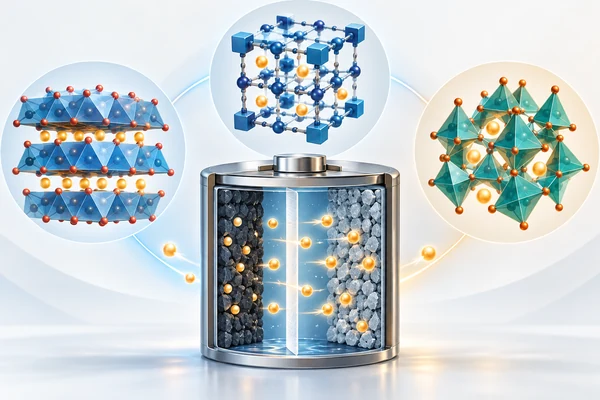
A Li-SOCl2 battery uses metallic lithium as the anode, porous carbon material as the cathode current collector, and thionyl chloride (SOCl2) as both the electrolyte solvent and the cathode active material. This is a very special design – the cathode active material exists in liquid form, theoretically giving it one of the highest energy densities among primary batteries.
The discharge reaction equation is:
2SOCl2 + 4Li → 4LiCl + SO2 + S
During the reaction, thionyl chloride is reduced and lithium is oxidized, producing lithium chloride (LiCl), sulfur dioxide (SO2), and elemental sulfur. The LiCl product deposits in the micropores of the carbon cathode and also forms a dense passivation layer of lithium chloride on the surface of the metallic lithium anode.
This passivation layer, although it causes "voltage hysteresis", also creates a "protective coat" on the lithium surface, making the lithium electrode very stable in thionyl chloride electrolyte and endowing the Li-SOCl2 battery with a storage life of 10‑20 years.
Core performance parameters
| Parameter | Value |
| Nominal voltage | 3.6V |
| Energy density | 650-700 Wh/kg |
| Annual self‑discharge | ≤1% (energy type), ≤2% (power type) |
| Operating temperature | -60℃ to +85℃ |
| Storage life | 10-20 years |
| Max continuous current | 25-200 mA (depends on model) |
Table 1 Performance parameters of lithium-thionyl chloride battery
Voltage Hysteresis Phenomenon
Li-SOCl2 batteries have a unique physicochemical phenomenon – voltage hysteresis. When a battery that has been stored for a long time is discharged with a relatively high current, the migration rate of lithium ions through the passivation layer cannot instantly meet the high current demand, causing a significant drop in load voltage, which may prevent the device from starting. This is not a defect but a side effect of the passivation layer – it is precisely the existence of this layer that gives the battery its extremely low self‑discharge rate.
Performance comparison of Li-SOCl2 with other mainstream batteries
| Aspect | Li-SOCl2 | Lithium‑ion | Alkaline |
| Rechargeable | No (primary) | Yes (secondary) | No (primary) |
| Nominal voltage | 3.6V | 3.7V | 1.5V |
| Energy density | 650 Wh/kg | 200-300 Wh/kg | 100-150 Wh/kg |
| Annual self‑discharge | ≤1% | 5%-10% | 2%-3% |
| Operating temp | -60℃~85℃ | -20℃~60℃ | 0℃~55℃ |
| Storage life | 10-20 years | 2-3 years | 3-5 years |
| Typical applications | Smart meters, TPMS, IoT sensors | EVs, phones, laptops | Remotes, flashlights |
| Disposable/reusable | Single use | Reusable (500-2000 cycles) | Single use |
Table 2 Performance comparison of lithium-thionyl chloride battery, lithium-ion battery, and alkaline battery
Lithium‑ion batteries support repeated charge‑discharge cycles but have higher self‑discharge and limited storage life. Alkaline batteries are very cheap but have low energy density and low voltage, requiring frequent replacement in long‑life applications. Li-SOCl2 batteries do not support recharging.
How to test Li-SOCl2 batteries
The unique chemistry of Li-SOCl2 batteries poses special challenges for testing.
Open‑circuit voltage and state‑of‑charge estimation. The discharge plateau of Li-SOCl2 batteries is extremely flat – the voltage remains almost constant until near depletion. Traditional voltage‑based SOC estimation methods are ineffective. Remaining capacity must be evaluated by integrating the discharge capacity or by performing a full discharge test under laboratory conditions. In March 2025, Saft launched LiSa, the world's first lifetime prediction service for primary lithium batteries, providing accurate remaining battery life predictions to IoT device operators via an API.
Passivation effect evaluation. The voltage waveform at the moment a new device is powered up is a key window for detecting the degree of passivation. Test equipment must have a high sampling rate (e.g., >50 kS/s) to accurately capture the transient voltage drop during cold start.
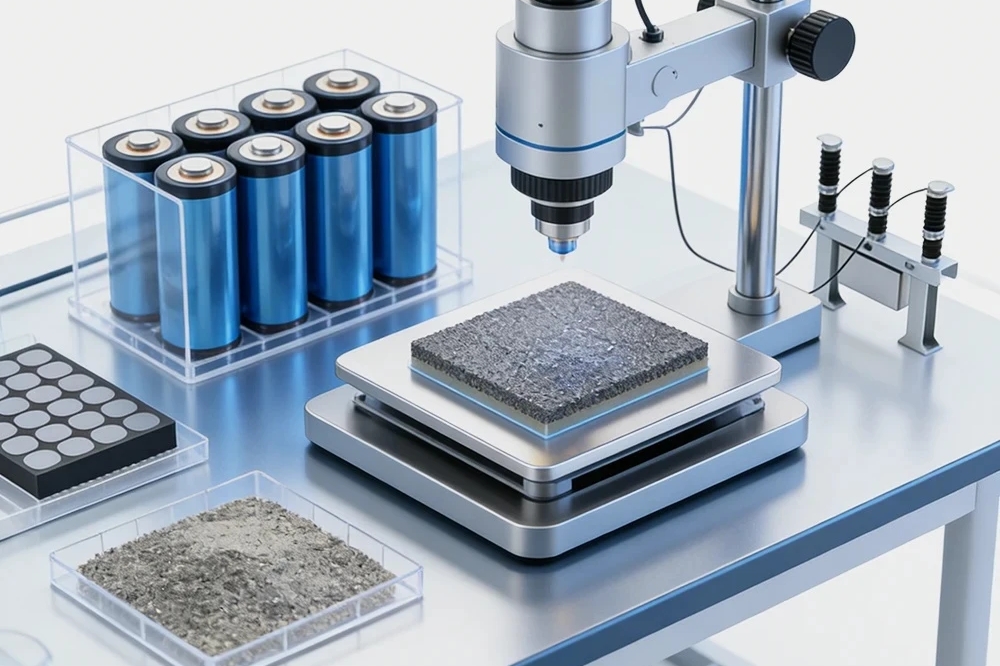
Self‑discharge detection. High‑precision open‑circuit voltage tracking is an effective means of identifying internal micro‑short circuits. Battery analyzers with µA resolution (such as the Keysight BT2152B/NEWARE CT-9008-SD) can directly measure the self‑discharge current of a cell within minutes, greatly shortening quality control time.
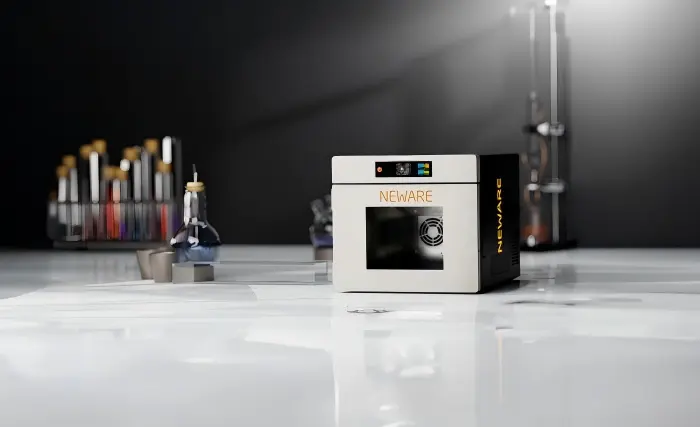
NEWARE Self-Discharge Tester
Long‑term cycle simulation and capacity validation. The standard method is to perform long‑term discharge tests under constant temperature and humidity conditions using pulsed currents that simulate real operating conditions, tracking changes in open‑circuit voltage and actual discharge capacity to calculate the calendar life of the cell in its actual application.
Conclusion and Future Outlook
With its four core advantages – high energy density, ultra‑low self‑discharge, wide operating temperature range, and extremely long storage life – the Li-SOCl2 battery has become the "energy cornerstone" for long‑life devices such as smart meters, TPMS, and industrial IoT. Although its power output is limited and voltage hysteresis is a natural drawback, these limitations are being gradually overcome through scientific testing and application activation protocols.
As the number of IoT devices worldwide is expected to exceed 40 billion by 2030, the deployment scale of Li-SOCl2 batteries will continue to expand. More accurate life prediction technologies and more efficient production‑line inspection methods will unlock even greater technical potential for Li-SOCl2 batteries in the era of the Internet of everything.
Supplement: Some of the information presented above was obtained from the Internet. We are very sorry if there is any infringement! You can contact us for deletion!