The 1970s: Reversible intercalation established a route to rechargeability
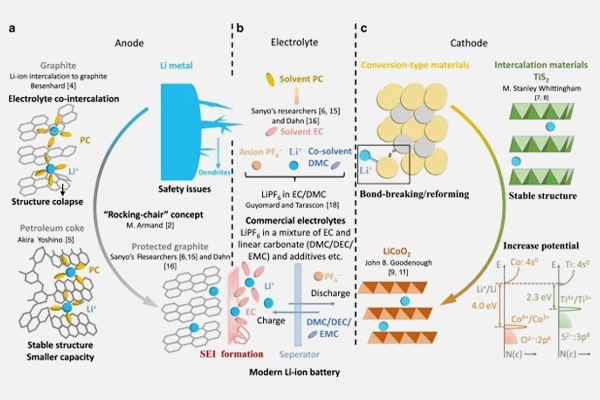
Early primary lithium batteries took advantage of lithium metal's low electrode potential, but a battery that can discharge is not necessarily suitable for repeated charging. In the 1970s, M. Stanley Whittingham demonstrated reversible insertion of lithium ions into layered titanium disulfide (TiS₂) and built a rechargeable cell with a lithium-metal anode. His work established intercalation as a basis for secondary batteries. [1]
The anode remained a problem. Repeated lithium deposition could form dendrites and cause an internal short circuit; the organic electrolyte increased the consequences of failure. Later research therefore had to do more than improve the cathode. It also had to avoid repeatedly depositing metallic lithium at the anode during cycling. [1]
1980–1985: A high-voltage cathode and a carbon anode emerged
In 1980, John B. Goodenough's team reported lithium cobalt oxide (LiCoO₂) as a cathode material. Compared with earlier sulfide cathodes, it enabled a higher cell voltage and laid the groundwork for higher energy density. [1] A better cathode alone, however, could not make a practical commercial cell: anode safety, electrolyte compatibility, and full-cell manufacturing also had to work together.
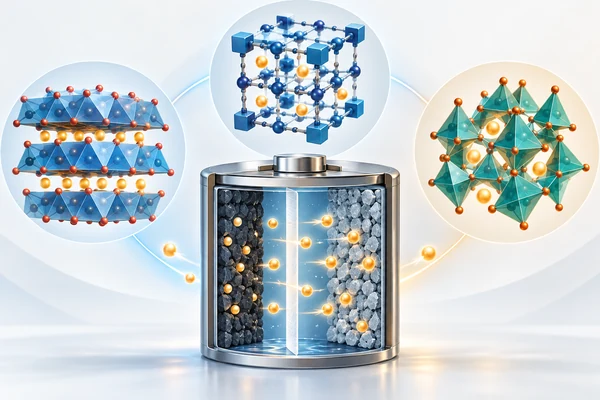
In 1985, Akira Yoshino built a practical prototype using lithium cobalt oxide as the cathode and a carbon material that could host lithium as the anode, avoiding direct deposition of metallic lithium during charging. This early carbon anode was mainly petroleum coke; it should not be equated with the graphite anodes widely used later. [1] During charging, lithium ions leave the cathode and enter the carbon anode. During discharge, they travel back while electrons deliver energy through the external circuit. This "rocking-chair" mechanism remains the basic framework of modern lithium-ion cells.
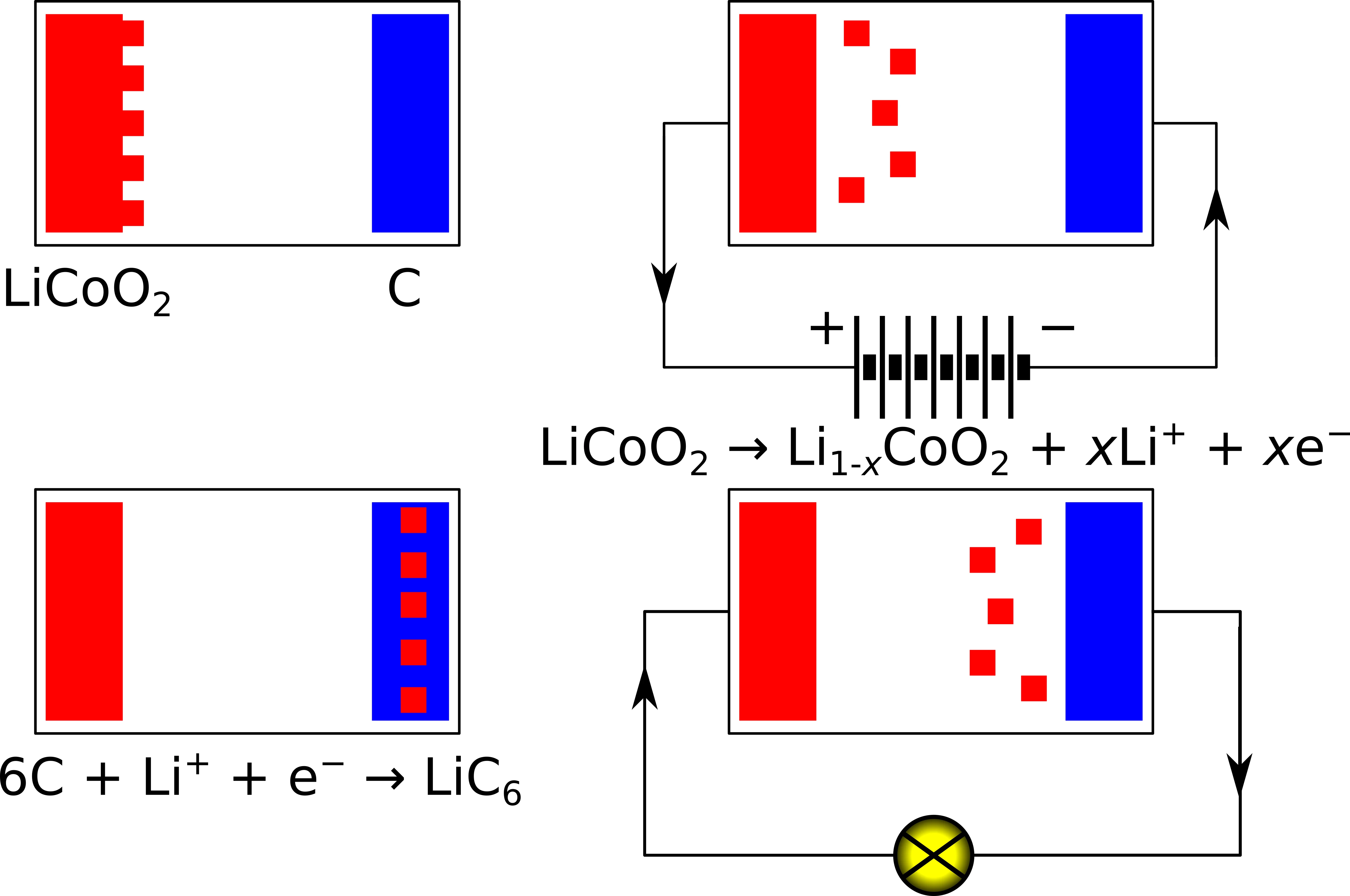
Figure 1. Charge and discharge in a lithium cobalt oxide–graphite cell. Lithium ions move between the two electrodes. The diagram illustrates a later graphite-based configuration, not Yoshino's original petroleum-coke anode.
1991: From a working prototype to a commercial cell
Sony introduced the first commercial lithium-ion battery in 1991. [2] This milestone also meant that manufacturing consistency, packaging, safety design, and production controls had reached a marketable level. Portable video cameras, computers, and mobile phones subsequently drove demand for lightweight rechargeable batteries. [1, 2]
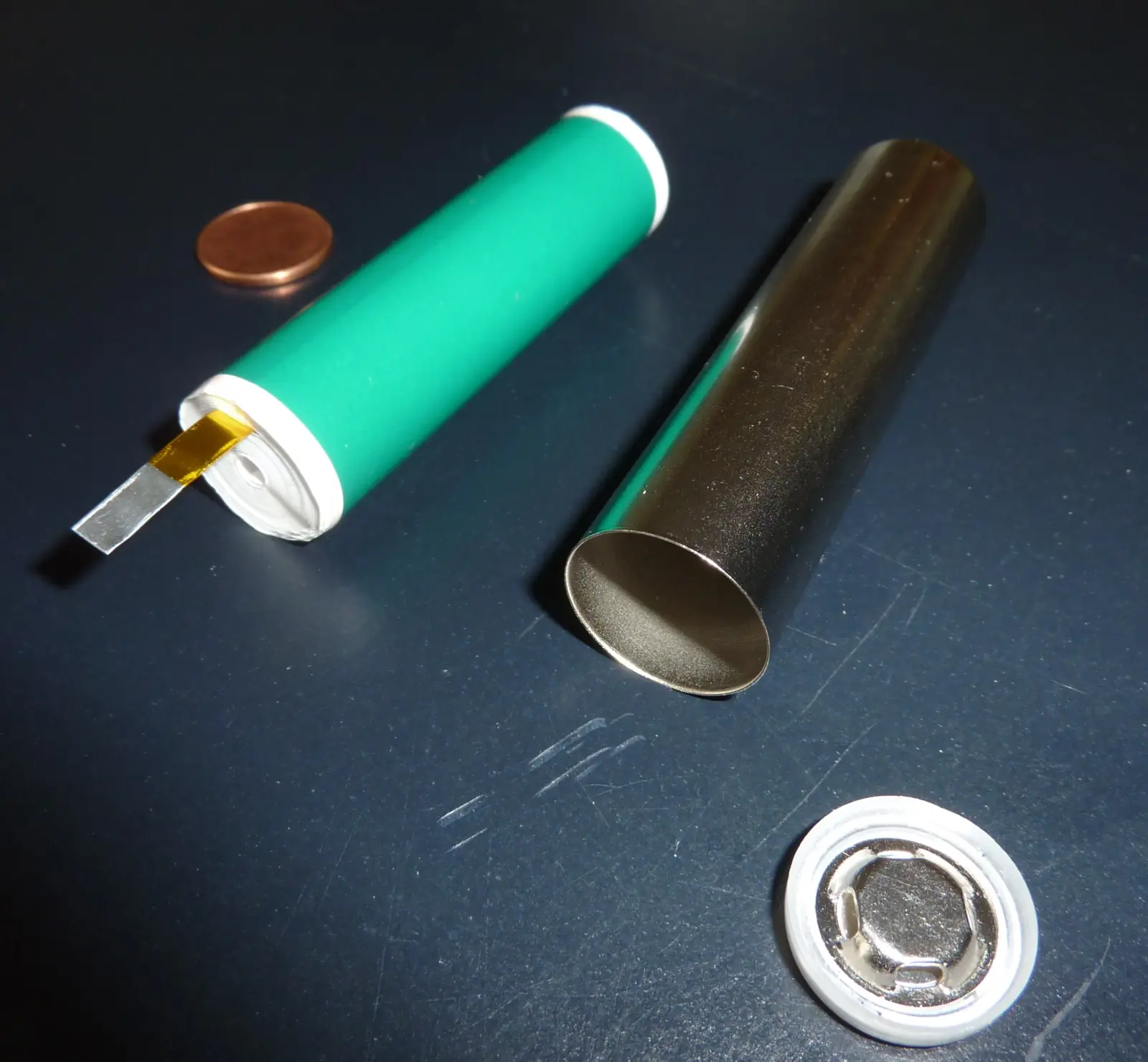
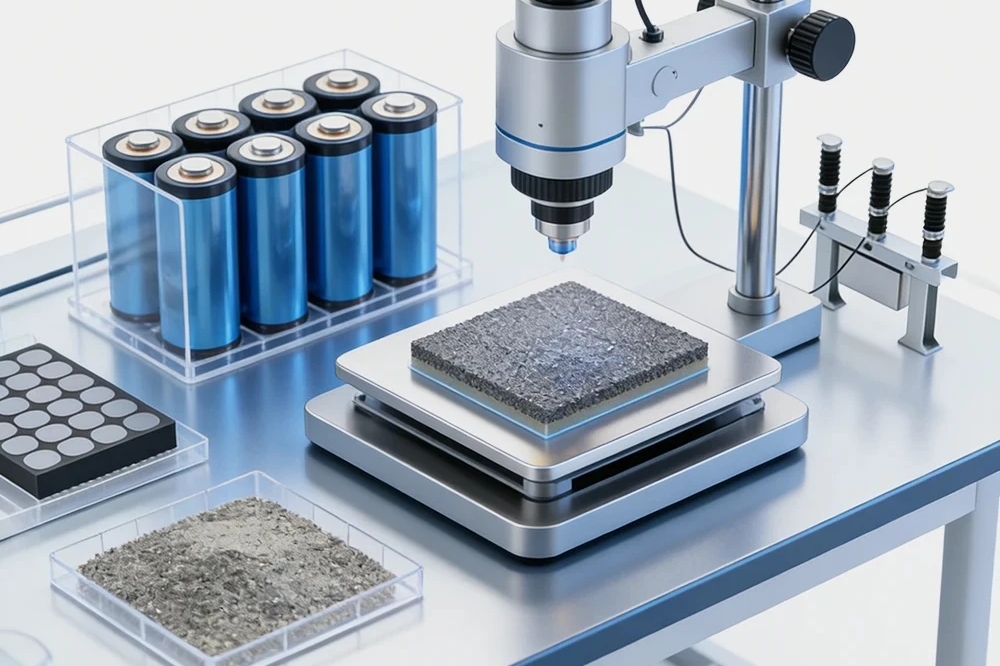
Figure 2. A disassembled 18650 cylindrical lithium-ion cell, showing the cell assembly, metal casing, and end cap. This is an illustrative later cell, not a 1991 Sony product.
In everyday use, "lithium battery" often means a lithium-ion battery. Technically, the earlier rechargeable systems with lithium-metal anodes differ from the lithium-ion cells commercialized in 1991 without a lithium-metal anode. Their structures and main risks are different. Historical performance figures should also be identified as material half-cell results, laboratory prototypes, or commercial full-cell data before they are compared.
From the 1990s onward: Cathode chemistries diversified
Lithium cobalt oxide suited early portable electronics, but applications make different trade-offs among cost, power, life, and thermal stability. In 1997, Padhi, Nanjundaswamy, and Goodenough reported lithium iron phosphate (LiFePO₄) as a cathode, providing a foundation for later phosphate-based cells. [3] Lithium manganese oxide, nickel manganese cobalt oxide, and nickel cobalt aluminum oxide subsequently entered different product lines. Names such as "LFP battery" or "NMC battery" usually identify the cathode chemistry; they do not establish that the anode, electrolyte, or complete battery pack performs in the same way. [4]
Anodes, electrolytes, and engineering designs also continued to evolve. Graphite became a common anode material. Silicon-based materials can increase anode capacity, but their expansion and interface stability need to be managed. As cells were assembled into modules and packs, thermal management, battery management systems, and consistency control became increasingly important.
How this history changed battery testing
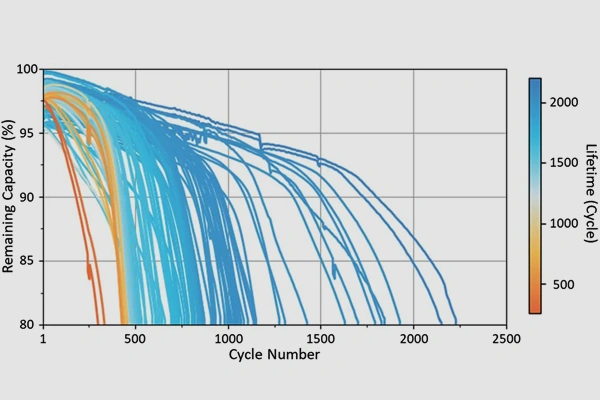
At the materials-research stage, the question was whether a cell could charge and discharge reversibly. Commercialization added questions about capacity, energy, cycle life, safety, and consistency across production batches. Today, a comparison between two batteries cannot rest on the chemistry name or a single discharge-capacity result. The voltage window, charge and discharge rates, temperature, rest periods, and definition of end of life all affect the outcome.
For a cycle-life comparison, specify the cell format, temperature, state-of-charge (SOC) range, cycling protocol, and baseline used to calculate capacity retention. A fast-charging comparison should also examine low-temperature lithium-plating risk, temperature rise, and subsequent capacity loss. Each historical materials advance had to be validated through repeatable full-cell tests before it could become a credible application advantage.
Conclusion
Lithium-ion battery development followed four linked steps: reversible intercalation, a high-voltage cathode, a practical anode without metallic lithium, and chemistry diversification driven by production and applications. The point is more useful than a list of dates. Claims of "higher energy," "longer life," or "greater safety" must be checked against the specific material combination, test conditions, and cell design.
References
[1] The Royal Swedish Academy of Sciences. The Nobel Prize in Chemistry 2019: Popular Information. https://www.nobelprize.org/prizes/chemistry/2019/popular-information/
[2] Sony Group. Announcement of New Lithium Ion Batteries (2004). The release recounts the 1991 commercialization. https://www.sony.com/en/SonyInfo/News/Press/200412/04-060E/
[3] Padhi, A. K., Nanjundaswamy, K. S., and Goodenough, J. B. "Phospho-olivines as Positive-Electrode Materials for Rechargeable Lithium Batteries." Journal of The Electrochemical Society 144 (1997): 1188–1194. https://doi.org/10.1149/1.1837571
[4] U.S. Department of Energy. Energy Storage Grand Challenge Cost and Performance Assessment 2022. https://www.energy.gov/sites/default/files/2022-09/2022%20Grid%20Energy%20Storage%20Technology%20Cost%20and%20Performance%20Assessment.pdf