What is a sodium-seawater battery (SWB)?
In the global quest for low-cost, highly secure Long-Duration Energy Storage (LDES) solutions, the rechargeable sodium-seawater battery (SWB) is emerging as a cutting-edge focus of attention for coastal and marine economies.
In essence, an SWB is a cross-disciplinary electrochemical system that deeply integrates a sodium-ion battery architecture with the open flow field of a fuel cell/electrolyzer. It directly utilizes the massive amount of Na+ in seawater (which contains approximately 3.5% NaCl naturally) as the source of cathode active materials. This completely eliminates reliance on critical precious metals like lithium, cobalt, and nickel typical of conventional lithium-based systems. It exhibits theoretical advantages of high volumetric energy density and ultra-long cycle life, offering a brand-new perspective for building low-cost, long-duration, and safe energy storage systems based on abundant seawater resources.
Core architecture, phase interfaces, and reaction mechanisms
For battery engineers, the most unique engineering design of the SWB lies in its asymmetric dual-compartment structure:
[ Enclosed Anode Compartment ] ⟶ [ Solid Electrolyte Membrane (NASICON) ] ⟶ [ Open Cathode Compartment ]
Enclosed anode compartment: Contains the anode current collector, active sodium-storage materials, and a non-aqueous electrolyte; it must strictly maintain an abolutely water-free environment.
Open cathode compartment: Composed of a cathode current collector directly immersed in circulating, flowing seawater. Unlike the three-phase interface of metal-air batteries, the SWB forms a solid/liquid two-phase interface at the cathode. The continuous flow of seawater effectively replenishes active materials and flushes away irreversible reaction products.
Solid electrolyte separator (NASICON): Blocks electrons and water molecules while serving as the sole channel for Na+ transport.
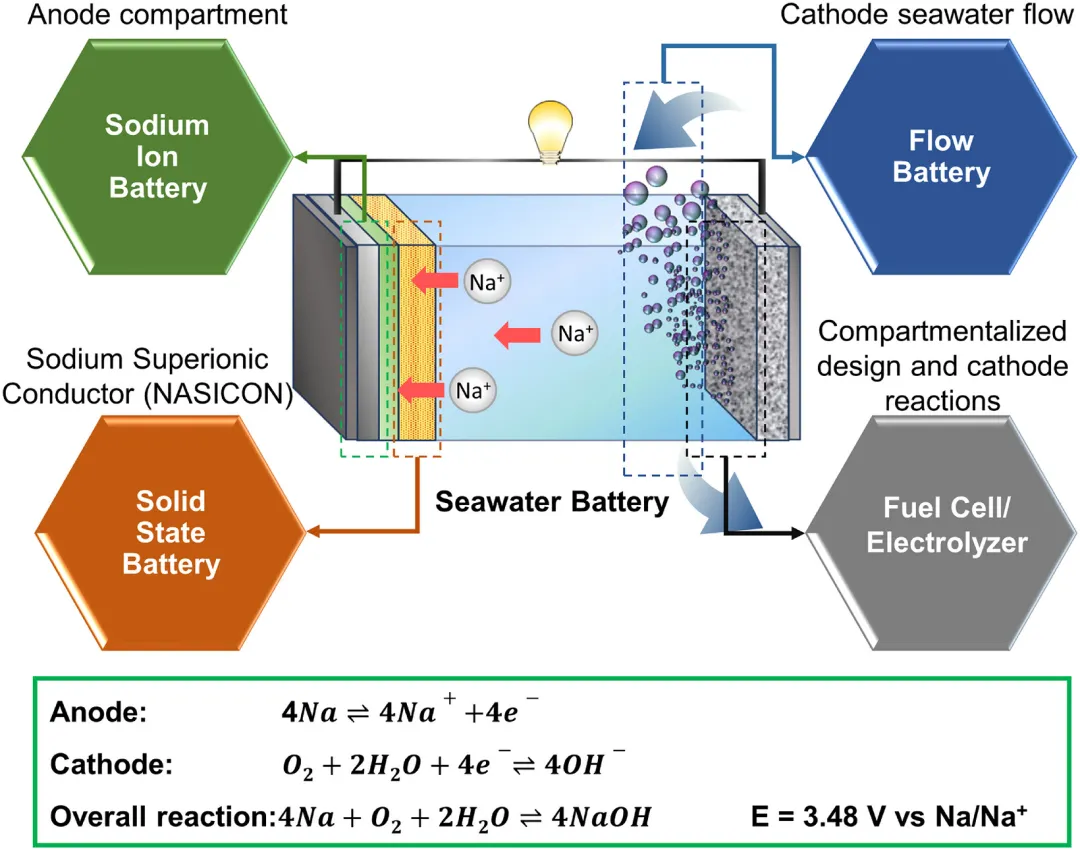
Figure 1: Schematic diagram of a rechargeable seawater battery, illustrating the existing relevant technologies and reactions involved during the operation of the seawater battery.
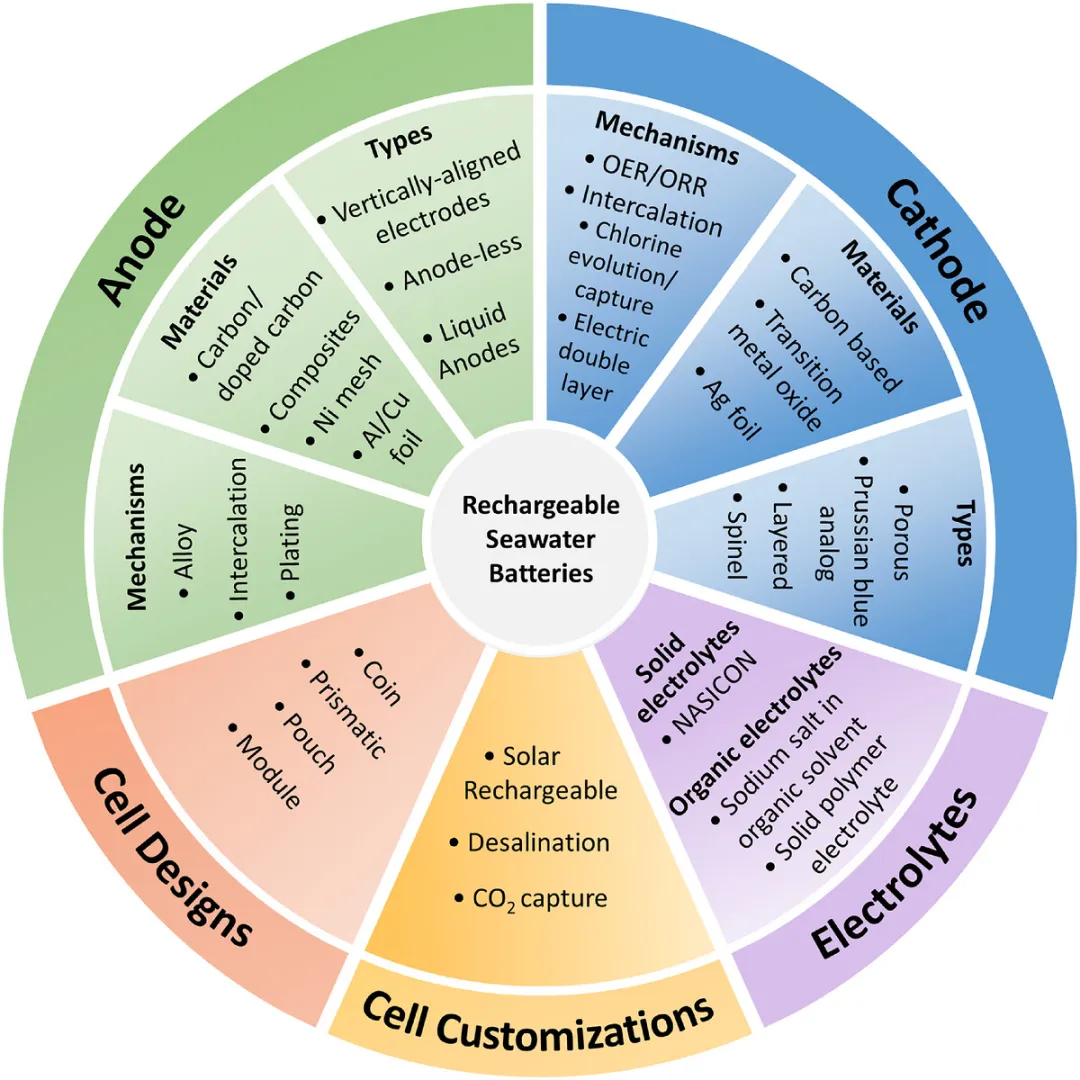
Figure 2: Components of a rechargeable seawater battery and potential R&D (Research and Development) directions.
Electrochemical reaction mechanisms
In a natural seawater system with a pH of approximately 8, although a competing chlorine evolution reaction (ClER) theoretically exists, the cathode side is thermodynamically dominated by the oxygen evolution reaction (OER) and oxygen reduction reaction (ORR). The theoretical standard potential of the full cell is 3.48 V (vs. Na/Na+):
Charging reaction (OER region):
An oxygen evolution reaction occurs to OH- on the cathode side; Na+ passes through the solid electrolyte and is reduced and stored at the anode.
Cathode: 4OH- ⇌ O2 + 2H2O + 4e-
Anode: 4Na+ + 4e- ⇌ 4Na
Discharging reaction (ORR region):
The anode releases Na+; the cathode utilizes dissolved oxygen in seawater to undergo a reduction reaction, generating NaOH.
Cathode: O2 + 2H2O + 4e- ⇌ 4OH-
Anode: 4Na ⇌ 4Na+ + 4e-
Overall full-cell reaction:
4Na + O2 + 2H2O ⇌ 4NaOH
Technical evolution of cathode/anode materials, electrolytes, and NASICON
1. Cathode catalyst systems: reducing Voltage Hysteresis and Alternative Mechanisms
Due to sluggish OER/ORR kinetics, early seawater batteries faced severe voltage hysteresis. Researchers are making breakthroughs from two dimensions:
Bifunctional catalysts: Traditional carbon paper suffers from insufficient mechanical stability and carbon corrosion, whereas titanium alloy current collectors exhibit high contact resistance. Currently, researchers accelerate catalytic kinetics by constructing 3D carbon sponge conductive networks through heteroatom (e.g., O, N, P) self-doping, or by introducing transition metal oxides (such as cobalt manganese oxide [CMO] nanocubes, which achieve a coulombic efficiency greater than 96%). For instance, a Pt-modified 1T-MoS2 catalyst prepared via the carbothermal shock method can significantly suppress voltage hysteresis to 0.39 V, dramatically boosting the maximum power density.
Alternative Mechanism (Chloride Ion Capture): To completely circumvent electrode polarization and structural degradation caused by gas evolution, researchers have developed a highly reversible Ag/AgCl cathode based on silver (Ag) foil. This strategy narrows the voltage hysteresis to 291 mV and delivers a coulombic efficiency as high as 98.75%.
2. Anode systems: moving beyond hard carbon toward anode-free sodium metal
Since the cathode seawater can be regarded as an infinite source of sodium, the actual capacity of the full cell is entirely limited by the intrinsic storage capability of the anode.
Hard carbon: Starch- or biomass-derived hard carbon exhibits a stable capacity of around 300 mAh/g. A vertically arranged hard carbon structure increases the effective electrolyte-electrode contact area, boosting the areal capacity by 50 times compared to conventional monolithic electrodes.
Alloy anodes: Tin (Sn), antimony (Sb), and red phosphorus (P) possess ultra-high theoretical specific capacities (e.g., 950 mAh/g for red phosphorus). Within an SWB system that sustainably replenishes Na+, they can effectively alleviate the capacity decay caused by initial irreversible capacity loss common in conventional sodium-ion batteries.
Anode-Free deposition technology: This involves directly depositing sodium metal in situ onto modified current collectors (such as graphene-modified Cu or Al/C foils) during the initial charge. Sodium metal boasts a theoretical capacity of 1166 mAh/g, making it the ultimate solution for maximizing volumetric energy density.
3. Technical boundaries of electrolytes and solid separators (NASICON)
Non-aqueous electrolytes for the anode primarily focus on ether-based systems (e.g., 1 M NaCF3SO3 in TEGDME) or ionic liquids (NaTFSI/Pyr14TFSI) to build a stable SEI film and suppress anion erosion of the NASICON. Among these, redox-mediator electrolytes possessing both electronic and ionic conductivity (such as Na-BP) show stunning performance. They effectively strip isolated "dead sodium," achieving near 100% coulombic efficiency under an extreme areal capacity of 24mAh/cm2.
As the core barrier, the NASICON solid electrolyte breaks the thermodynamic limit of <2 V in aqueous batteries thanks to its wide electrochemical window and excellent water stability. Compared to β''-Al2O3, which is prone to H+/H3O+ intercalation that causes conductivity collapse, the crystal structure of NASICON (monoclinic or rhombohedral) is much more stable. By doping elements like Ti and Mg to regulate grain boundary resistance, its room-temperature ionic conductivity can be stabilized at the 0.001 S/cm level.
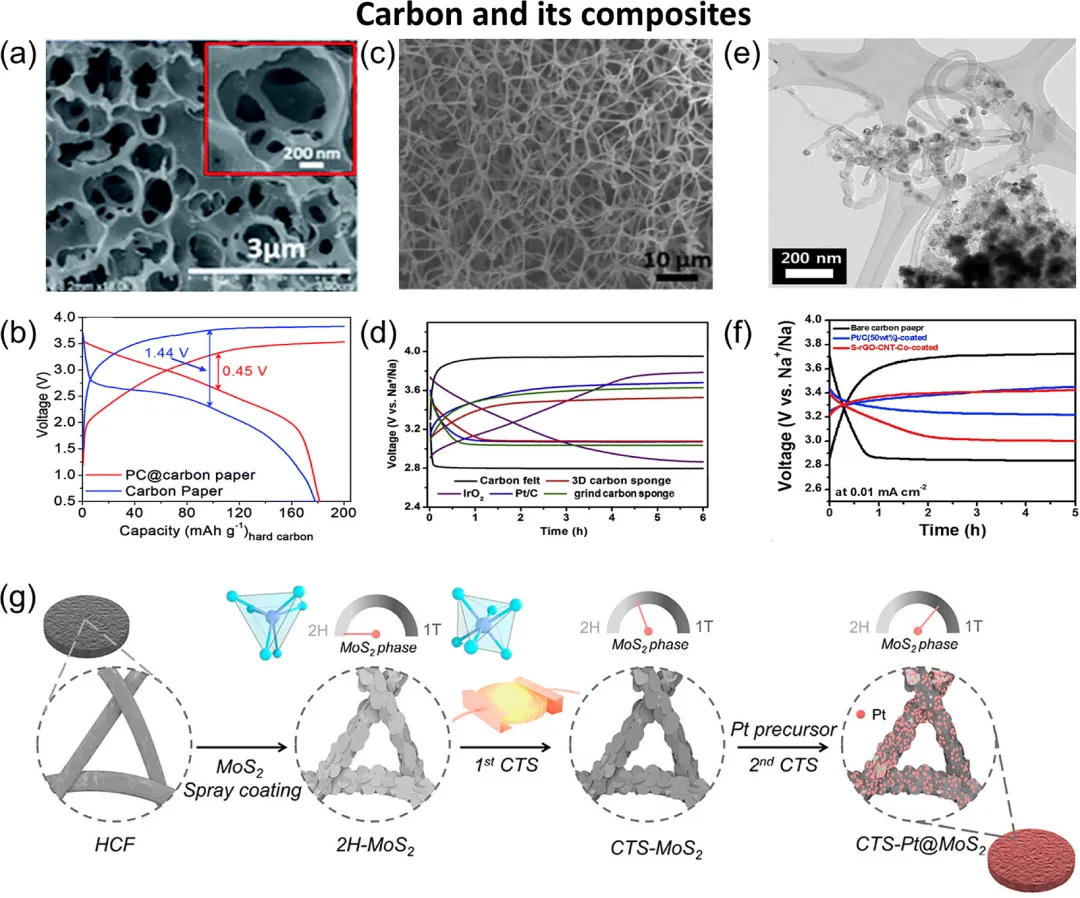
Figure 3: Electron micrographs and charge-discharge curves of various cathode catalysts.
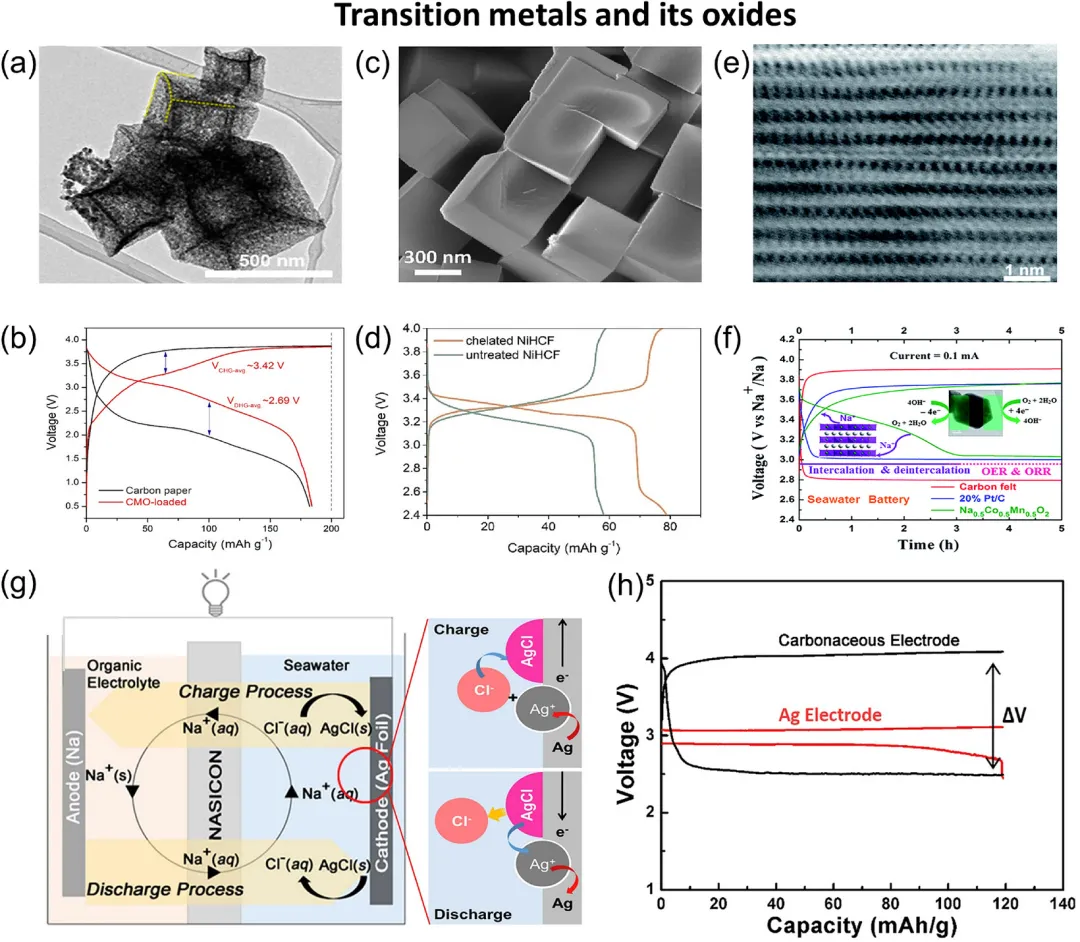
Figure 4: (a) TEM image of porous CMO nanocubes; (b) Comparison of charge/discharge curves between CMO-loaded carbon paper and bare carbon paper; (c) SEM image of NiHCF prepared using a chelating agent; (d) Comparison of charge/discharge curves between chelated NiHCF and untreated NiHCF; (e) STEM image of P2-type layered Na0.5Co0.5Mn0.5O2; (f) Comparison of charge/discharge curves of Na0.5Co0.5Mn0.5O2 versus carbon felt and Pt/C; (g) Schematic diagram of a seawater battery using a chloride ion-capturing electrode; (h) Comparison of charge/discharge curves between the chloride ion-capturing Ag electrode and a carbon electrode.
Core engineering pain points and solutions
To push SWBs from laboratory prototypes to engineering commercialization, R&D teams and engineers must undergo a rigorous gauntlet of testing. Addressing the intrinsic deficiencies of various components within the system, NEWARE's high-precision, high-specification testing equipment provides comprehensive quantitative evaluation support.
Pain point 1: capturing faint polarization signals and assessing Long-Term stability of bifunctional catalysts
Technical bottleneck: Seawater oxygen reaction (OER/ORR) kinetics are extremely sluggish. Under the impact of high-salinity flushing and fluid shear forces in natural seawater, catalysts are prone to micro-deformation, localized detachment, or substrate carbon corrosion. These microstructural degradations manifest macroscopically as continuous discharge voltage drift and continuously increasing polarization. Conventional testing equipment often fails to quantitatively identify and track these trends early due to insufficient sampling rates and accuracy.
Solution: The core of assessing the long-term evolution of bifunctional catalysts lies in accurately isolating microvolt-level (μV) voltage polarization trends under long-cycle fluid operating conditions. The NEWARE BTS9000 Battery Testing System offers a measurement accuracy up to ±0.02% FS and high-frequency data acquisition capabilities up to 1000 Hz (1000 data points per second, optional). Combined with its millisecond-level hardware response, R&D engineers can monitor microvolt fluctuations in internal ohmic resistance and charge transfer resistance in real time via dynamic polarization curve analysis and galvanic step tests. This provides highly reliable data support for research teams to quantitatively deduce the decay kinetics of catalysts under fluid flushing and predict electrode degradation in advance.
Pain point 2: Dynamic Overpotential Evolution and Long-term Cycle Life Assessment in Anode-Free Sodium Deposition
Technical bottleneck: During the operation of anode-free or sodium metal anodes, the uncontrolled growth of sodium dendrites and the high formation rate of "dead sodium" significantly degrade coulombic efficiency (CE), and even pose an engineering risk of piercing the rigid NASICON ceramic separator. In the early stages of R&D (such as coin cells or micro-testing setups), testing typically begins with small capacities that cannot withstand large current shocks. Therefore, the system is extremely dependent on the current output accuracy of micro-current channels and the capturing capability of minute voltage fluctuations.
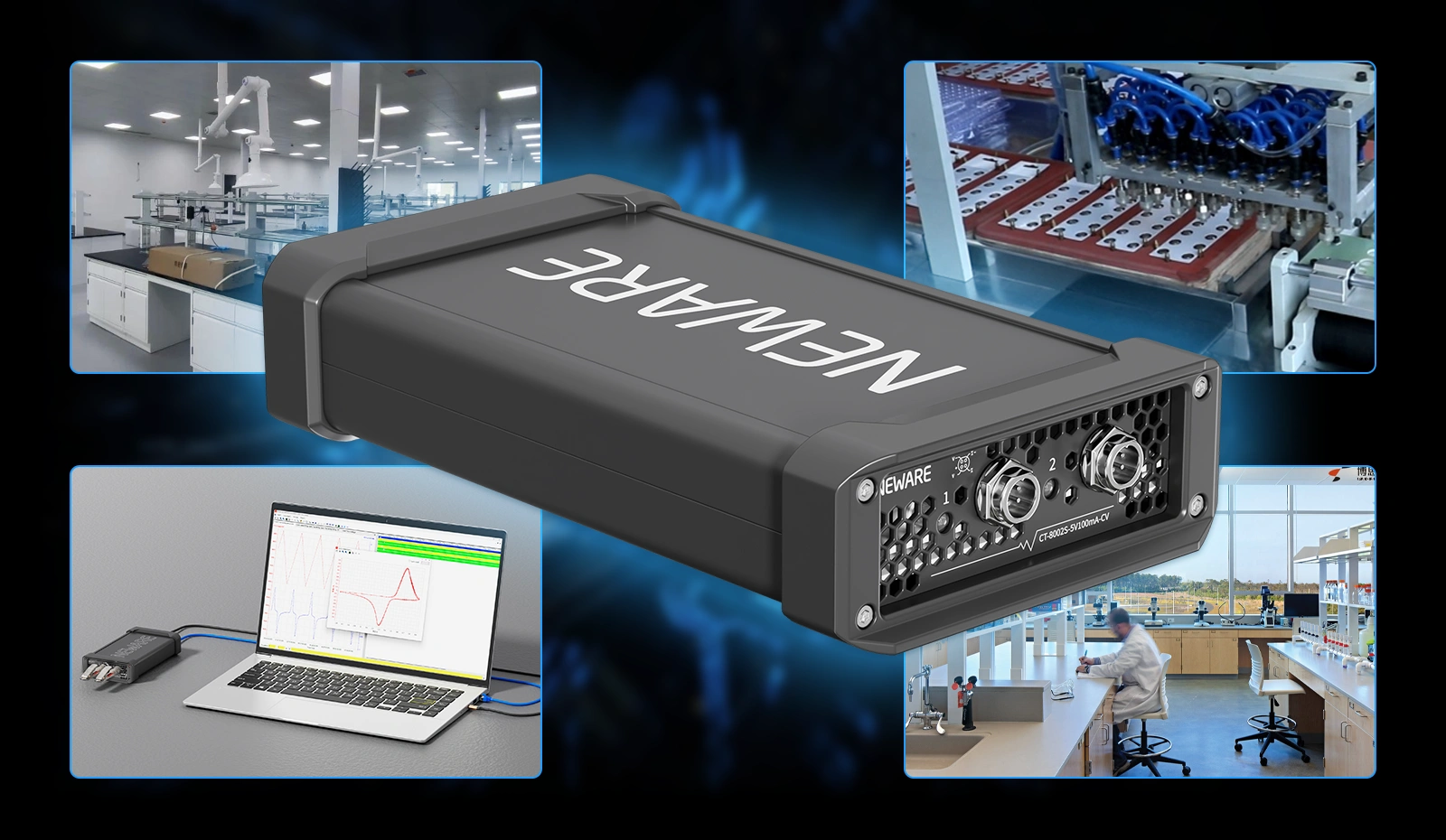
Solution: To evaluate the reversibility of sodium metal on the current collector surface, R&D teams need to monitor the constant current plating/stripping voltage characteristic curves over long periods with high frequency and ultra-high stability under a micro-current range. Through NEWARE's precision-grade micro-current testing system (such as the CT-8002S-5V100mA-CV specialized model), since the full scale is only 100 mA, the equipment perfectly avoids base noise distortion caused by large-current hardware. The system maintains high-precision constant current output throughout hundreds of cycles and thousands of hours of micro-current stripping tests, accurately determining the initial coulombic efficiency (ICE) and long-term dynamic CE. At the same time, its high-frequency sampling can sensitively capture transient overpotential mutations or sharp voltage fluctuation signals (Voltage Noise) caused by the germination of micro-dendrites, providing an early failure warning before the solid separator breaks down.
Pain point 3: Polarization and DCR Simulation Testing for Modular Multi-Cell Stacks under Multi-Variable, Complex Operating Conditions
Technical bottleneck: Scaling up from single cells to large-power energy storage stacks exposes system performance to multi-variable coupled interference from flow rates, salinity, dissolved oxygen, local pH, and temperature differences. Even for an early module system like 5S4P (5 series 4 parallel), the increase in total Direct Current Internal Resistance (DCR) caused by internal bipolar plates and flow channels will lead to a drop of up to 37% in maximum output power. As the stack scales up further, the multi-physical field coupled interference will increase exponentially.
Solution: Solving the inconsistency in scale-up manufacturing requires system-level linkage across large-power, multi-channel systems. NEWARE's high-specification, large-power battery testing system, the CE-6000 series, provides an extremely wide voltage and current testing range, specifically designed for complex condition simulation at the stack level. The system possesses excellent external equipment cooperative control capabilities, enabling deep integration with fluid control systems (to adjust seawater flow velocity) and environmental test chambers (to adjust ambient temperature) via communication buses. While simulating different seawater velocities, ambient temperatures, and intermittent wind/solar inputs, the CE-6000 can conduct simultaneous multi-channel performance audits on the energy storage modules. By utilizing high-frequency recording of voltage drops under dynamic step currents, it precisely quantifies the marginal contribution of DCR to the overall Round-Trip Efficiency (RTE), providing high-precision data streams for stack flow field structure optimization and thermal management design.
Customized multi-functional scenarios and global energy storage feasibility outlook
Benefiting from the independent flow-field design of its dual compartments, the sodium-seawater battery (SWB) is no longer just a pure electrical energy storage device when deployed in engineering. Instead, it can seamlessly integrate into coastal cities and marine engineering, showcasing a hardcore, cross-disciplinary customized application scenario known as the "Climate-Water-Energy Nexus":
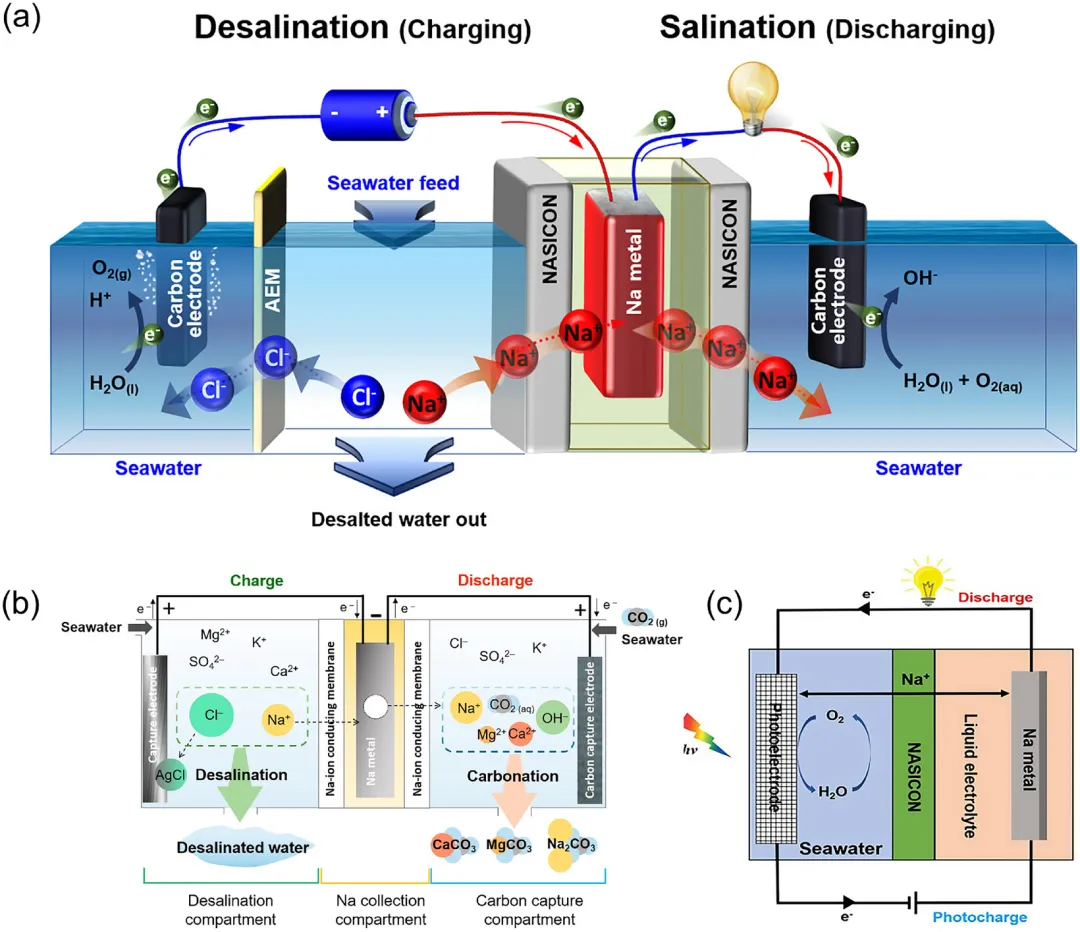
Figure 6: (a) Schematic diagram of a rechargeable seawater battery desalination system; (b) Rechargeable seawater battery desalination system with carbon capture function; (c) Solar-powered rechargeable seawater battery.
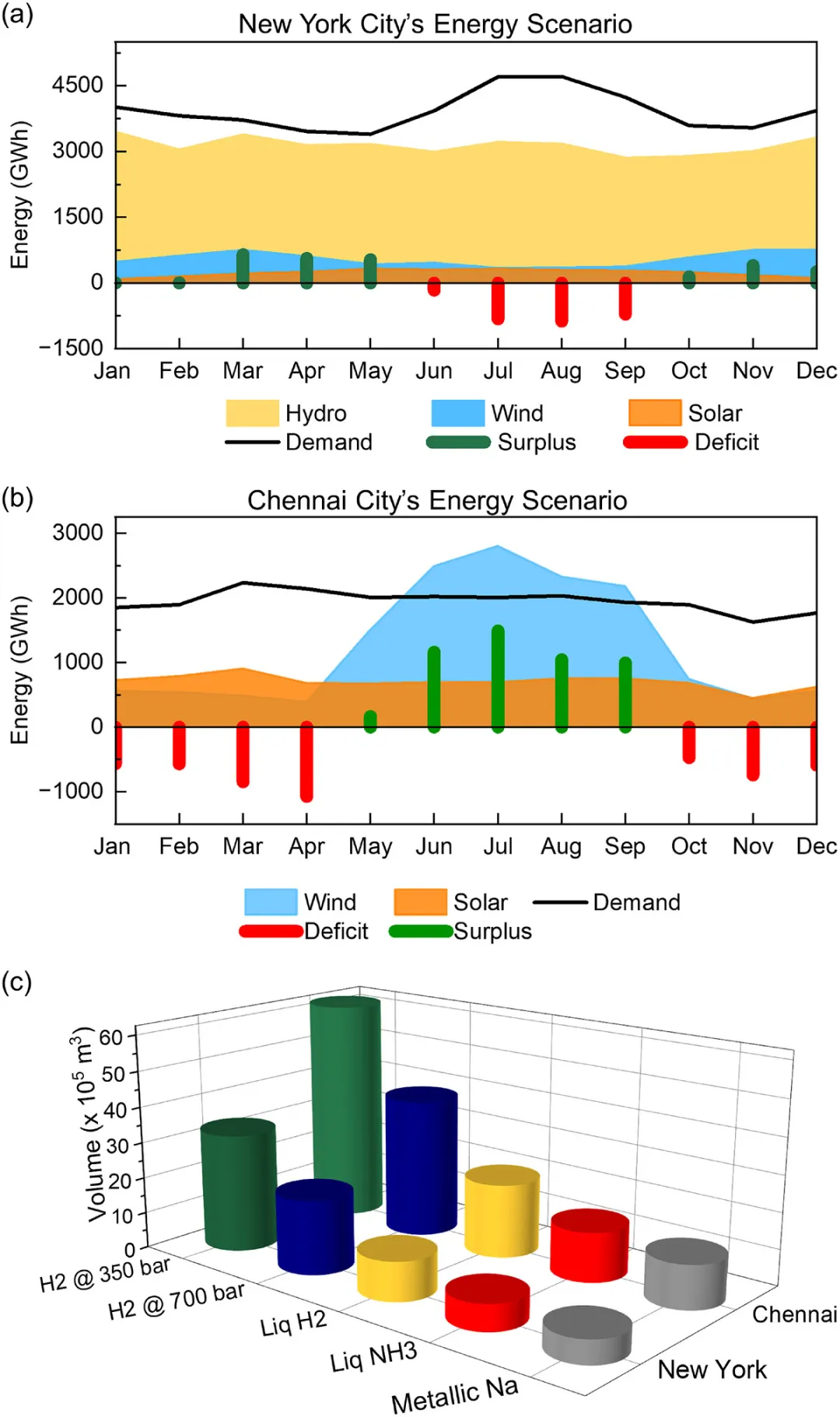
Figure 7: (a) Monthly electricity demand of New York City and (b) Chennai city, assuming renewable energy generation matches the annual electricity demand; (c) Comparison of the volumes required by different energy storage technologies to store surplus or deficit energy.
Scenario 1: coastal "zero-carbon" electric vehicle (EV) supercharging stations (user-side energy storage scenario)
Scenario pain points: High-density supercharging stations in coastal port cities pose massive challenges to local grid expansion, and green power like offshore wind and marine solar is highly intermittent.
SWB solution: The original literature conducted quantitative calculations for this scenario. Assuming a site equipped with 10 Tesla Superchargers operating at full capacity throughout the day, the average daily power consumption is approximately 48 MWh.
Commercial value: If an anode-free sodium metal seawater battery is utilized as a stationary energy storage station, it can absorb surplus offshore wind/solar energy during the day and discharge at high power for EVs at night and during peak hours. This serves as a highly efficient user-side "energy buffer" to relieve grid distribution pressure. Furthermore, because it does not require expensive lithium, cobalt, or nickel resources, its comprehensive construction and operation costs will be substantially lower than conventional lithium-based storage stations.
Scenario 2: terawatt-hour (TWh)-scale urban long-duration energy storage for remium-land port metropolises (LDES Scenario)
Scenario Pain Points: Coastal metropolises, such as New York City in the USA or Chennai in India, suffer from massive cross-seasonal renewable energy supply-demand gaps (severe mismatches between summer peak power usage and winter wind/solar surpluses). To store city-scale, terawatt-hour (TWh) levels of long-duration electricity, conventional lithium batteries fall short in volumetric energy density and demand massive footprints.
SWB Solution: Scientists modeled and deduced the monthly electricity supply and demand for these two major metropolises. Under the premise of meeting the same long-duration storage needs for surplus/deficit power, and leveraging the high volumetric energy density of anode-free sodium metal seawater batteries, the required macro-volume is only 1/5 of a 350-bar compressed hydrogen system (and far below that of liquid ammonia storage systems).
Commercial Value: This data proves that in premium-land, land-scarce coastal port metropolises, SWBs can be deployed directly as containerized or underground integrated macroscopic long-duration energy storage power stations. They can solve grid peak-shaving, load-shifting, and frequency-regulation challenges for an entire city spanning weeks or even months while occupying minimal space.
Scenario 3: islands, offshore drilling platforms, and coastal industrial complexes (three-in-one scenario: energy storage + water desalination + carbon capture)
Scenario pain points: Remote islands or offshore platforms face extreme shortages of fresh water and energy, and the cost of capturing CO2 emitted by traditional industries is exorbitant (the traditional chlor-alkali industry carbon fixation pathway consumes massive amounts of electricity).
SWB solution:
1. Low-Energy, Self-Driven Seawater Desalination: During the charging and energy storage phase, accompanied by the migration of Na+ to the anode and paired with an anion exchange membrane (AEM) introduced on the cathode side, the system can self-drive the extraction of Cl- from seawater while storing surplus wind and solar power. This achieves seawater desalination with an energy consumption as low as 21.3 kWh/m3, directly supplying water to islands or industrial zones.
2. Spontaneous, Low-Cost Carbon Fixation and Acid-Base Neutralization: Furthermore, the NaOH generated during discharge can naturally capture CO2 from industrial flue gas or ambient air, converting it into high-value carbonates or bicarbonates (like Na2CO3). This carbon fixation process requires absolutely no additional external energy consumption.
Commercial value: This scenario perfectly fuses "electrical energy storage," "low-energy fresh water supply," and "zero-carbon carbon fixation". It represents the ultimate potential technical roadmap supporting marine economies in advancing toward "Net-Zero" goals.
Conclusion
From microscopic multiphase electrocatalytic kinetic screening to macroscopic TWh-scale high-power storage stack multivariate coupled testing, every step of the sodium-seawater battery’s journey from the lab to commercialization is redefining electrochemical boundaries. As a globally leading supplier of battery testing instruments, NEWARE will continuously upgrade its hardware foundations—characterized by an ultra-high precision of 0.02%—and its multivariate linked software systems.
References
Kumar, A., Nayak, A. K., et al. (2026). Rechargeable Sodium–Seawater Batteries: An Emerging LDES Technology for Sustainable Coastal and Marine Systems. Small, Progress Report.
(Note: The basic reaction mechanism diagrams and urban electricity supply-demand balance deduction models involved in this article are copyrighted by the original authors and the journal Small. NEWARE utilizes them solely for cutting-edge technology popularization and discussions on breaking through industry application scenarios.)