Solid-State Battery Bottlenecks: Why Commercialization Is Delayed
While all-solid-state architectures remain the long-term vision for electric mobility, their commercial deployment continues to face critical material science and manufacturing barriers. Understanding these fundamental challenges highlights why a transitional yet permanent solution—such as the condensed state—is necessary for near-term gigawatt-scale production.
Technical Drawbacks of Sulfide, Oxide, and Polymer Routes
Current all-solid-state technical routes fall into three main categories, each with intrinsic limitations hindering large-scale deployment:
Sulfide Route: Offers high room-temperature ionic conductivity, but is extremely sensitive to moisture, releasing toxic H2S gas. This mandates ultra-dry processing environments (dew point below -60℃) and causes rapid impedance growth from interfacial side reactions with lithium anodes.
Oxide Route: Exhibits high chemical stability, but its inherent brittleness leads to low yields in thin-sheet fabrication. Furthermore, rigid "solid-solid" contact deteriorates during charge/discharge volume changes, spiking interface impedance.
Polymer Route: Provides superior flexibility, but its room-temperature conductivity remains low (10-6 ~ 10-5 S/cm), requiring elevated temperatures (>60℃) to function, alongside low resistance to lithium dendrites.
The Trade-Off: Conductivity vs. Strength vs. Interface Stability
Within conventional material frameworks, ionic conductivity, mechanical strength, and interfacial stability are mutually restrictive. Improving conductivity often requires sacrificing mechanical strength or introducing reactive interfaces, while reinforcing mechanical integrity typically comes at the expense of ion mobility.
Rethinking Electrolyte Architecture: The Condensed State Option
Rather than completely eliminating liquid components, the condensed route asks: Is it possible to retain the rapid ion transport of liquids while eliminating flammability and fluidity risks through molecular engineering?
Supramolecular Chemistry: The Core Science of Condensed Batteries
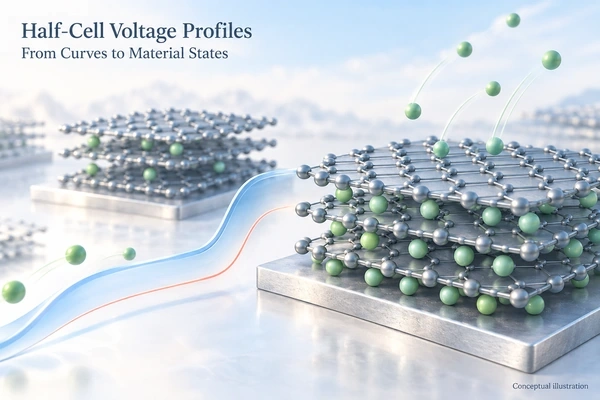
To overcome the transport bottlenecks of conventional polymers without incurring the brittleness of inorganic ceramics, condensed battery technology turns to supramolecular chemistry. By utilizing reversible non-covalent network interactions, this approach builds high-efficiency ion pathways within a semi-solid matrix.
Non-Covalent Interactions and Self-Assembly
Unlike simple mechanical mixing, condensed batteries utilize supramolecular self-assembly driven by π-π stacking, hydrogen bonding, and electrostatic interactions. These non-covalent forces impart micro-scale order and macroscopic stress-dissipation capabilities.
Designing Ordered Channels for High Ionic Conductivity
By using structured cores (such as triphenylene) that stack into 1D columnar structures, flexible functional side chains form internal channels. This raises the room-temperature ionic conductivity to 6.5 X 10⁻³ S/cm-two orders of magnitude higher than conventional polymers.
Electrolyte Membrane Engineering: Elasticity and Self-Healing
Translating supramolecular chemistry into usable cell components requires robust film fabrication techniques. The electrolyte membrane must maintain high mechanical flexibility to sustain cell cycling stresses while preserving dimensional integrity.
Crystallinity Control in Polymer-Supramolecular Composites
By tuning matrix crystallinity between 5% and 25%, the electrolyte achieves structural integrity from crystalline domains while preserving amorphous regions for ion transport.
Dynamic Re-bonding for Micro-Crack Repair
Under mechanical stress from cycling, non-covalent bonds absorb energy and break. At operational temperatures (50 ~ 55℃), these dynamic bonds re-engage, automatically repairing micro-cracks and extending lifespan.
Anode Interface Protection: In-Situ LiF-Rich SEI Formation
A high-performance electrolyte is only as effective as its interface with active electrode materials. When paired with high-capacity silicon or lithium metal anodes, controlling side reactions and preventing dendrite growth become critical engineering priorities.
Fluorinated Side Chains for Stable Interphases
Terminal fluorination on supramolecular side chains decomposes during initial formation cycles, generating a dense, lithium fluoride (LiF)-rich solid electrolyte interphase (SEI) that suppresses lithium dendrites.
Cycle Life Performance with High-Active Anodes
When paired with advanced anodes, the system maintains >80% capacity after 1,000 cycles at 0.5C, preserving a smooth, non-porous surface morphology.
Intrinsic Safety Profile: Thermal Stability and Non-Flammability
Safety remains the single most critical factor for adopting ultra-high energy density batteries in electric vehicles and aviation applications. Condensed chemistry inherently mitigates fire risks by replacing volatile solvents with non-flowing, thermally stable polymer-liquid networks.
Zero Vapor Pressure and High Thermal Decomposition Thresholds
The condensed network exhibits zero measurable vapor pressure and a decomposition onset above 390℃, preventing off-gassing and thermal ignition under high temperatures.
Physical Barriers Against Thermal Runaway
The non-flowing gel state prevents electrolyte leakage during physical puncture, effectively interrupting thermal runaway propagation pathways.
Industrial Scalability: Energy Density and Gigafactory Integration
Beyond chemical excellence, the commercial viability of any battery technology depends on its manufacturing compatibility and system-level integration. Condensed batteries achieve high performance at both the cell and pack levels while utilizing existing factory infrastructures.
Integrating Condensed Chemistry with Qilin CTP 3.0 Architecture
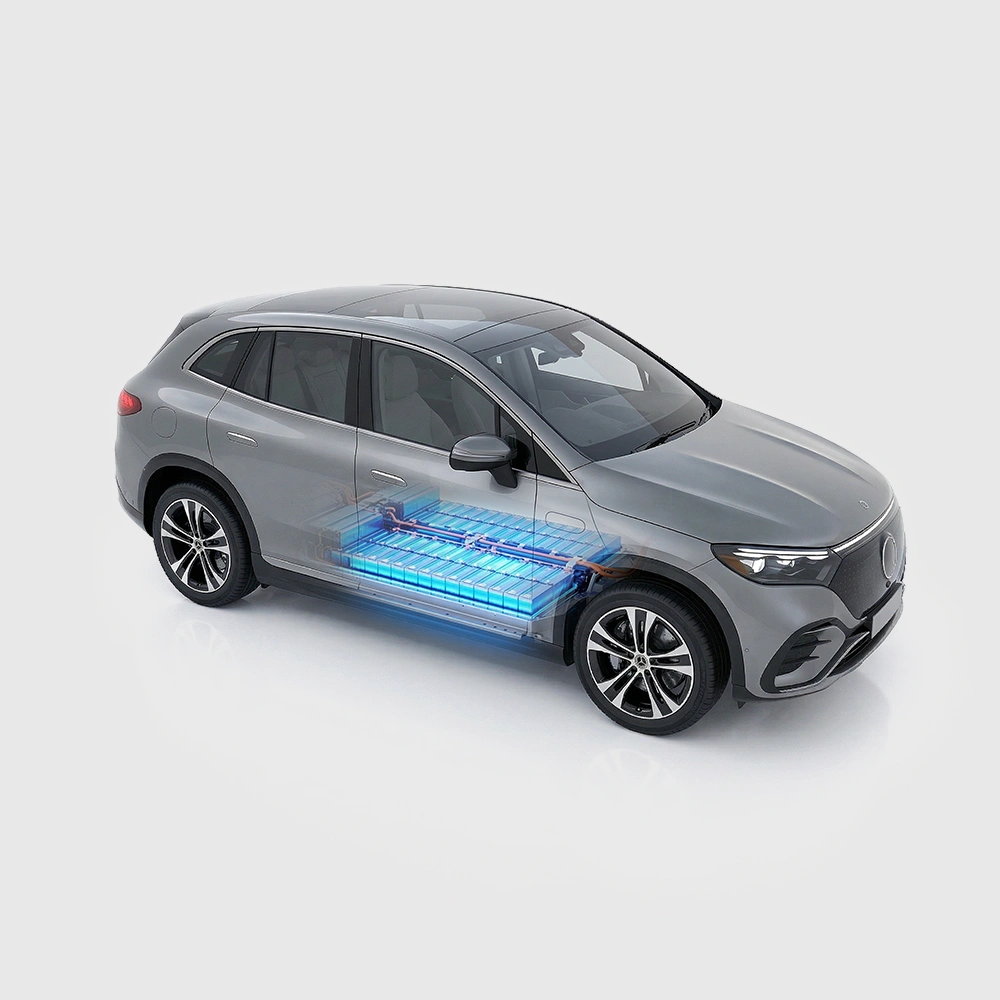
Combined with cell-to-pack (CTP) structural optimization, cell-level energy density reaches 350 ~ 500 Wh/kg with a pack-level volumetric energy density of 760 Wh/L, opening pathways for electric vehicle and eVTOL applications.
Low-CAPEX Manufacturing on Existing Li-ion Production Lines
Preparation processes (mixing, coating, thermal pressing) align with current manufacturing standards, requiring minimal retrofitting compared to sulfide dry-room demands.
Summary: Technical Comparison and Market Outlook
Evaluating condensed technology alongside existing liquid and emerging sulfide solid-state systems clarifies its current position in the market landscape. The matrix below highlights key tradeoffs between ionic transport, safety, and scalability.
| Metric | Conventional Liquid | CATL Condensed | Sulfide Solid-State |
| Cell Energy Density | ~260-300Wh/kg | 350-500Wh/kg | 400-500 + Wh/kg |
| Ionic Conductivity | 10-2 S/cm | 6.2 X 10⁻³ S/cm | 10-3~10-2 S/cm |
| Gigafactory Compatibility | High | High | Low |
| Commercial Status | Mass Production | Commercial Deployment | R&D / Pilot |
Condensed battery technology serves as a pragmatic bridge, balancing high energy density, intrinsic safety, and rapid scalability for the next decade of electrification.