Smartwatch battery market: Small size, big business
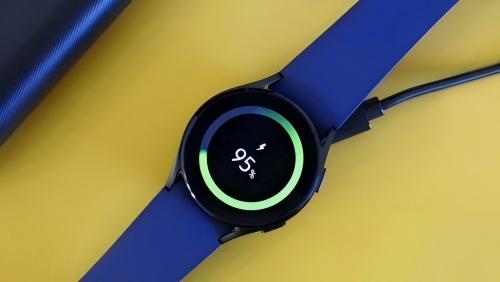
Smartwatches represent the largest battery demand category among wearable devices. Modern smartwatches integrate display screens, heart rate monitoring, GPS positioning, eSIM communication, motion tracking, and numerous other functions, placing high demands on battery capacity, endurance, and safety. The global smartwatch battery market was valued at approximately $4.603 billion in 2025 and is projected to reach $7.731 billion by 2032. As health monitoring features continue to expand (e.g., blood pressure monitoring, temperature sensing, sleep tracking), power requirements will only increase.
Mainstream smartwatch battery specifications
Smartwatch batteries predominantly use lithium‑ion polymer pouch cells, which offer customizable dimensions, high energy density, and a mature supply chain. Battery capacities vary significantly across brands and models:
| Brand/Model | Battery | Typical Endurance | Charging Specs |
| Apple Watch Series 11 | Built‑in Li‑ion | 24h normal / 38h low‑power | 80% in 30 min |
| Apple Watch Ultra 3 | Built‑in Li‑ion | 42h normal / 72h low‑power | 80% in 2 h |
| Samsung Galaxy Watch8 Classic | 445 mAh | / | / |
| Samsung Galaxy Watch Ultra | 590 mAh | 100h normal | WPC wireless fast charge |
| Xiaomi Watch S5 | 815 mAh | 21 days (Bluetooth mode) | / |
Performance characteristics of smartwatch batteries
The balance between capacity and endurance is the most critical metric. Larger capacity means longer battery life but also increases device size and weight. The Samsung Galaxy Watch Ultra's 590 mAh battery delivers up to 100 hours in power‑saving mode; the Xiaomi Watch S5's 815 mAh battery provides up to 21 days of use in Bluetooth mode.
Charge/discharge rates – smartwatch batteries typically do not require high‑current discharge, but demand higher precision for low‑power standby and low‑current charging/discharging. The Apple Watch Series 11 supports fast charging, reaching 80% charge in 30 minutes.
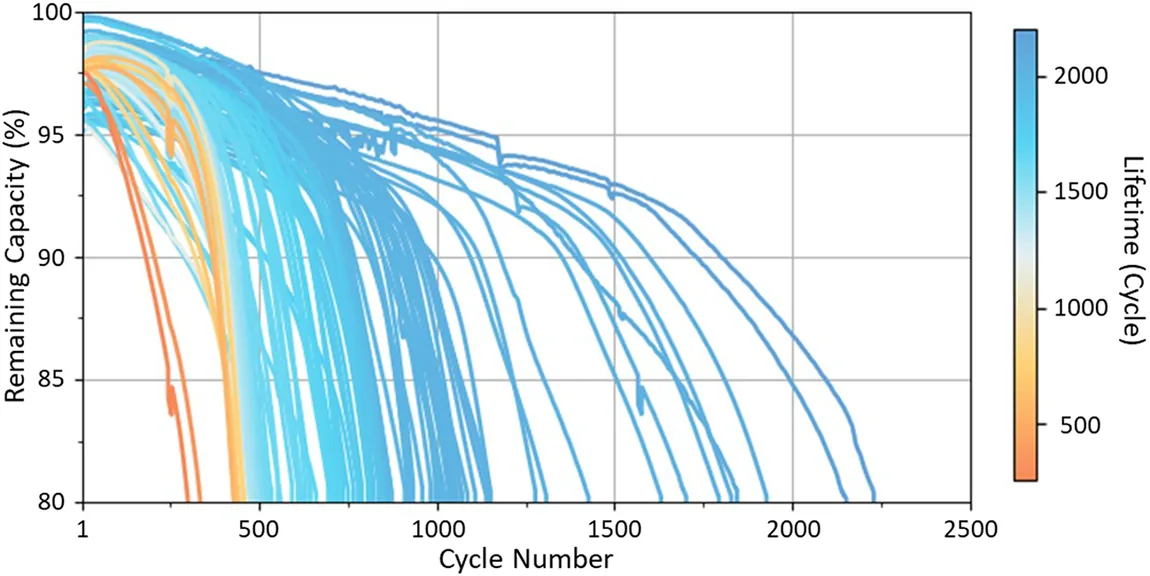
Cycle life is another key indicator. Smartwatches are usually charged daily or every few days, so batteries must maintain normal performance for 2‑3 years of service life.
What equipment is needed to test smartwatch batteries?
The miniaturization and stringent safety requirements of smartwatch batteries impose specific demands on testing equipment.
High‑precision low‑current testing capability
Smartwatch batteries have small capacities (typically several hundred mAh) and standby currents as low as microampere levels. Test equipment must achieve µA‑level current measurement accuracy to properly evaluate self‑discharge rates, standby power consumption, and other critical parameters. Professional systems such as the CE‑4000/8000 series support µA‑level current output, meeting the testing needs of wearable devices and battery materials research.
Temperature chamber testing capability
Smartwatches must function properly across a wide range of ambient temperatures. Testing equipment must support high‑low temperature testing from -20°C to 60°C to verify battery performance stability under different temperature and humidity conditions.
Safety performance testing functions
Since smartwatches are in direct contact with the human body, battery safety is paramount. Testing equipment must support overcharge, over‑discharge, external short‑circuit, and other safety tests in compliance with international standards such as IEC 62133.
Compliance with international standards
Smartwatch battery testing must comply with multiple international standards: IEC 62133 (safety standard for portable lithium batteries), IEC 61960 (electrical performance standard for portable batteries), UN 38.3 (lithium battery transport safety), and GB 31241 (safety requirements for lithium batteries used in portable electronic products).
Multi‑channel parallel testing capability
Smartwatch battery production testing often requires high‑volume parallel testing, so equipment must support independent multi‑channel control.