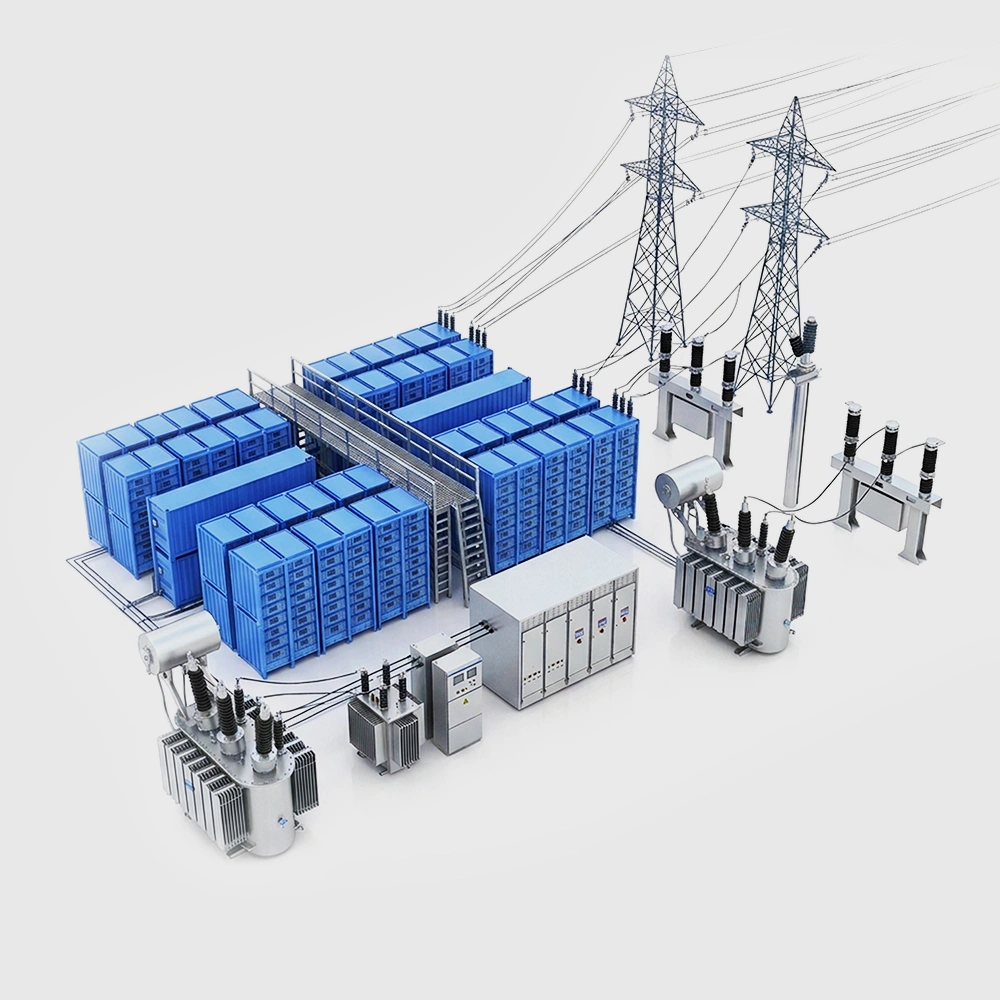
In the rapid evolution of electric vehicles (EVs), energy storage systems (ESS), and premium consumer electronics, maximizing battery cycle life and safety remains a core objective for R&D engineers and laboratory managers. What is the underlying electrochemical degradation mechanism behind the widely acknowledged rule of "shallow charging and discharging extends lifespan"? Furthermore, how can we accurately quantify and evaluate battery capacity fade under varying Depth of Discharge (DoD) conditions during actual R&D and testing?
Understanding DoD: a quantitative metric for electrochemical stress
Depth of Discharge (DoD) is defined as the percentage of discharged capacity relative to the battery's rated capacity:

DoD is not merely a simple percentage value; it serves as a critical indicator measuring both the electrochemical stress and mechanical stress exerted on the battery during charge-discharge cycling:
Shallow cycling (e.g., 20% DoD): Positive and negative electrode materials experience relatively mild lithium intercalation/deintercalation, resulting in minimal lattice constant variation and lower interface side-reaction rates.
Deep cycling (e.g., 100% DoD): Cells undergo extreme voltage spans (e.g., 4.2V to 2.8V for NCM/NCA batteries), forcing electrode materials into limit states of lithiation/delithiation and severe internal polarization.
In-Depth degradation mechanisms: how high DoD accelerates battery degradation
Based on current academic research and industry consensus, the irreversible damage caused by high DoD cycling primarily originates from three electrochemical and physical dimensions:
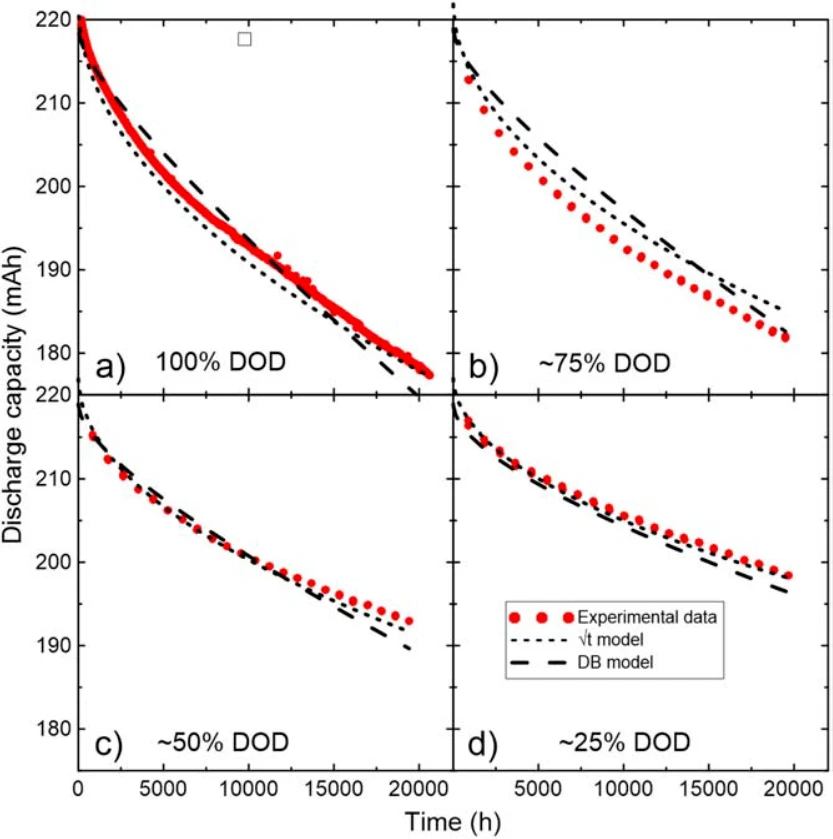
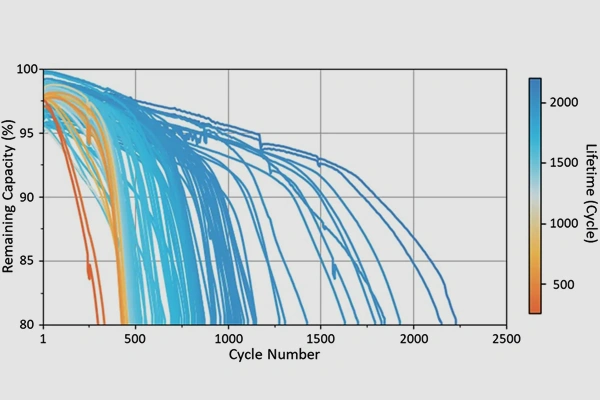
Figure 1: Evolution of discharge capacity over test time under different DOD levels alongside lifetime model fits.
1. Material mechanical stress and structural fatigue
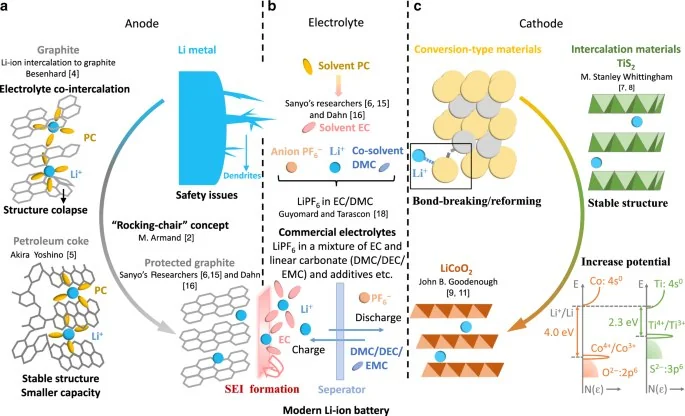
The continuous insertion and extraction of lithium ions within positive and negative electrode materials are accompanied by lattice volume contraction and expansion.
Under low DoD conditions, the volume change rate of active particles remains low (typically around 1% to 3% for graphite anodes).
Under high DoD deep cycling, volume fluctuation becomes severe (graphite anode volume changes can reach 10%, while silicon-carbon anodes can exceed 300%). This repeated, large-scale volumetric stress generates micro-cracks within active particles, leading to a loss of electrical contact between active material grains and accelerating capacity fade.
2. Side reactions and accelerated phase transitions
Anode side: Elevated anode potential at the end of deep discharge degrades the pre-existing Solid Electrolyte Interphase (SEI) layer. During subsequent charging, the electrolyte continues to decompose on newly exposed interfaces, continuously consuming active lithium ions (Loss of Lithium Inventory, LLI).
Cathode side: Deep delithiation destabilizes layered structures (such as high-nickel NCM/NCA), triggering transition metal dissolution and surface phase transformations into salt-rock structures, which elevates interfacial impedance.
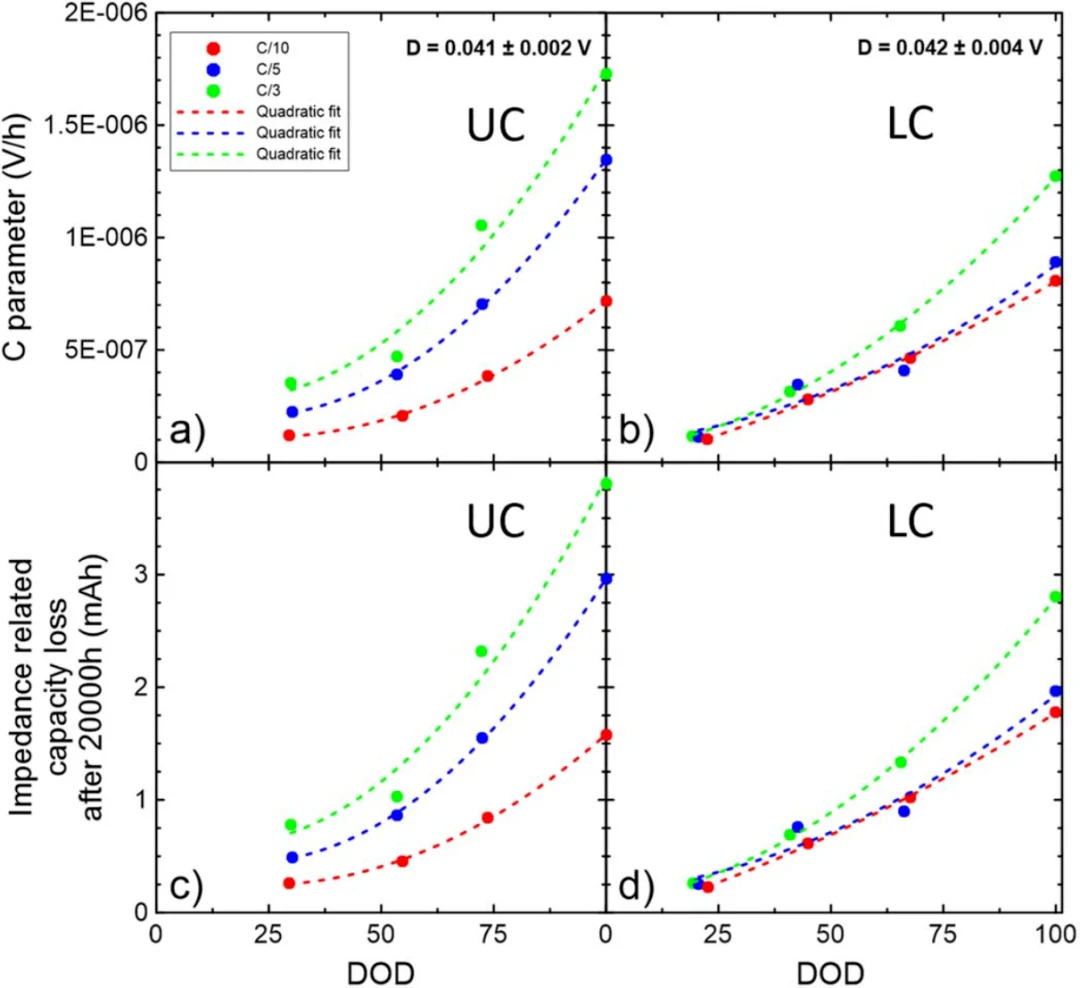
Figure 2: Impedance-related capacity loss after 20,000 hours and C parameter fitting across various DOD levels and C-rates (C/10, C/5, and C/3).
3. Internal resistance heating and cell-to-cell inconsistency
Toward the end of deep discharge, concentration polarization and ohmic polarization reach their peaks, causing a significant rise in internal resistance. Joule heating generated by elevated internal resistance causes localized temperature spikes, further catalyzing thermal side reactions such as electrolyte breakdown. At the battery pack level, high DoD amplifies cell-to-cell inconsistencies, accelerating system-level failure driven by the "bucket effect."
Academic & engineering consensus: optimal SOC operating windows
Extensive laboratory research and cycle-life testing data demonstrate that reducing average DoD exponentially enhances the cumulative throughput energy of lithium batteries. To balance available capacity/range with extended lifespan, the industry widely adopts zoned management strategies:
Energy storage systems (ESS): To achieve 10 to 15 years of calendar and cycle life, operational SOC is typically restricted to an optimal "sweet spot" of 30%–70% (40% DoD).
Electric vehicles (EVs): Balancing driving range and durability, daily operations are recommended within 20%–90% SOC, leveraging BMS algorithms to maintain upper and lower buffer zones.
Consumer electronics (CE): Utilizing software-level intelligent charge management avoids prolonged exposure to 100% high-voltage fully charged states.
Verification in R&D and manufacturing: the need for high-precision cyclers
Formulating optimal BMS SOC window strategies or evaluating the true lifespan of advanced materials (such as high-silicon anodes and solid-state electrolytes) under varying DoD conditions requires exceptionally precise and stable charge-discharge testing equipment.
In extreme DoD or ultra-shallow cycling (e.g., 5%–10% DoD) tests, minute current drifts or microvolt-level voltage measurement errors can introduce substantial cumulative discrepancies into life-prediction models.
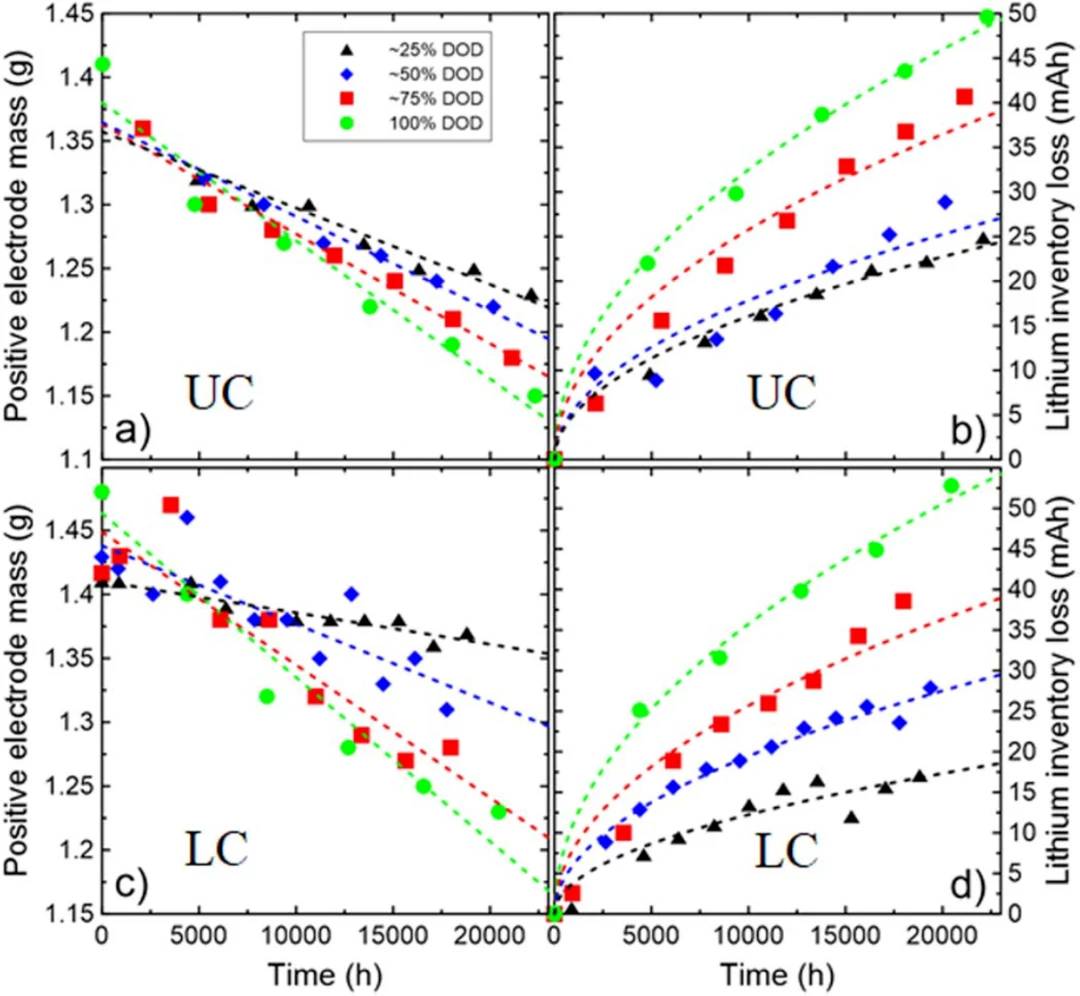
Figure 3: Evolution of positive electrode mass loss (left) and active lithium inventory loss (right) across different DOD levels (~25%, ~50%, ~75%, and 100%) over 20,000 hours.
NEWARE high-precision testing solutions
To support battery material R&D, cell evaluation, and BMS strategy validation, NEWARE provides comprehensive high-precision energy-regenerative and charge-discharge testing systems:
Dynamic simulation & precision: Featuring a sampling frequency up to 10,000 Hz (100 μs) and voltage/current measurement accuracy up to 0.02% FS, these systems accurately capture differential capacity (dQ/dV) curves and electrochemical polarization traits during subtle DoD cycling.
DoD strategy validation: Supporting complex custom step programming, they enable seamless multi-stage DoD pulse tests and long-term cycle-life comparison profiles.
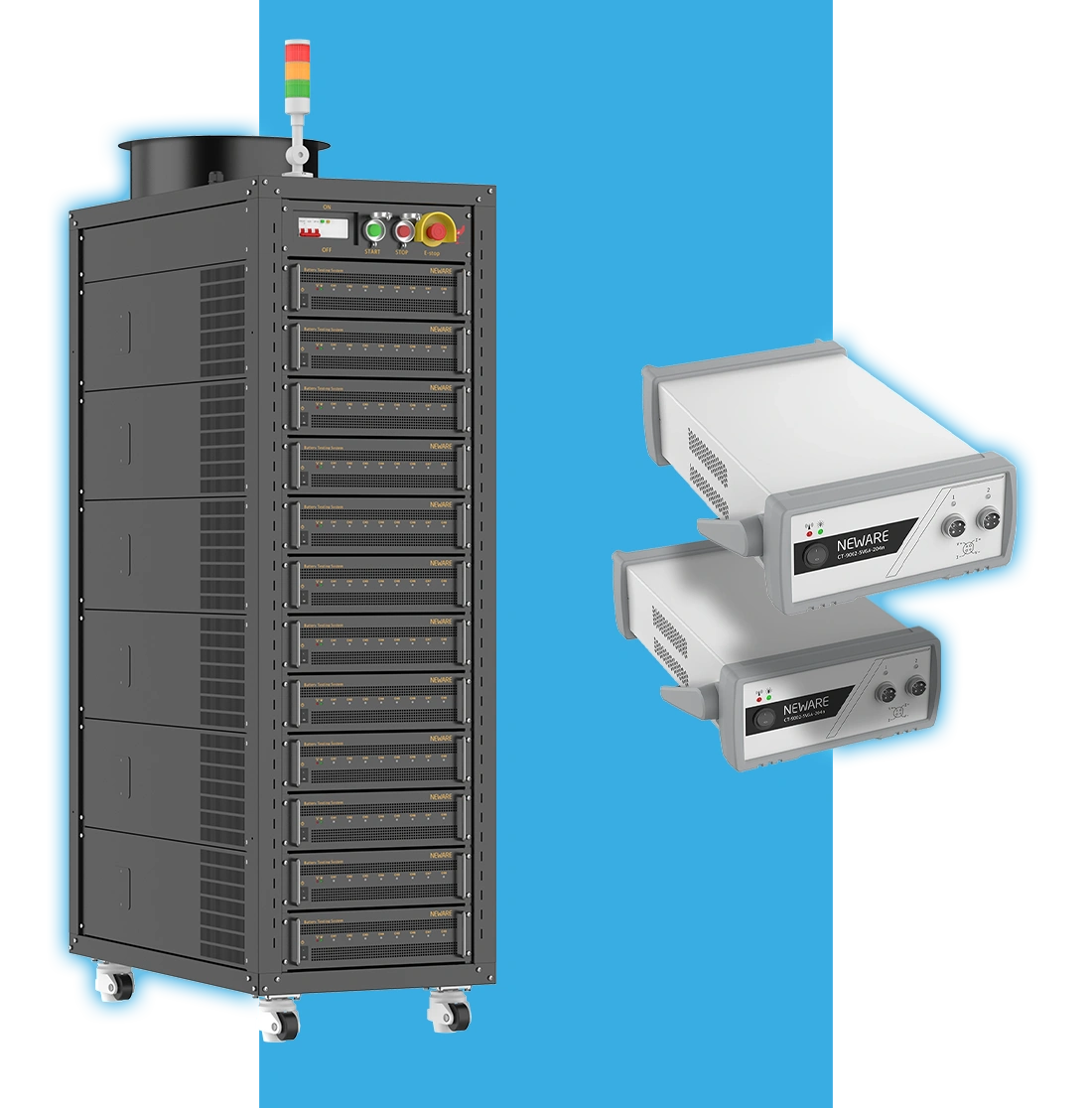
NEWARE CE-6000 Series Energy-Regenerative Test Systems
High-Efficiency carbon reduction: During large-scale, high-current DoD cycle testing (e.g., 100A–300A single cells or battery PACK modules), discharge energy is efficiently fed back into the facility grid (recovery efficiency reaches 85%–90%+).
Thermal interference mitigation: The energy-regenerative topology drastically minimizes internal heat dissipation, reducing ambient temperature rises in testing facilities and preventing thermal distortion of battery DoD test results to guarantee data reproducibility.
Conclusion
A rational understanding of DoD impacts on electrochemical mechanisms serves as the foundation for optimizing BMS control algorithms and maximizing total battery life cycle value. By establishing rigorous DoD degradation models with NEWARE high-precision battery testing systems, battery manufacturers and research institutions can rapidly identify the optimal equilibrium between performance and durability—accelerating the development of next-generation, high-safety, long-life batteries.
References
Gauthier, R., Eldesoky, A., Cormier, M., Zhang, N., Louli, A. J., & Dahn, J. R. (2022). How Do Depth of Discharge, C-rate and Calendar Age Affect Capacity Retention, Impedance Growth, the Electrodes, and the Electrolyte in Li-Ion Cells? Journal of The Electrochemical Society, 169(2), 020518.