Whether leveraging multi-motor electric drivetrains or the extreme SpaceX performance package, the Tesla Roadster demands unprecedented energy release. Beyond cold-gas thrusters, the core sustained power relies on high-rate pulse discharge from the battery system—putting extreme challenges on DCIR management and transient thermal behavior.
What is high-rate pulse discharge and why Tesla roadster-class vehicles depend on it
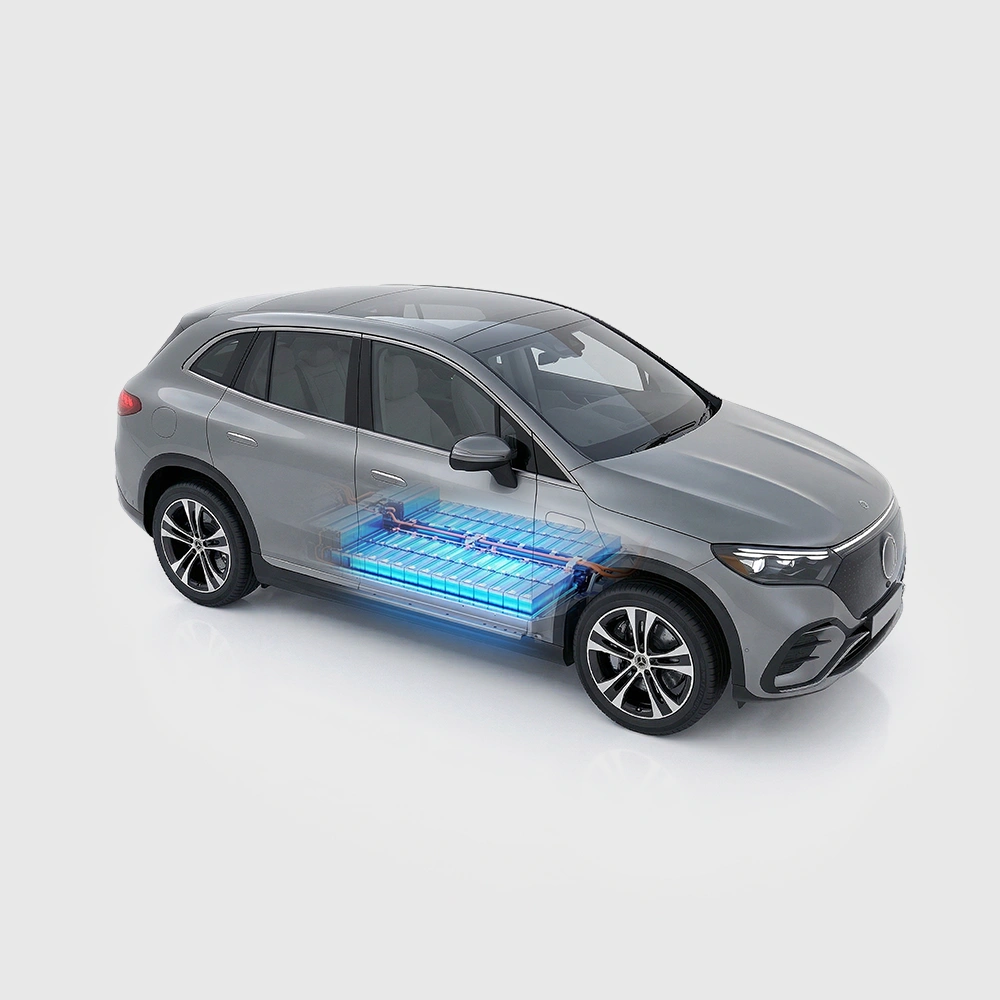
In the high-performance EV sector, extreme acceleration response and instantaneous power output depend on high-power battery systems. Taking Tesla's newly unveiled next-generation Roadster as an example, its extreme powertrain and high-voltage auxiliary propulsion technology must release hundreds of kilowatts or more of peak power within a fraction of a second.
This millisecond-level response imposes dual challenges at the physical and electrochemical levels. During lab R&D and production quality inspection, how to accurately simulate and evaluate battery electrochemical behavior, polarization phenomena, and thermal response under ultra-high-rate pulse discharge (High C-Rate Pulse Discharge) has become a core challenge for battery engineering teams.
Three electrochemical challenges of high-rate pulse discharge
When a battery undergoes ultra-high-rate pulse discharge, multiple responses occur rapidly inside the cell, directly determining peak power output and safety boundaries:
Ohmic polarization and DCIR: When large currents flow through the cell's current collectors, electrode materials, and electrolyte, an instantaneous voltage drop (IR drop) occurs. Micro-ohm-level internal resistance differences are multiplied under high currents, directly affecting peak power output. Therefore, DCIR testing is a fundamental item in high-rate pulse discharge validation.
Electrochemical polarization and concentration polarization: In the early milliseconds of discharge, the charge transfer rate at the electrode interface and the diffusion rate of lithium ions (Li+) in the electrolyte cannot keep up with the electron transfer rate, causing polarization voltage to surge. This transient process places extremely high demands on test equipment sampling rates.
Transient heat accumulation: According to Joule's law (Q = I2 Rt), multiplying pulse current causes heat generation rate (P = I2 R) to grow quadratically, imposing extremely high requirements on battery thermal management systems and structural safety — making integrated temperature testing solutions essential for high-rate testing.
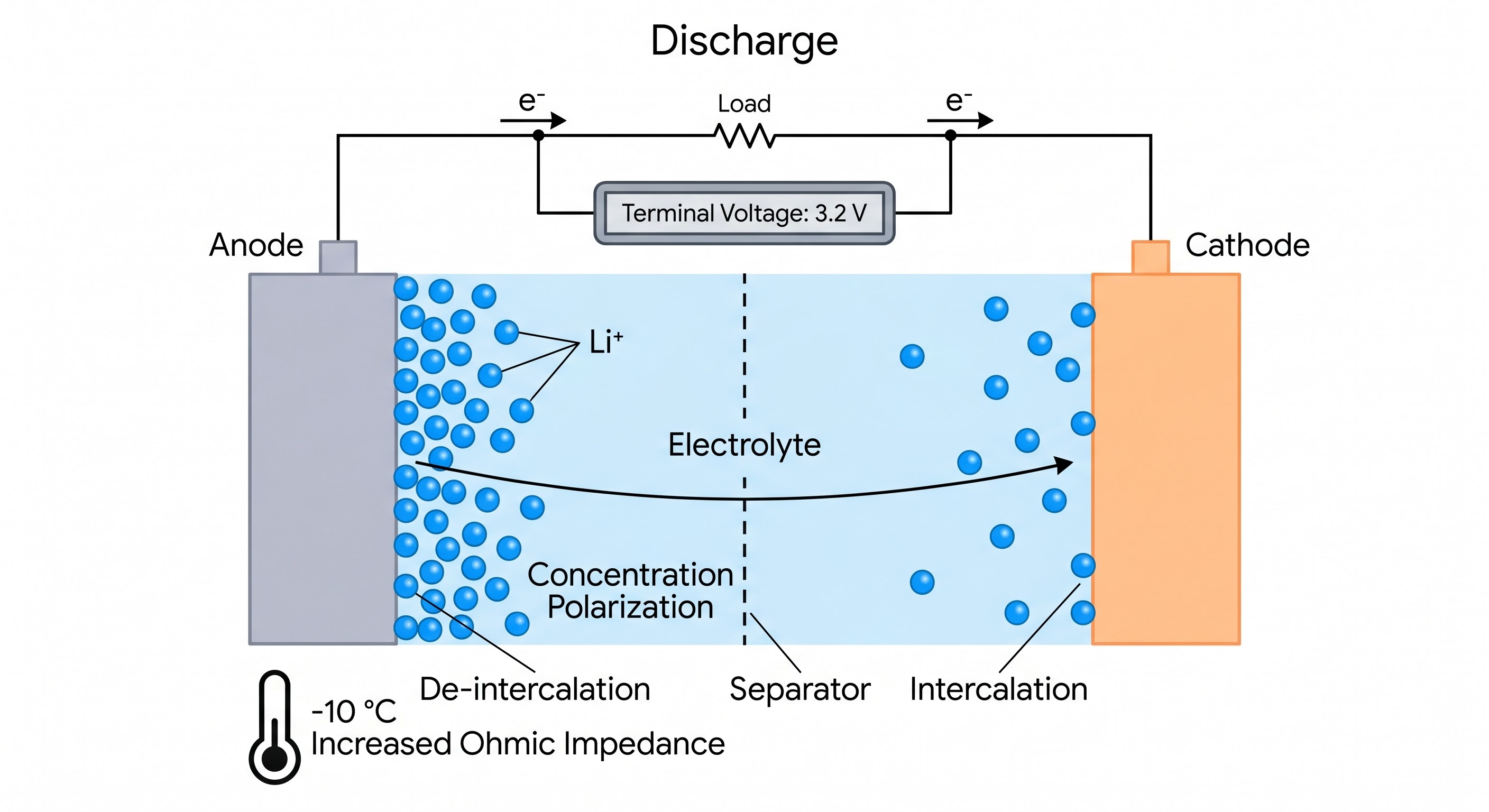
Lab testing challenges of high-rate pulse discharge
To faithfully reproduce and accurately evaluate these extreme conditions, pulse discharge testing systems must provide the following key capabilities:
Microsecond/millisecond current response speed: Test channels must switch from zero current to ultra-high current in an extremely short time. Overshoot or delay will distort measurement data and fail to reproduce real pulse conditions.
KHz-level high-sampling-rate data acquisition: Low-sampling-rate equipment easily misses the voltage minimum at the pulse instant and the polarization recovery curve. Sampling rates must reach the kHz level to fully capture transient electrochemical processes and provide reliable data for HPPC (Hybrid Pulse Power Capability) testing.
Integrated environmental control: Seamless synchronization between battery charge/discharge channels and temperature control environments is necessary to evaluate high C-rate performance under varied thermal conditions.
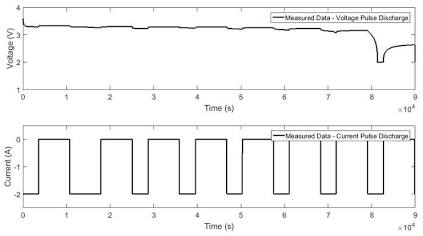
High-rate pulse discharge testing system selection: NEWARE solutions
To meet the testing needs of high-power cells, modules, and battery packs under extreme pulse conditions, NEWARE provides high-precision testing hardware alongside integrated environmental testing systems.
Core charge/discharge testing equipment
| Equipment | Data Recording Rate | Current Response Time | Target | Core Function |
CT/CE-9000 Series | 1ms (1000Hz) | ≤ 100 µs | Cells / Modules | High-precision DCIR, fast pulse simulation |
CE-6000 Series | 10ms (100Hz) | ≤ 3ms / ≤5ms | Cells / Modules / Packs | High-power testing, multi-channel parallel connection |
Integrated environmental testing solutions
All-in-one battery testing systems (constant / high-low temperature integrated chambers): Combining charge/discharge testing channels directly with temperature chambers into an all-in-one architecture, NEWARE provides precise temperature control (≤± 0.5℃ fluctuation) across a wide range (from -70℃ to 150℃).
Synchronized control & safety protection: The integrated system features smart temperature control, fault alarm systems, and safety isolation mechanisms. It allows real-time synchronization between current pulse loads and thermal data, ensuring safe operation during high C-rate pulse discharge.
Frequently asked questions (FAQ)
Q1: What sampling rate is needed for high-rate pulse discharge testing?
A: A minimum of 1kHz is recommended, ideally 1ms-level data acquisition. Low sampling rates miss the voltage minimum at the pulse instant and the polarization recovery curve, distorting DCIR and HPPC results.
Q2: What is the difference between DCIR testing and HPPC testing?
A: DCIR (DC internal resistance) testing focuses on instantaneous IR drop under high current; HPPC (Hybrid Pulse Power Capability) testing evaluates battery power capability through multi-stage pulses. The two are often used together under high-rate pulse conditions and complement each other.
Q3: Why choose all-in-one battery testing systems for high-rate pulse testing?
A: High-rate discharge causes rapid internal heat accumulation (P = I2 R). All-in-one battery testing systems integrate charge/discharge testing with constant or high-low temperature chambers, ensuring tight synchronization between electrical pulses and thermal control while providing safety protection.
Q4: What is the pulse discharge C-rate of the Tesla Roadster battery?
A: Tesla has not publicly disclosed complete pulse discharge parameters for the Roadster battery. In engineering practice, hundreds-of-kilowatts peak power and millisecond-level response are typically used as reference conditions for high-rate pulse testing; specific values are subject to official release.
Q5: How should a high-rate pulse discharge testing system be selected?
A: Focus on current response speed (microsecond/millisecond level), data sampling rate (kHz level), and environmental integration. Choose CT/CE-9000 series for high-precision cell/module testing, CE-6000 series for high-power cell/module/pack-level testing, paired with NEWARE all-in-one battery testing systems.
Conclusion
Technical breakthroughs in high-power EVs depend on electrochemical system innovation and rigorous technical validation. With high-precision testing equipment and integrated all-in-one environmental testing solutions, researchers and manufacturers can thoroughly analyze the extreme performance boundaries of cells in laboratory environments, building a solid foundation for the safety and reliability of next-generation high-performance EVs.
References
IEC 62660-1: Secondary lithium-ion cells for the propulsion of electric road vehicles – Performance testing.
ResearchGate: Studies on voltage and current response curves in pulse discharge testing.