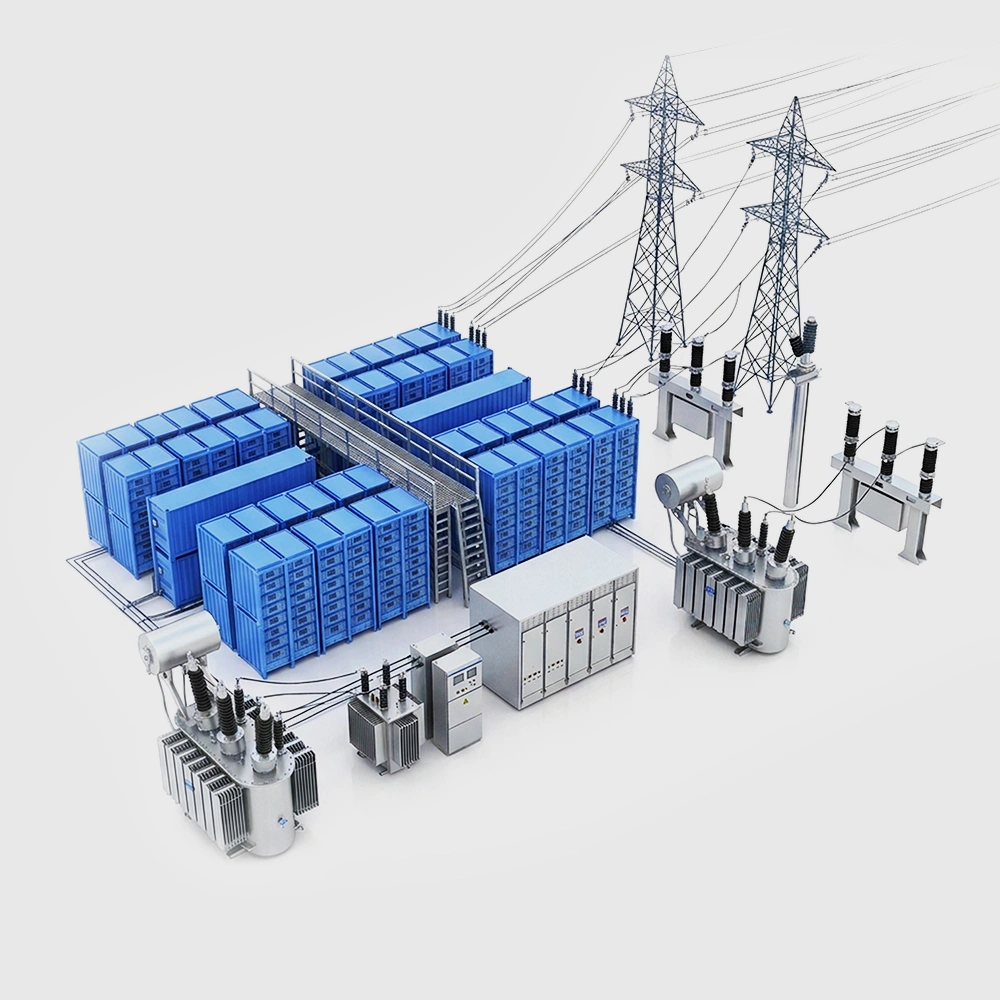
The AI wave and the dawn of humanoid robots
In 2026, the development of artificial intelligence has entered a phase of "recursive self-improvement"—new models are trained with the participation of previous-generation models, and the role of human supervision is gradually diminishing. Elon Musk stated directly at the Abundance Summit: "Fully automated self-improvement could appear by the end of this year, or at the latest, by next year." Breakthroughs in AI are unfolding at a pace where "every night you go to sleep, and every morning you wake up to new breakthroughs."

Figure 1 AI neural network concept diagram
In this intelligent revolution, humanoid robots have become the ideal vehicle for AI to transition from the virtual realm to reality. While large models endow machines with the ability to "think," hardware grants them the ability to "act"—thus giving birth to embodied intelligence. Among the dozens of companies globally competing in the humanoid robot space, Tesla, with its unique hardware-software integration capabilities, stands at the forefront of this transformation.
In January 2026, Tesla officially announced that it had commenced mass production of the Optimus Gen 3 at its Fremont factory in California. This product, described by Elon Musk as "by far the most advanced robot in the world" is propelling humanoid robots from laboratory concepts toward commercial-scale adoption. Its emergence marks the arrival of the "iPhone moment" for the humanoid robotics industry.
In-depth analysis of Optimus Gen 3
While Optimus Gen 3 is not the first mature humanoid robot, it holds exceptional significance for the market and marks a new milestone in Tesla's robotics technology.
What is Optimus Gen 3? Features & Performance
Optimus Gen 3 represents a quantum leap compared to its predecessors. The first-generation model unveiled in 2022 was clumsy in movement and required human remote control. Although the second generation could perform factory tasks such as moving boxes and assembly, its application scenarios remained confined within Tesla's own factories. The design goal of the third generation, however, is to become a truly general-purpose humanoid robot intended to enter households and society.
At the hardware level, the most significant breakthrough of Optimus Gen 3 lies in its hand design. Its robotic hand features 22 degrees of freedom (22 DoF). By relocating the heavier actuators from the hand to the forearm and employing a sophisticated tendon-driven system, it achieves dexterous movements comparable to the 27 degrees of freedom of the human hand. The hand's precision reaches 0.08 millimeters, enabling it to perform delicate operations such as gently gripping an egg without breaking it, tying shoelaces, and sorting laundry without damaging items. This means it is capable of performing over 3,000 distinct household and industrial tasks.

Figure 2 Tesla Optimus robot exterior
At the intelligence level, the Optimus Gen 3 is equipped with Tesla's FSD-v15 full self-driving computer, redesigned specifically for embodied intelligence. The robot constructs a real-time 3D map of its surrounding environment through a vision system comprising 8 cameras, processing this information via an end-to-end neural network. Rather than relying on hard-coded instructions, it acquires skills through a "Sim-to-Real" training pipeline and imitation learning from human video data—meaning that after simulating actions millions of times in a virtual world, it can directly transfer these skills to the real world. More importantly, it possesses self-correction capabilities: for instance, upon recognizing a failed grasp attempt, it can immediately adjust its approach without requiring human intervention.

Figure 3 Tesla Optimus robot demonstrating precision operation (holding an egg)
In terms of battery life, the Optimus Gen 3 can operate continuously for 24 hours, providing a fundamental foundation for all-day application scenarios.
Market positioning: Mass production signals and price expectations
Tesla has formulated aggressive production plans for the Optimus Gen 3. In January 2026, Tesla announced the start of mass production at its Fremont, California facility, setting a long-term goal of producing 1 million robots annually. Initial annual production capacity is approximately 50,000 to 100,000 units, with plans to deploy several thousand units by the end of 2026 at its own Gigafactories and early industrial partner facilities.
In an interview at the Abundance Summit, Elon Musk revealed that Optimus 3 will begin production this summer, with initial output relatively low, and is expected to enter a high-volume production phase next year. Remarkably, Tesla is designing new robot manufacturing facilities with the goal of continuously updating robot versions, potentially introducing new robot designs every year.
Regarding pricing, the cost target for the third-generation Optimus is set below $20,000. Once this price point is achieved, a "versatile home assistant"—capable of cleaning, doing laundry, cooking, and caring for children—will truly become possible, at a price comparable to that of an economy car.
Impact on the market
The mass production of Optimus Gen 3 will fundamentally reshape the cost structures and labor models of multiple industries.
The manufacturing sector will be the first to be affected. Tesla plans to initially deploy thousands of Optimus robots at its own Gigafactories to handle repetitive tasks such as material handling, parts sorting, and assembly assistance. Elon Musk predicts that output per Tesla employee will become "absurdly high"—achieved not through layoffs, but by using robots to liberate humans from tedious labor.
The home service market will be disrupted. When a $20,000 robot can perform over 3,000 household tasks, the definition of traditional home appliances will be rewritten—washing machines, vacuum cleaners, and dishwashers may all be replaced by a single general-purpose robot. This is precisely why at this year's AWE exhibition, Chinese robotics companies such as Dreame Technology and Unitree Robotics are competing alongside Tesla.
More importantly, competitive pressure is intensifying. Tesla's decision to move up its mass production timeline from the originally planned late 2026 to January is largely driven by the relentless pursuit of other robotics companies: Boston Dynamics' Atlas is about to enter commercial application, Figure AI's Figure 03 has the backing of Microsoft and OpenAI, and Google Deepmind is providing its foundational AI model Gemini Robotics to third parties through an "Android of the robotics field" model. The mass production of Optimus shifts this competition from "who can build a robot" to "who can manufacture robots at scale."
Panorama of the robotics market
As robotics technology becomes increasingly sophisticated, companies around the world are developing robots across multiple dimensions.
Mass-producible humanoid robot players
Optimus is not alone. In 2026, the global humanoid robot market has formed a tripartite landscape dominated by China, the United States, and South Korea.
Chinese companies are prioritizing scale. According to Morgan Stanley statistics, China has filed 7,705 humanoid robot-related patents over the past five years, five times the number filed in the United States. Unitree Robotics' Go2 quadruped robot has surpassed 10,000 units in monthly sales and performed complex martial arts movements at the 2026 Spring Festival Gala. In February 2026, AGIBOT Robotics released the A3, planning to achieve large-scale mass production within the year, with a maximum battery life of 8 hours, targeting scenarios such as tour guiding, shopping assistance, entertainment, and commercial performances. Engine AI's T800 humanoid robot currently produces approximately 200 units per month, with plans to increase output to 500 units by the end of the first quarter.
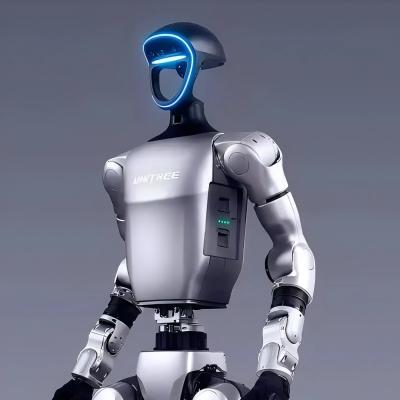
Figure 3 Unitree G1 humanoid robot
American companies prioritize function-first approaches. Compared to the pursuit of humanoid aesthetics, American companies tend to favor creating specialized robots for specific problems. Richtech Robotics has introduced a robotic barista named ADAM, while Mammotion has developed automatic lawnmowers for household use. Realbotix focuses on companionship scenarios, with its robots already deployed in nursing homes, hotels, and resorts. Figure is the first AI robotics company to bring general-purpose humanoid robots into daily life, augmenting human capabilities through advanced artificial intelligence.
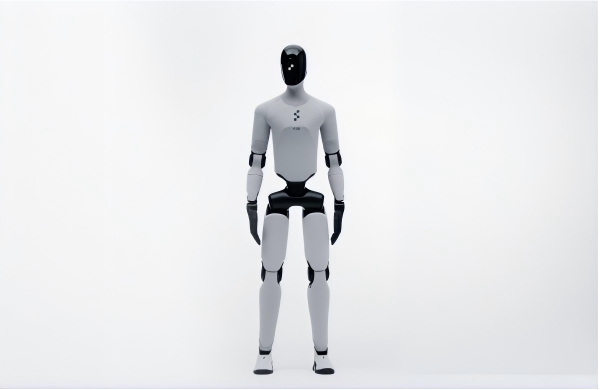
Figure 4 Figure AI humanoid robot
Korean companies emphasize platform integration. Hyundai Motor Group publicly demonstrated Boston Dynamics' Atlas for the first time, with plans to deploy it at its Metaplant facility in Georgia starting in 2028. LG Electronics has introduced CLOiD, equipped with dual arms and five-fingered hands, capable of performing household tasks such as opening and closing refrigerators and setting ovens.

Figure 5 Boston Dynamics Atlas robot
Robot ethics issues
As humanoid robots become more prevalent, ethical issues are becoming increasingly prominent. Academic research indicates that AI and humanoid robots may transfer human autonomy to machines and present challenges regarding accountability in life-or-death decisions. In scenarios such as healthcare and elderly care, when robots assume caregiving responsibilities, how can it be ensured that human oversight is not diminished? When robots possess human-like appearances and emotional interaction capabilities, where should the boundaries of the human-machine relationship be drawn?
The more profound issue lies in employment structure. The "universal basic income" predicted by Elon Musk is seen as a potential solution—when AI and robots produce enough goods and services, the importance of currency will decline, and human society will need to redesign distribution mechanisms.
Truly applicable scenarios for humanoid robots
Current industry consensus suggests that early applications of humanoid robots will concentrate in three areas: smart manufacturing, smart warehousing, and emotional companionship.
In the field of smart manufacturing, robots are being trained in factory scenarios—moving pallets, folding clothes, and retrieving water from shelves. In warehousing and logistics, the algorithms used by multiple robots to coordinate complex formations on the Spring Festival Gala stage can be directly adapted for real-time warehouse dispatching. In terms of emotional companionship, nursing homes, hotels, and resorts have begun deploying companion robots.
Government support is accelerating this process. China has established a humanoid robot data training center covering 11 types of application scenarios. The government helps companies gain "usage opportunities" through supply-demand matching, which is the aspect most envied by overseas counterparts.
New markets driven by AI and robotics
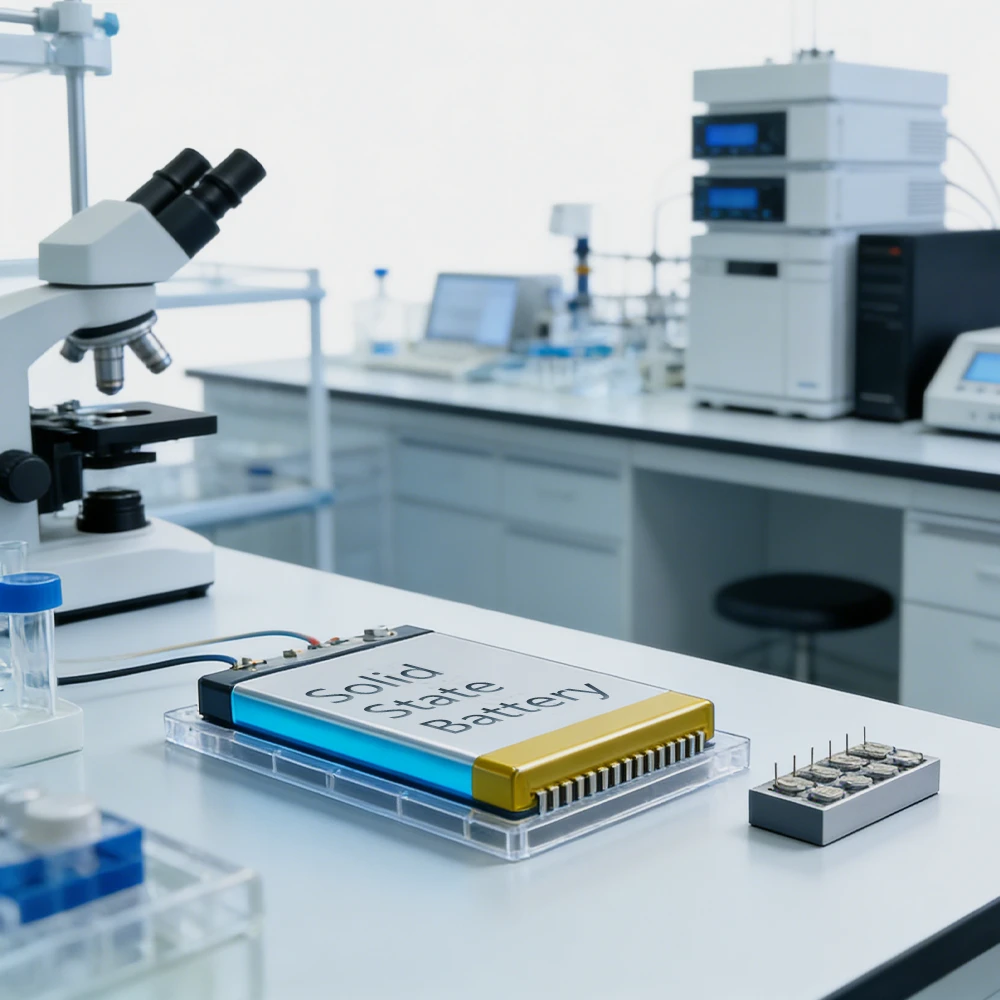
The robotics boom is creating new demands across the industrial chain. The battery market is the first to be affected—Samsung SDI projects that demand for robot batteries will surge to 1.4 GWh by 2030 and reach 138.3 GWh by 2040. Samsung has already planned to apply all-solid-state batteries for robotics applications, while LG Energy Solution is shifting toward an AI-driven research and development system.
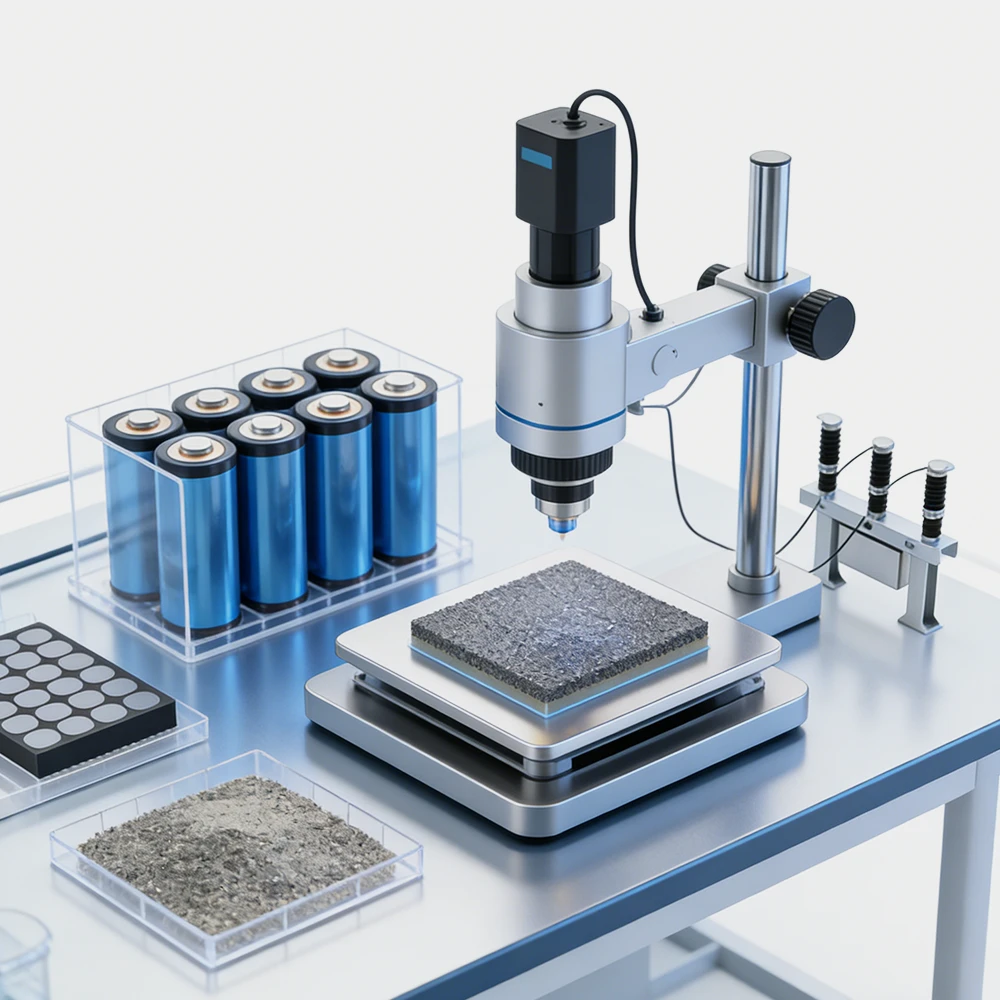
The battery testing market also stands to benefit. Demand for high-precision, high-safety battery testing equipment is surging to support the demanding operating conditions of robots working continuously for 24 hours. Just as high and low temperature testing is essential for electric vehicles, cycle life testing and safety testing for robot batteries will become new growth areas.
In the energy market, the surge in electricity demand from AI data centers has driven rapid expansion of the ESS energy storage market, while robots, as mobile energy terminals, will further reshape power load curves.
The future landscape of humanoid robots
In the film A.I. Artificial Intelligence, the robot boy David's persistent quest for maternal love prompted us to ponder: when machines possess emotions, how should humans coexist with them?
The game Detroit: Become Human goes a step further, portraying the conflicts and integration that occur after robots awaken to self-awareness within human society. The themes explored in these fictional works are now approaching reality with the mass production of Optimus 3.
Musk's vision for the future is even more ambitious. He revealed that Tesla is collaborating with xAI to develop "Digital Optimus"—a digital AI system capable of simulating entire company operations, handling paperwork such as accounting and HR, forming a complete "physical + cognitive" combination with the physical Optimus. He even predicts that Optimus could become the first real-world von Neumann machine, capable of self-replication and even independently building civilization on any habitable planet.
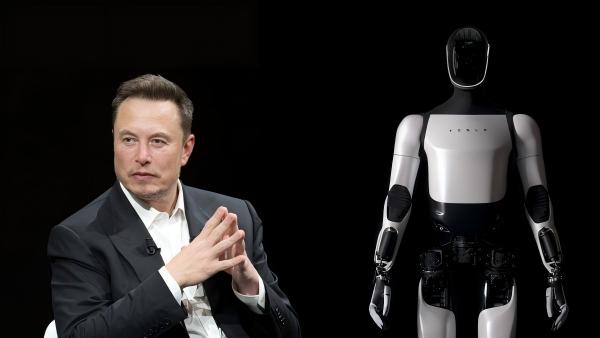
Figure 6 Elon Musk and Tesla Optimus
Of course, the path of this transformation will follow an S-curve: initially slow, then exponential growth, followed by a plateau phase awaiting the next breakthrough. In the summer of 2026, when Optimus 3 begins small-batch production, what we see may be just a few test units in factories. But by the high-production phase of 2027, and by 2030 when all-solid-state batteries enable longer operating times, humanoid robots will gradually penetrate factories, warehouses, shopping malls, hospitals, and ultimately, ordinary households.
AI and robots will not replace humans, but rather redefine the boundaries between "work" and "life." How to properly use AI and humanoid robots, how to maintain human dignity and freedom of choice while machines increasingly assume labor—these will become questions everyone will need to face in the near future. And when Musk says that "money will become less important at some point in the future," perhaps we should ponder: when robots take over material production, where should humanity's next destination be?
Supplement: Some of the information presented above was obtained from the Internet. We are very sorry if there is any infringement! You can contact us for deletion!