CATL 2026 Super Tech day
At 7:00 PM on April 21 in China, 2026, CATL held its "Beyond the Pole" Super Tech Day event in Beijing, officially unveiling six innovative products: the third-generation Super charging battery, the third-generation Qilin battery, the Qilin condensed matter battery, the second-generation Freevoy super hybrid battery, the Naxtra sodium battery, and the Ultra-Swap Integrated all-scenario replenishment network plan. These solutions target diverse mobility scenarios and user needs, offering a wide range of efficient new energy options. This was the most technology‑dense product launch in CATL's history.
The event took place amid intense competition in the new energy industry. One month earlier, BYD had unveiled its second‑generation Blade Battery and megawatt flash charging technology, capable of charging from 10% to 97% in just 9 minutes. CATL's response not only covers battery performance dimensions such as ultra‑fast charging, range, and safety but also systematically articulates for the first time a strategic layout of "coordinated development of multiple chemical material systems," advancing three parallel technology routes – LFP, NCM, and sodium‑ion – to address user needs across different scenarios.
Third‑Generation Super Charging Battery (Shenxing)
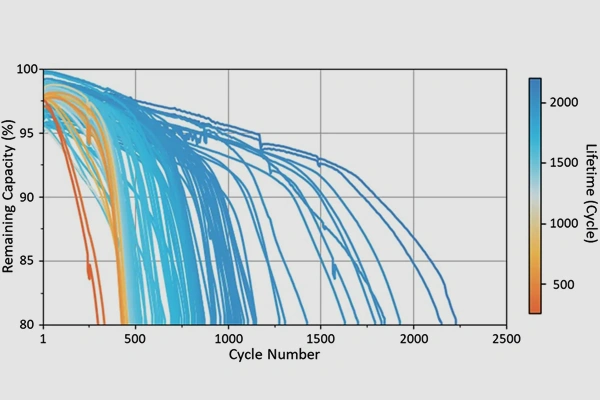
The third‑generation Super charging battery achieves an equivalent 10C, peak 15C ultra‑fast charging capability. At room temperature, charging from 10% to 35% SOC takes just 1 minute, from 10% to 80% takes 3 minutes and 44 seconds, and a full charge (10% to 98%) takes only 6 minutes and 27 seconds. In extreme cold of -30°C, charging from 20% to 98% takes about 9 minutes. After 1,000 complete cycles, the battery retains over 90% of its capacity, striking a balance between extreme rate capability and ultra‑long life.
The key to this breakthrough lies in internal resistance control. The third‑generation Shenxing battery has the world's lowest internal resistance for ultra‑fast charging, averaging only 0.25 mΩ – a 50% reduction compared to other ultra‑fast charging batteries on the market. According to the Arrhenius equation, every 10°C rise in battery temperature roughly doubles the rate of internal side reactions, severely impacting lifespan. The third‑generation Shenxing battery tackles the temperature rise problem through three methods: reducing heat generation, enhancing heat dissipation, and improving precision.
Third‑Generation Qilin Battery
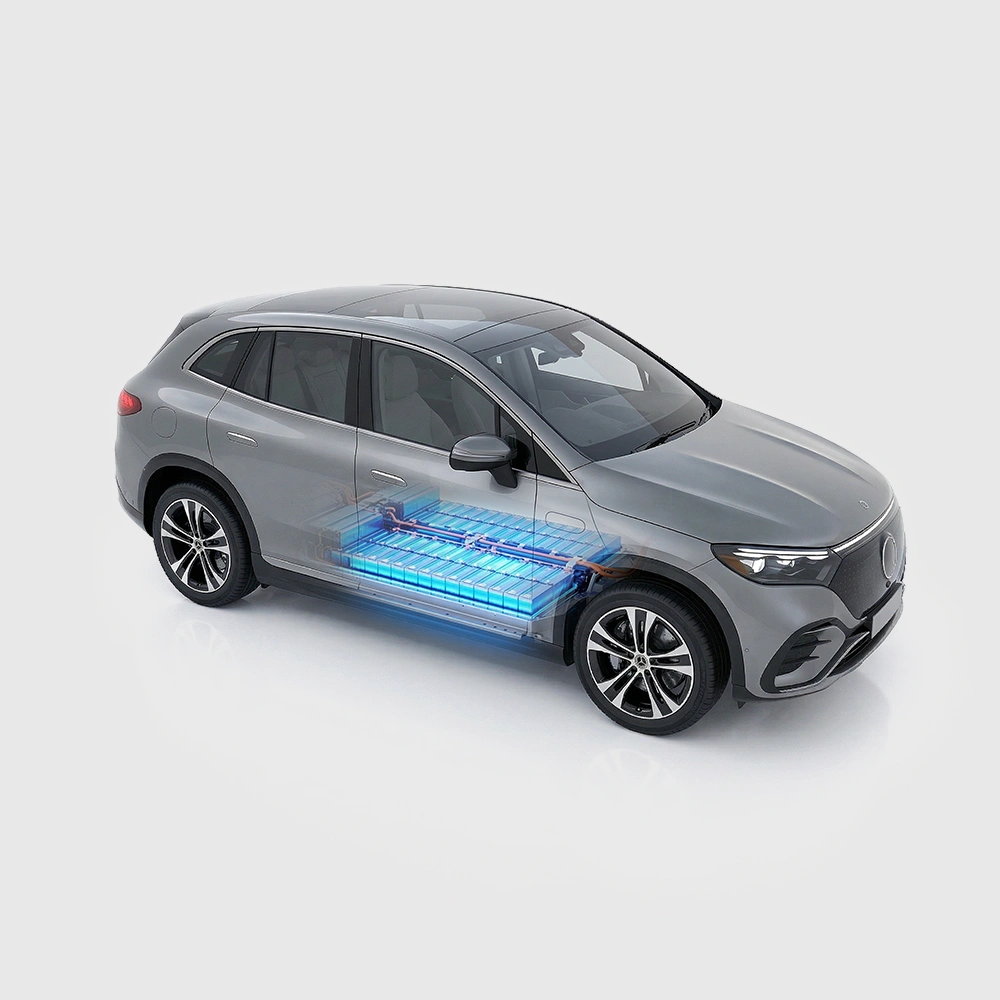
The third‑generation Qilin battery achieves a cell energy density of 280 Wh/kg. It delivers 1,000 km of range while standard‑equipping 10C ultra‑fast charging, with a battery pack weight of 625 kg. Compared to similarly ranged LFP battery vehicles on the market, it reduces weight by 255 kg and saves 112 liters of space. In terms of safety, building on its "NP non‑thermal propagation" technology, the Qilin battery introduces a "thermal‑electrical separation" solution, designing an independent sealed exhaust channel for each cell to cut off the propagation path from thermal runaway to electrical failure.
The impact of lightweighting on vehicle performance has been quantified in detail: energy consumption per 100 km is reduced by more than 6%; 0‑100 km/h acceleration time is shortened by about 0.6 seconds; moose test passing speed increases by 8%; and braking distance from 100 km/h is shortened by about 1.44 meters. In addition, the lifespan of key chassis components increases by 40%, and tire life extends by 30% – allowing an extra 10,000 km of driving. Gao Huan, CATL's Chief Technology Officer, stated: "The Qilin battery is the only optimal solution for premium pure electric vehicles. No Qilin, no premium."
For racing applications, the third‑generation Qilin track battery delivers instantaneous power of 3 MW, doubling the 1.33 MW of the second‑generation track battery from 2025, providing unprecedented power reserve for high‑performance EVs.
Qilin condensed matter battery
The Qilin condensed matter battery marks the first time CATL has applied its aviation‑grade condensed matter technology to passenger vehicles. It achieves a cell energy density of 350 Wh/kg – the highest among mass‑produced batteries – and a volumetric energy density of 760 Wh/L, with the battery pack weight kept under 650 kg. Under a typical sedan battery envelope design, it enables a range of 1,500 km, while a full‑size SUV exceeds 1,000 km. In terms of safety, the battery upgrades traditional liquid electrolyte to a condensed matter electrolyte, fundamentally achieving "no leakage, no flammability." This technology was previously developed for manned electric aviation and has completed its maiden flight validation on a 4‑ton commercial aircraft; further validation on aircraft above 8 tons is underway.
Second‑Generation Freevoy Super Hybrid Battery
The second‑generation Freevoy super extended‑range hybrid battery offers 600 km of pure electric range for its NCM version and 500 km for its LFP version, with an energy density of 230 Wh/kg. It delivers instantaneous power of 1.5 MW at full charge and can stably output 1.2 MW even at 20% SOC (low charge condition), addressing the pain point of "power degradation under low SOC" in range‑extender vehicles. On safety, its bottom coating withstands impact energy of 1,500 joules, and it has water resistance of 200 hours of continuous immersion at 2 meters depth. Its "super‑hybrid system" technology uses the LFP olivine crystal structure as a framework, achieving a gradient mixture of NCM and LFP at the powder particle level, increasing range by more than 15% over a single LFP battery at the same weight.
Naxtra sodium battery
CATL announced that its Naxtra sodium battery will enter large‑scale mass production in the fourth quarter of 2026. The company has overcome four industry engineering challenges: extreme water control, hard carbon gas generation, aluminum foil adhesion, and scalable self‑generating anodes. Wu Kai, an academician of the Chinese Academy of Engineering and CATL's Chief Scientist, stated at the event that sodium‑ion batteries will show broad prospects in high‑temperature, extreme‑cold mobility scenarios, as well as in energy storage. He emphasized that every material has its limitations, and adhering to a multi‑chemistry development path for battery materials is a necessity – only then can users find the most suitable solution for different scenarios. In an earlier research report, Dongwu Securities predicted that sodium‑ion battery shipments could reach 10 GWh in 2026 and exceed 100 GWh by 2030. On cost, after scaling up, the comprehensive cost of sodium batteries is expected to drop by 20–30%, achieving full cost leadership over LFP batteries by 2027.
Ultra‑swap integrated replenishment network
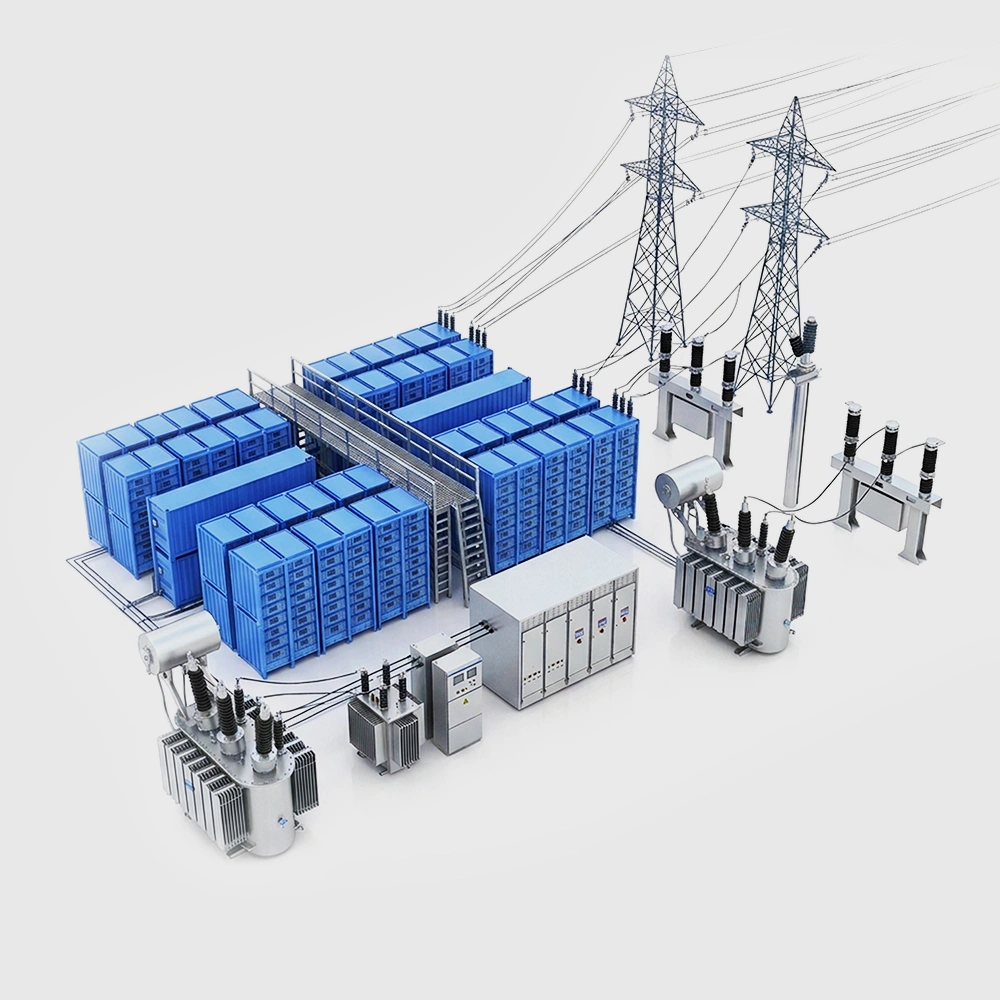
CATL proposed the "Ultra‑Swap Integrated" replenishment solution, under which both the Chocolate Battery Swap Network for passenger cars and the Qiji Battery Swap Network for heavy trucks are equipped with ultra‑fast charging piles as standard, enabling both charging and swapping with on‑demand power distribution. The company plans to build 4,000 Ultra‑Swap Integrated stations by the end of 2026, covering over 100 cities and highway networks. Together with multiple automakers, CATL is co‑building a replenishment ecosystem, aiming to establish more than 100,000 shared replenishment facilities by the end of 2028. The Ultra‑Swap Integrated station evolves from a single‑function replenishment facility into an "energy interconnection" infrastructure, offering higher efficiency, lower cost, and stronger service capability.
Multi‑chemistry synergy and technology‑driven future
The strategic significance of this product launch goes far beyond the products themselves. Robin Zeng, Chairman of CATL, revealed key figures at the event: over the past decade, R&D investment has exceeded 100 billion RMB, including more than 20 billion RMB in 2025 alone, and the company holds over 60,000 patents. He said that when asked whether spending more than 20 billion RMB each year on R&D is worthwhile, his answer is that the question itself is wrong. "For CATL, R&D investment is not a cost; it is the ability to ride through cycles."
Zeng emphasized that for Chinese technology to go global, it cannot rely solely on speed and scale, but must depend on high‑quality innovation and verifiable capabilities. The six products unveiled at this event have achieved full‑chain coverage from battery products to replenishment networks, spanning three major material systems – LFP, NCM, and sodium‑ion – providing systematic support for new energy mobility to achieve full‑scenario coverage.
Supplement: Some of the information presented above was obtained from the Internet. We are very sorry if there is any infringement! You can contact us for deletion!