Hydrogen fuel cells are a new type of energy technology that utilizes the reaction between hydrogen and oxygen to generate electricity and water, offering several advantages, such as environmental friendliness, high efficiency, and sustainability. This article will explore the advantages and applications of hydrogen fuel cells.
Advantages of hydrogen fuel cells
Environmental friendliness: Hydrogen fuel cells produce only water as a byproduct, emitting no harmful gases such as carbon dioxide or nitrogen oxides. This not only eliminates tailpipe emissions but also helps mitigate greenhouse gas emissions, making it crucial for environmental preservation.
High efficiency and energy conservation: Hydrogen fuel cells can convert the energy in gas directly into electricity with an efficiency of 50% to 60%, which is more than twice the efficiency of traditional combustion engines. Additionally, hydrogen gas has a high energy density and can store more energy per unit volume with the same mass compared to batteries.
Sustainable development: As fossil fuel resources are limited, hydrogen gas is considered a sustainable and non-depletable primary energy source. It can be produced using renewable energy sources, further enhancing its potential as a sustainable development technology.
Applications of hydrogen fuel cells
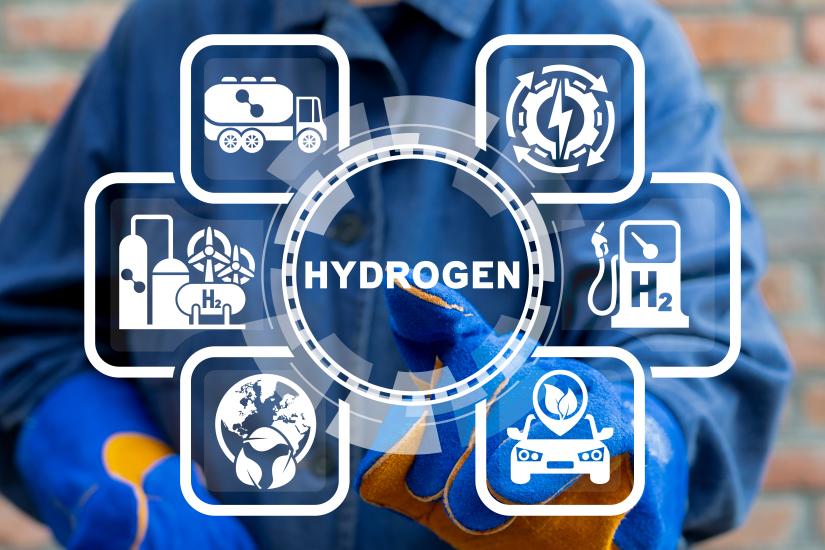
Transportation: Hydrogen fuel cell vehicles represent a prominent application of hydrogen fuel cells in the transportation sector. These vehicles offer zero emissions, high efficiency, energy conservation, low noise, and sustainability, addressing issues related to vehicle exhaust pollution and energy security. Additionally, hydrogen fuel cell buses and hybrid trains are already in practical operation.
Energy supply: Hydrogen gas can be used to generate electricity, making it an important application of hydrogen fuel cells in the energy supply sector. By utilizing the heat generated from hydrogen combustion to drive generators, hydrogen fuel cells provide an environmentally advantageous electricity generation technology, as it does not produce smoke or greenhouse gas emissions.
Offshore platforms: Hydrogen fuel cells have been successfully applied in offshore platforms such as islands, oil production platforms, lighthouses, ships, and underwater robots. Their advantages lie in the fact that they do not require transmission lines and do not cause environmental pollution, providing a sustainable energy solution for remote offshore areas.
Military applications: Hydrogen fuel cells are widely employed in military applications, including battlefield communications, artillery propulsion, electronic reconnaissance, and more. Their features of high efficiency, portability, silent operation, and zero emissions contribute to enhancing military operational capabilities.
Research developments in hydrogen fuel cells
As the application areas for hydrogen fuel cells continue to expand, researchers are continuously exploring breakthroughs and improvements in hydrogen fuel cell technology. Key areas of focus include:
Efficient hydrogen production technologies: Current hydrogen production methods primarily rely on natural gas reforming, which have several drawbacks such as high energy consumption and environmental impact. Researchers are thus developing more efficient hydrogen production technologies, including water electrolysis and photoelectrochemical hydrogen production.
Hydrogen storage technologies: The storage of hydrogen is crucial for the development of hydrogen fuel cell technology. Researchers are working on low-cost, high-density compressed hydrogen storage techniques and solid-state hydrogen storage technologies.
Advancements in fuel cell materials and technologies: To make hydrogen fuel cells more environmentally friendly, durable, and cost-effective, researchers are exploring new catalysts, membrane materials, and gas diffusion layer materials to enhance the overall performance and efficiency of hydrogen fuel cells.
In conclusion, hydrogen fuel cells offer advantages such as environmental friendliness, high efficiency, and sustainability, with diverse potential applications. Although there are areas that require further improvement, with technological advancements and expanding application fields, hydrogen fuel cell technology is expected to have a promising future.