In today's highly advanced microelectronics era, consumer electronics have achieved an extraordinary level of integration. However, the core bottleneck restricting the further downsizing of TWS earbuds, smart wearables, medical implants, and smart IoT nodes is often not the chip lithography process, but rather that tiny "Small Battery."
What is a "small battery"?
In the industry context, a "small battery" typically refers to an energy storage unit with a volume ranging from a few cubic millimeters to over ten cubic centimeters, and a cell capacity between a few milliampere-hours (mAh) and several hundred mAh.
Unlike electric vehicle power batteries that easily reach dozens or hundreds of ampere-hours, small batteries do not blindly pursue absolute power output. Instead, they prioritize volumetric energy density (Wh/L), ultra-low self-discharge rate, and shape customizability as their primary technical indicators.
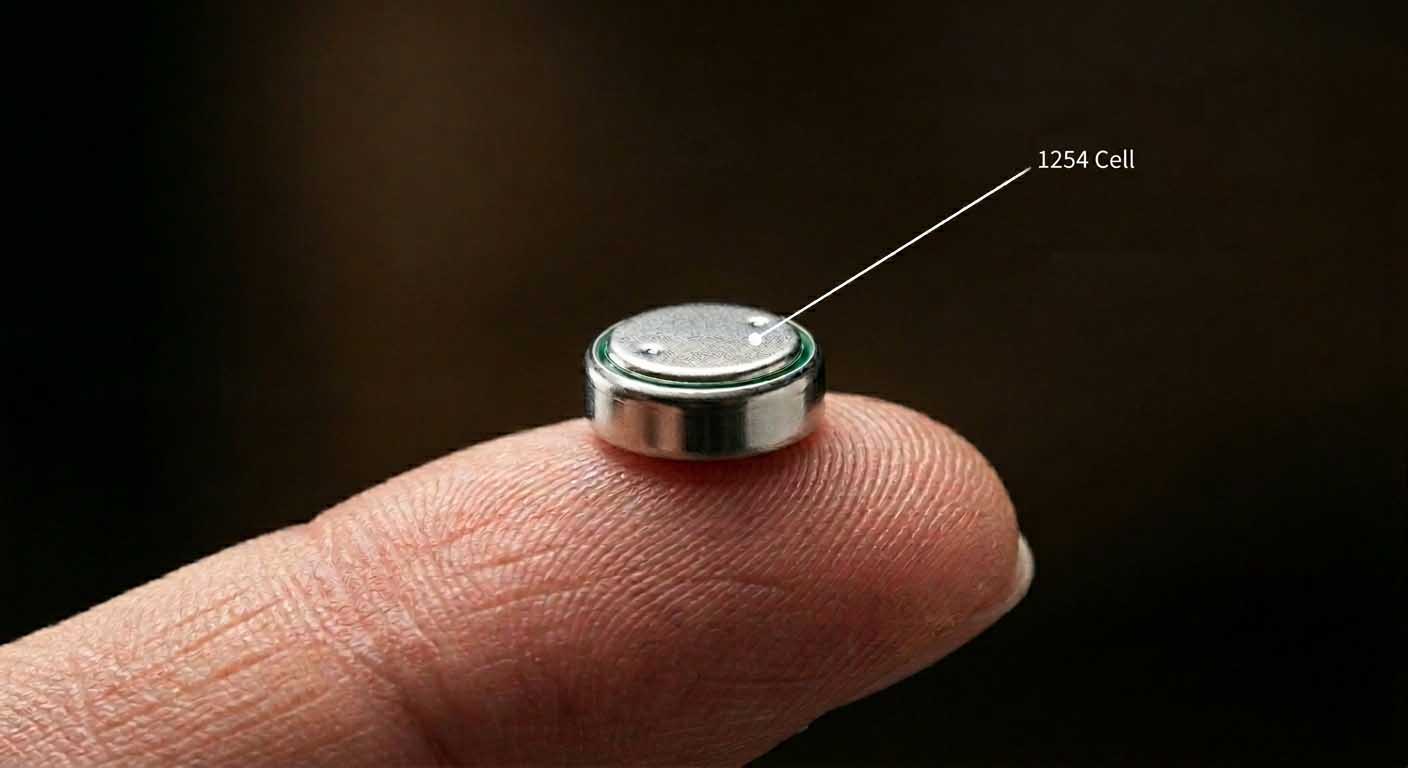
Mainstream types and core applications of small batteries
Small batteries do not have a unified chemical system; instead, they present highly customized characteristics based on specific application scenarios:
Coin/button cells: Predominantly based on lithium-manganese systems (such as CR2032 and miniature rechargeable lithium coin cells). They are mainly applied in low-power sensors, car keys, and motherboard RTC power supplies. Their features include standardized structures, low cost, and extremely mature manufacturing processes.
Miniature pouch cells: Encapsulated in aluminum-plastic film, offering exceptional flexibility in thickness and shape. They serve as the undisputed backbone for smart wearable devices such as smart bands and smart glasses.
Steel-cased pin cells / Micro cylindrical batteries: Commonly found in smart styluses, e-cigarettes, and miniature hearing aids, fitting into narrow spaces that require strict aspect ratios and pressure resistance.
Thin-film / solid-state micro-batteries: Directly deposited on substrates via semiconductor processes (such as PVD coating) and can even be integrated with chips. They are mostly used in medical implants (such as smart contact lenses and pacemakers) and high-end MEMS systems.
Advantages and limitations analysis of small batteries
To make good use of small batteries, one must have a clear understanding of their "personality traits":
| Advantages | Limitations |
| Extreme space optimization: Can be perfectly embedded into irregularly shaped, miniature industrial design spaces. | High internal resistance (high IR): Due to the extremely small cross-sectional area of tabs and internal conductive paths, internal resistance is usually several or even dozens of times higher than that of large batteries. |
| Ultra-low Self-discharge: Excellent small batteries can achieve an annual self-discharge rate of less than 1%, satisfying the standby needs of devices for up to several years. | Limited rate performance: It is difficult to continuously sustain high-current discharge; instantaneous high power consumption can easily lead to a severe voltage drop. |
| Negligible weight: Adds almost no physical burden to human wearability or sensor deployment. | Low Pack-Level efficiency: Typically restricted to single-cell (1S) operation, unable to scale up capacity massively through series-parallel connections like power batteries. |
Three hidden pain points in R&D and commercialization
Many testing and evaluation methods that work effectively in the field of power batteries fail completely when applied to small batteries. In practical materials R&D and cell QC (Quality Control), teams frequently encounter the following issues:
1. Inaccurate measurement of "microampere-level" leakage current
During standby or self-discharge tests of small batteries, their current signals are often at the microampere (μA) or even nanoampere (nA) level. The range of ordinary testing equipment is usually designed at the ampere level—akin to "weighing sesame seeds with a truck scale." The direct consequence is that background noise completely submerges the authentic test data.
2. Self-Discharge test cycles stretching across months
Traditional self-discharge testing requires letting the battery rest for weeks or even months, then calculating the rate through voltage drop (ΔV). For the consumer electronics market, where product iteration cycles are measured in "months," such an elongated R&D cycle is absolutely fatal.
3. "Data Artifacts" caused by contact resistance
The current of coin cells or miniature pouch cells is inherently small. Any slight poor contact in the test fixtures (excessive contact resistance) will manifest in the test data as high internal resistance or a false polarization voltage, directly misleading the screening of material formulas.
Small battery testing solution: NEWARE series 4 high-precision testing system
Faced with such rigorous testing demands for small batteries and coin cells in laboratories, R&D personnel often need to introduce professional characterization tools with higher precision. The NEWARE CT/CE-4000 (Series 4) battery testing system series is a high-precision platform custom-tailored for 3C micro-batteries, solid-state battery R&D, and foundational battery materials research.
In response to the various technical challenges of small battery testing, Series 4 provides highly targeted, hardcore technical support:
Multi-range automatic switching (capturing micro-currents): Certain models of Series 4 (such as CE-4008Q, etc.) support intelligent, seamless multi-range switching. Taking some micro-current models as an example, the minimum current output range can go as low as the microampere level. Supported by a 24-bit AD chip for resolution, electrochemical analyses (such as CV Cyclic Voltammetry and constant-voltage cutoff current capture) can precisely capture faint current fluctuations down to even 0.1μA, completely solving the industry pain point of "large-range equipment failing to accurately measure small currents."
Millisecond-level response and dynamic pulse simulation: Smart wearable devices (such as Bluetooth earbuds during data Bluetooth handshakes) generate instantaneous high-frequency pulse currents. Series 4 possesses a current response time of ≤1ms (even lower on some models) and supports minimum pulse width testing of 100ms - 500ms. This allows it to authentically simulate the complex power consumption conditions of smart hardware in the real world, preventing batteries from "premature shutdown" in actual applications.
Ultimate system accuracy: The voltage and current accuracy of the Series 4 testing system can reach up to ±0.01% F.S. It is capable of acutely capturing subtle potential changes during the lithiation and delithiation process of materials, providing exceptionally smooth, noise-free, high-quality raw data for dQ/dV differential capacity curve analysis.

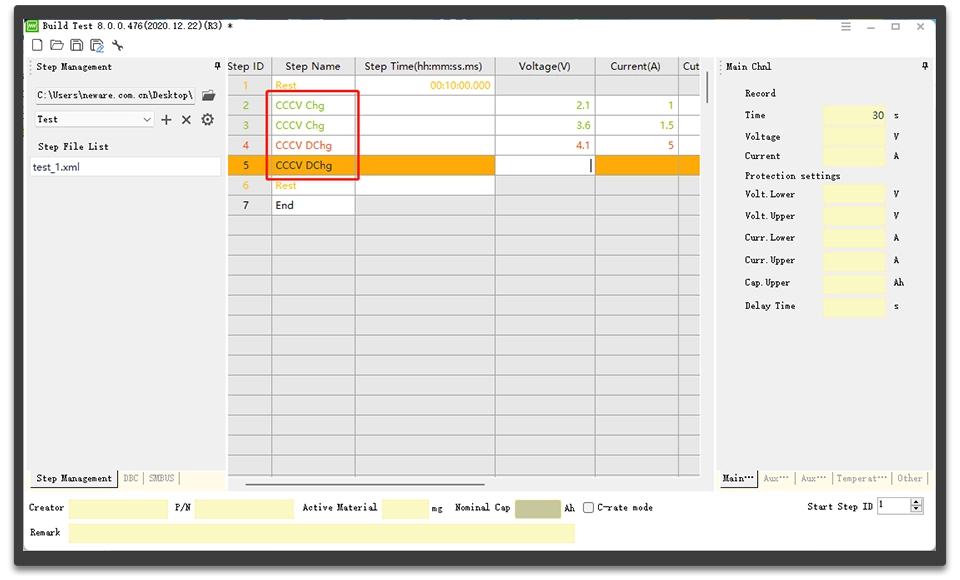
Comprehensive environmental integration and data protection: Small batteries are highly temperature-sensitive. The Series 4 integrates seamlessly with NEWARE environmental chambers to enable multi-dimensional, joint analysis of temperature and electrical performance via the BTS 8.1 testing software. Coupled with power-off data protection and offline testing capabilities, it ensures that invaluable long-term cycling data remains intact, even during unexpected power outages.
Conclusion
The R&D of small batteries is an engineering challenge that pushes miniaturization limits on the micrometer or even nanometer scale. Whether it is a breakthrough in solid-state electrolytes or the application of high-capacity silicon-based anodes, everything must be built upon refined, authentic, and high-resolution test data.
A craftsman must sharpen his tools if he is to do his work well. Measuring microscopic chemical reactions with more precise equipment is precisely the core value that NEWARE Series 4 has accumulated in the race track of materials and micro-battery R&D.
To learn more about high-precision testing solutions for small batteries and coin-cell materials, please visit: NEWARE CT/CE-4000 Series Official Technical Homepage.