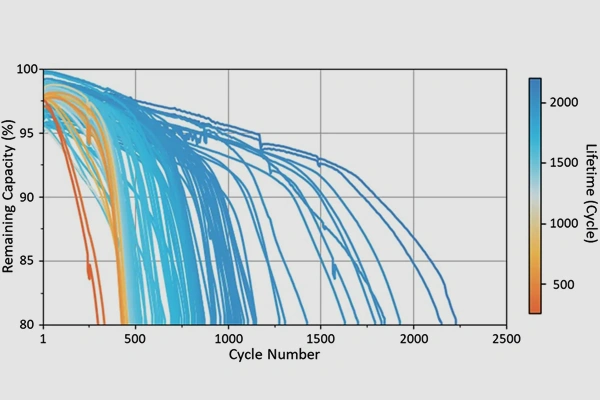
The core energy storage components of a lithium battery are the graphite anode, metal oxide cathode, and electrolyte solution. Every charge‑discharge cycle shuttles lithium ions between the anode and cathode – but each additional cycle adds a bit of "irreversible wear" inside the battery. Understanding the wear patterns and adopting differentiated maintenance strategies based on the characteristics of different devices is the key to truly extending the service life of each battery.
Current battery market: From "sufficient" to "excellent"
The global lithium battery market is in an unprecedented period of expansion. In 2026, total global lithium battery demand is expected to reach 2,939 GWh, a year‑on‑year increase of 32.3%, of which demand for energy storage cells will reach 1,024 GWh, up 60% year‑on‑year. Meanwhile, the average annual degradation rate of electric vehicle batteries is about 2.3% – a new EV with a 500 km range can still retain more than 77% of its capacity after 10 years.
However, technological progress does not mean users can be carefree. Different types of devices show very large differences in battery health performance during daily use. Only by accurately understanding these issues can we truly achieve precise maintenance.
How does battery health affect different industries
Smartphones: What does a health drop below 80% mean
Measured data shows that when a phone's battery health drops from 90% to 85%, the daily moderate‑use runtime shrinks from 11.5 hours to 10.2 hours; once it falls below 80%, runtime plummets to the 6.8‑7.5 hour range, and overnight standby power consumption rises by 23%, while the frequency of automatic wake‑ups between 2 AM and 5 AM increases by 1.8 times.
Early research institutions generally regarded 80% as the retirement threshold. The latest data shows that some models are even designed to degrade to 80% within 1,200 cycles – meaning that even if users follow strict usage rules, the battery will approach its replacement point after about three years.
Electric vehicles: Battery health deeply affects range and safety
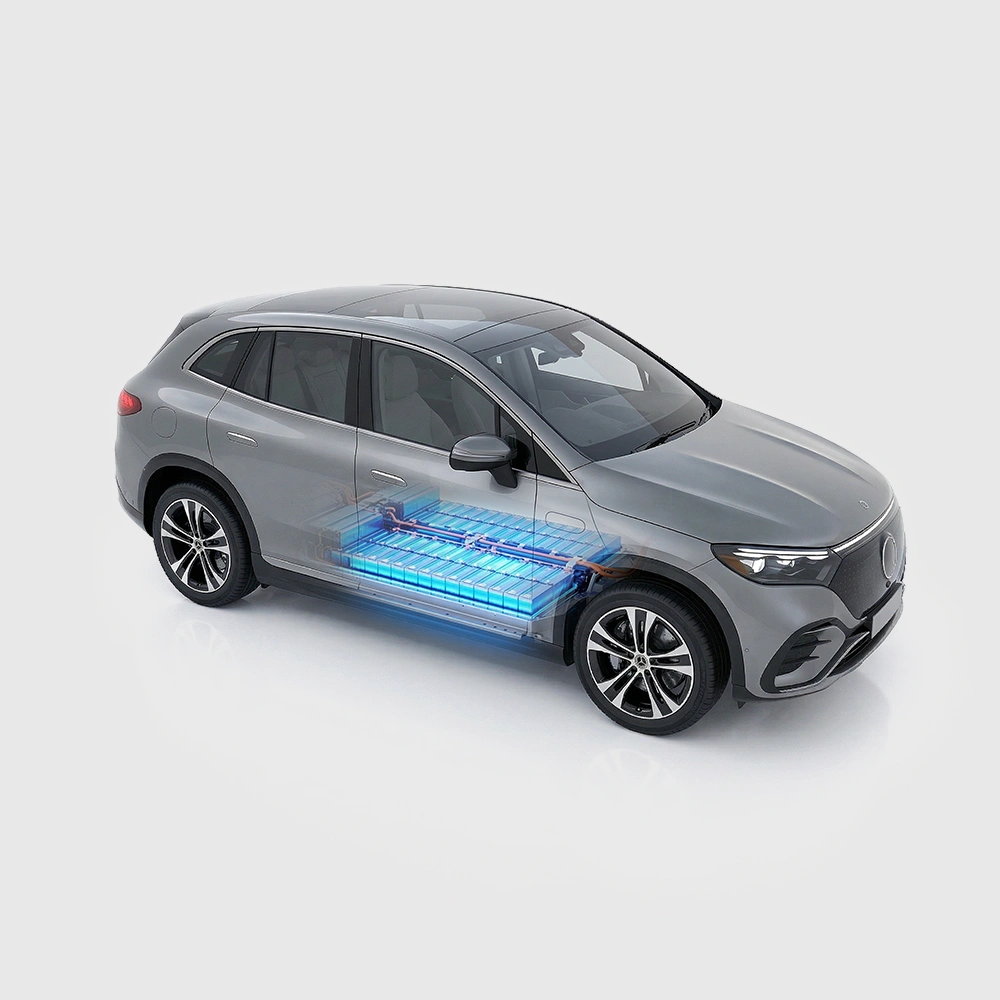
On the EV side, data shows that after three years of use, EVs retain an average of 97% of capacity; after five years, they retain an average of 95%. A dataset covering 21 brands and 22,700 vehicles shows that the average annual degradation rate of pure EV batteries is about 2.3%.
From the perspective of degradation rate, lithium iron phosphate (LFP) batteries degrade at about 1.5%-2% per year, while ternary (NCM) batteries degrade at about 2.2%-2.5%. The lifespan differences between different battery chemistries accumulate over long‑term service, significantly affecting vehicle resale value and the user's total cost of ownership.
| Device Type | Typical 5‑Year Health | Signs of Health <80% | Severity of Consequences |
| Smartphone | ~80%-85% | Sharp range drop, frequent shutdowns, huge increase in automatic wake‑ups | Moderate |
| Electric Vehicle | ~90%-95% | Noticeable range reduction, power limitation, slower charging | High |
| Tablet/Laptop | ~75%-80% | Half range, performance throttling, system lag | Moderate |
| Energy Storage System | ~85%-90% | Usable capacity decline, IRR affected | Low |
Table 1 5-year battery health for various devices
Golden rules for maintaining battery health
Rule 1: Charge range management
Lithium batteries hate both "starvation" and "overfeeding." Maintaining a voltage below 4.2V at 25℃ keeps capacity above 85% after 500 cycles; long‑term storage at 100% charge and above 35℃ significantly accelerates degradation. Keeping the charge between 20% and 80% can increase cycle life by about 40%. Enable the built‑in "optimized charging" feature – iOS's "Optimized Battery Charging" and Android brands' "smart charging protection" learn your daily routine to effectively reduce the time spent at high voltage.
Rule 2: Temperature management
The electrochemical nature of batteries makes temperature management critically important: below 15℃, lithium‑ion mobility decreases, risking lithium plating; above 35℃, electrolyte decomposition accelerates, and irreversible capacity loss rises significantly. Laboratory data shows that continuous charging at 35℃ results in 12%-18% lower remaining capacity after 1,000 cycles compared to 25℃. Manufacturers like Apple and Google actively reduce charging speed at high power to control temperature – the inflection point of charging speed is the first line of defense for battery health.
Rule 3: Use fast charging wisely
The high temperatures generated by fast charging are the number one enemy of batteries. High‑power fast charging can cause sustained high temperatures, with measured peaks reaching 57℃, leading to structural fatigue of electrode materials. It is recommended to use slow charging (stable 5V/2A, low heat) as the daily routine, and reserve ultra‑fast charging for emergencies – limit to 2‑3 times per month. For EVs, using AC slow charging daily and DC fast charging as a supplement is safer.
How to simply estimate battery health?
Battery health (State of Health, SOH) cannot be measured directly for either smartphones or EVs; it can only be derived from charge‑discharge data. There are four mainstream estimation methods.
Method 1: Capacity method (most accurate, time‑consuming)
This is the most common SOH evaluation method in the industry. The principle is:
SOH = Qcurrent / Qrated × 100% (current actual capacity ÷ rated capacity × 100%)
A full charge‑discharge cycle at constant current gives the current capacity, but it takes several hours.
Method 2: Cycle count estimation
This is the most frequently used empirical method for users. Estimate based on the battery chemistry: LFP cycle life 2,000‑3,500 cycles, NCM about 1,200‑2,000 cycles. For primary batteries like Li‑SOCl2 that cannot undergo capacity testing, the voltage decay trend can roughly estimate the remaining charge.
For EVs: back‑calculate 95% health after 5 years, annual degradation about 1%; the annual mileage can be used to roughly estimate the degradation rate.
Method 3: Internal resistance method (most common, fast)
The lower the health, the higher the battery's internal resistance. By measuring the DC internal resistance and comparing it to a new battery's resistance, health can be estimated. This is the most common method used in labs and testing facilities because it is fast and does not require a full charge‑discharge cycle, though it is slightly less accurate than the capacity method.
Method 4: Built‑in smartphone diagnostics
iPhone: Settings → Battery → Battery Health & Charging, shows maximum capacity percentage directly.
Android: Enter specific codes on the dialer or download professional battery monitoring apps to get cycle count and health estimates.
In practice, it is advisable to combine multiple methods to obtain a health assessment closer to the true state.
Q&A
Q1: At what health level should a phone battery be replaced?
A: 80% is the recognized replacement threshold. Below 80%, range drops sharply, power supply may become unstable causing frequent shutdowns, and normal user experience suffers greatly.
Q2: Can an EV battery last 10 years?
A: Yes. Data shows that with an average annual degradation of 2.3%, after 10 years the health can still be above 77%. There is a real‑world example: a Model 3 driven for 8 years with 180,000 km still had 81% battery health.
Q3: What should I do if my EV is parked for a long time?
A: If parked for more than two weeks, keep the charge at 50%-60%, store in a constant‑temperature dry environment at 15℃‑25℃, and recharge to about 50% every 30 days to avoid voltage‑induced passivation.
Q4: How harmful is using a phone while charging?
A: During heavy use while charging, the heat from the SoC and battery adds together, easily exceeding the 45℃ danger point. Measured data shows that playing a game while using a 65W fast charger increases the annual capacity degradation rate by 37% compared to normal‑temperature use.
Q5: Is there a significant lifespan difference between different battery chemistries?
A: Yes. LFP cycle life 2,000‑3,500 cycles (1.5%-2% annual degradation), NCM 1,200‑2,000 cycles (2.2%-2.5% annual degradation).
From cell material screening to factory health calibration, every "long‑life battery" relies on multi‑dimensional evaluations with professional equipment: high‑precision charge‑discharge cycling, DCIR tracking, high‑low temperature cycle validation, dQ/dV differential capacity analysis, and more.
Supplement: Some of the information presented above was obtained from the Internet. We are very sorry if there is any infringement! You can contact us for deletion!