The need for state monitoring amid rapid battery development
Driven by the global energy transition and the wave of electrification, the battery industry is expanding at an unprecedented pace. In 2025, the number of new energy vehicles in China exceeded 40 million, and the wave of power battery retirements arrived as expected. From consumer electronics to electric vehicles, from energy storage stations to the low-altitude economy, batteries have become an indispensable "energy heart" of modern society.

Figure 1 schematic diagram of an electric vehicle battery pack
However, batteries are not simple "plug-and-play" energy packs. As usage time passes and environmental conditions change, battery performance gradually degrades, and their state continuously evolves. For users, the most pressing questions are: How much charge is left? How much longer will it last? Can it still accelerate to overtake? Behind these questions lies the battery state parameter family—the SOX family.
The Battery Management System (BMS), as the "brain" of the battery, needs to monitor and evaluate various battery state indicators in real time to ensure that the battery operates within safe, efficient, and reliable boundaries. SOX is at the very core of BMS algorithms. Understanding these parameters not only helps users better utilize batteries but also provides scientific basis for battery research, testing, and second-life applications.
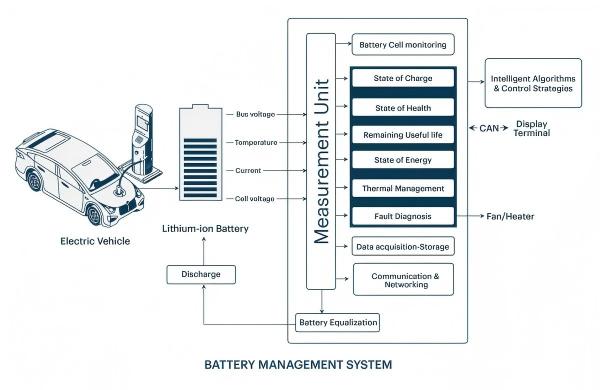
Figure 2 schematic diagram of a battery management system (BMS)
What is SOX?—comprehensive analysis of battery state parameters
SOX is a collective term for battery state parameters, primarily including the following core members:
SOC (state of charge): the "remaining charge" of the battery
SOH (state of health): the "degree of aging" of the battery
SOP (state of power): the "instantaneous power capability" of the battery
SOF (state of function): the "comprehensive usability" of the battery
In addition, academia has proposed extended parameters such as SOE (state of energy), SOT (state of temperature), and SOS (state of safety), together forming a complete battery state evaluation system.
SOC (state of charge)
SOC (state of charge) is the most intuitive battery parameter—it tells the user how much charge remains. SOC values typically range between 0% and 100%: 100% indicates a full charge, 0% indicates depletion.
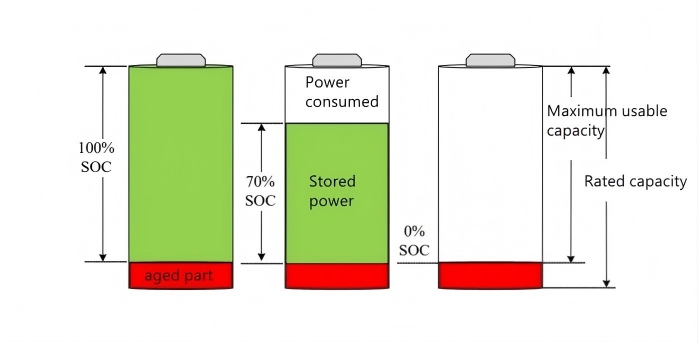
Figure 3 schematic diagram of battery SOC
Principle: There are several methods for estimating SOC, the most common being the Open Circuit Voltage (OCV) method and the Coulomb counting method. The OCV method exploits the nonlinear relationship between a battery's OCV and SOC—by measuring the battery voltage at rest and comparing it to an OCV-SOC curve, the SOC value can be derived. However, this method requires the battery to be at rest for a sufficiently long time, making it difficult for real-time application. The Coulomb counting method calculates SOC changes by integrating charge/discharge currents, but it suffers from accumulated error and requires periodic calibration. Modern BMSs typically employ a multi-algorithm fusion strategy, combining OCV correction with Coulomb counting while considering temperature and aging factors to achieve high-precision SOC estimation.
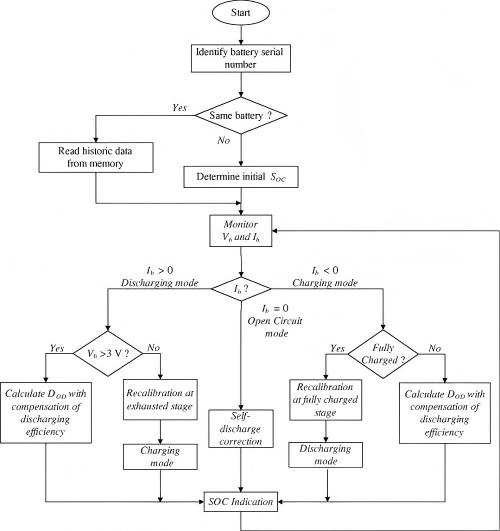
Figure 4 schematic diagram of coulomb counting for SOC estimation
Function: SOC is the most important indicator for users, directly affecting driving range. On the dashboard, it is displayed as "remaining battery percentage"; within the BMS, it serves as the fundamental basis for formulating charge/discharge strategies and performing cell balancing. Accurate SOC estimation prevents overcharge and over-discharge, extends battery life, and provides reliable range information to the driver.
SOH (state of health)
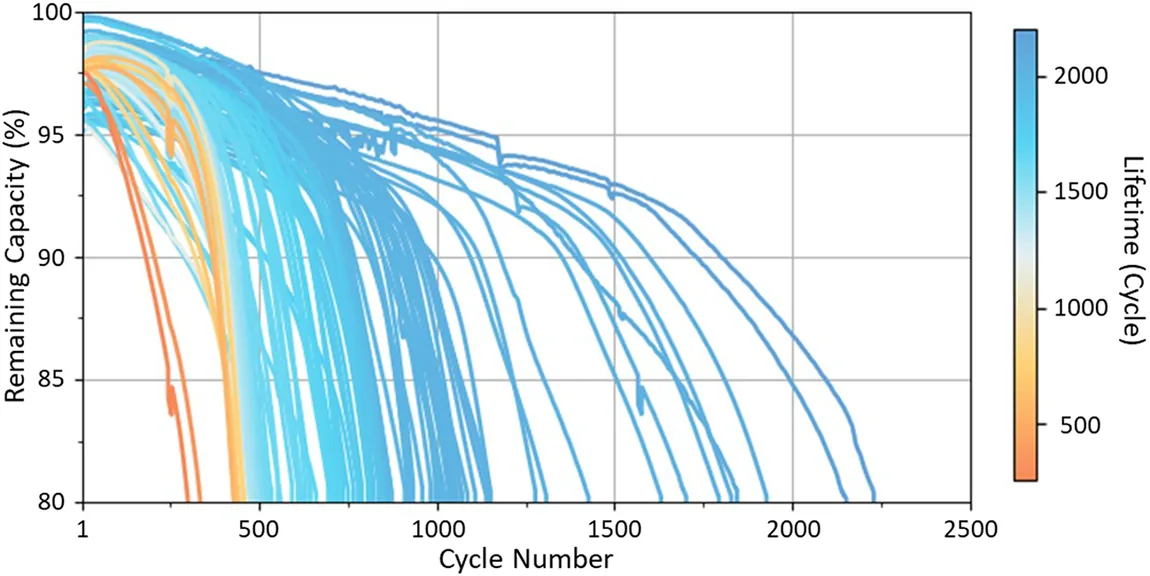
SOH (state of health) is an indicator that measures the degree of battery aging. A new battery has an SOH of 100%, and with increasing cycles, SOH gradually declines. When SOH falls to 70%-80%, the battery is generally considered no longer suitable for continued use in electric vehicles and can enter a second-life stage.
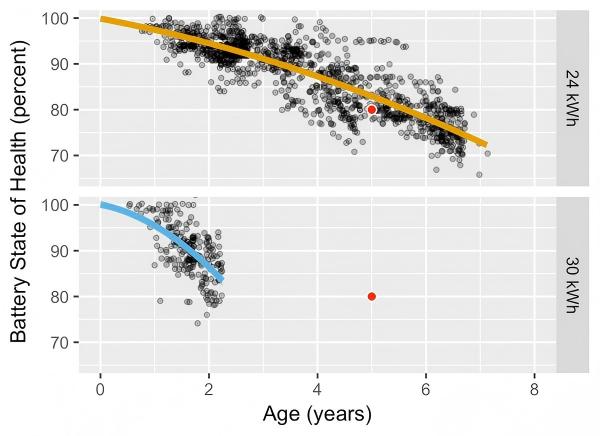
Figure 5 aging curve of battery SOH
Principle: SOH assessment is mainly based on two key parameters: capacity fade and internal resistance increase. Capacity fade reflects the decrease in the amount of charge the battery can store compared to a new battery; internal resistance increase reflects the rise in resistance to internal electrochemical reactions.
Research has shown that different battery chemistries require different diagnostic methods: Lithium Iron Phosphate (LFP) batteries are better suited for SOH diagnosis using the Incremental Capacity (IC) method, while Nickel Manganese Cobalt (NMC) batteries are better assessed using internal resistance measurement and Electrochemical Impedance Spectroscopy (EIS).
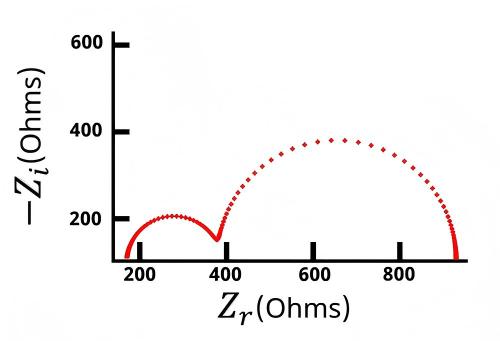
Figure 6 schematic diagram of EIS testing
Function: SOH is a key indicator for battery life management. It helps users understand how much longer the battery will last, provides a basis for used vehicle valuation, and supports decision-making for battery second-life use and recycling. For the BMS, SOH information is used to adjust SOC estimation algorithms and optimize charge/discharge strategies to prolong the battery's actual service life.
SOP (state of power)
SOP (state of power) characterizes the maximum power that a battery can safely charge or discharge within a short period. It directly affects the vehicle's rapid start, acceleration for overtaking, and regenerative braking capability.
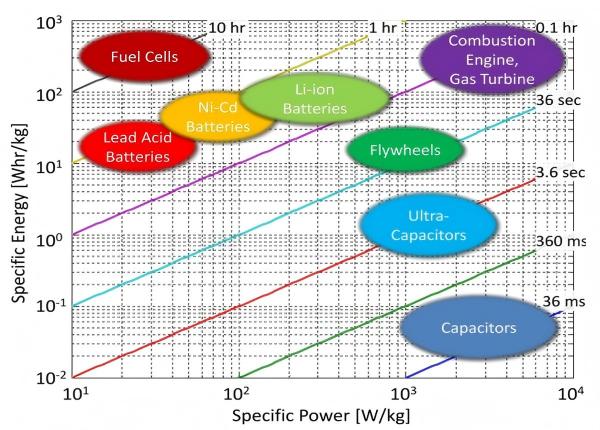
Figure 7 power-energy relationship diagram for various batteries
Principle: SOP calculation is based on the battery's real-time voltage, internal resistance, and voltage limits. The basic formula is:
SOP = Real-time voltage × Maximum current
The maximum current is determined by both voltage limits and current limits. Taking discharge as an example, the maximum discharge current can be calculated using the following formula:
Maximum discharge current = (Vocv - Vmin) / Rint
where Vocv is the current open-circuit voltage, Vmin is the discharge cutoff voltage, and Rint is the current internal resistance. The final SOP takes the minimum value among voltage limits, current limits, and temperature limits. Modern BMSs also incorporate Equivalent Circuit Models (ECM) and Kalman filtering to dynamically correct the effects of polarization.
Function: SOP is a core indicator for ensuring vehicle power performance and safety. During hard acceleration, the BMS consults SOP to decide whether sufficient power can be delivered; during fast charging, SOP determines the maximum allowable charging current; in low-temperature environments, the SOP assessment directly affects the vehicle's "cold start" capability. Accurate SOP evaluation maximizes battery potential while ensuring safety.
SOF (state of function)
SOF (state of function) is a comprehensive evaluation of the battery's overall functional state, answering the question: "Under the current state, can the battery perform a specific function?"
Principle: SOF is not an independently measured parameter but a comprehensive function of multiple factors including SOC, SOH, and temperature. Simply put:
SOF = f(SOC, SOH, Temperature, Load demand)
When the battery in its current state can perform a given function, SOF = "1" (available); otherwise, SOF = "0" (unavailable). For example, in a low-temperature environment of -20℃, SOC may still be 60%, but the actual available power is extremely low, so SOF might be judged as "unavailable." Patent literature shows that SOF can be obtained through coupling SOC and SOH: SOF = SOC × SOH.
Function: SOF provides users with an intuitive "battery status conclusion." It does not merely tell the user how much charge remains but directly answers practical questions such as "Can this car be driven now?" or "Can this function be used?" In safety-critical scenarios, such as redundant power systems for autonomous vehicles, the SOF assessment directly determines whether the system can safely execute emergency operations.
How to test battery SOX
Each member of the SOX family corresponds to different indicators and has its own testing methods.
How to test SOC
SOC testing methods are mainly divided into laboratory precision testing and BMS real-time estimation.
Laboratory testing methods: The most standard method is the constant-current discharge method—the battery is fully charged and then discharged to the cutoff voltage at a constant current, recording the discharge capacity and comparing it to the nominal capacity to obtain SOC. Other methods include constant-resistance discharge, constant-power discharge, and pulse discharge to simulate different operating conditions.
SOC calibration: The key to SOC calibration is establishing the SOC-OCV curve. By measuring the battery's open-circuit voltage at different SOC levels, a mathematical relationship is fitted. The forced discharge SOC calibration test also includes open-circuit voltage testing, discharge capacity testing, and state-of-charge error analysis. The Coulomb counting method is the core of BMS real-time SOC estimation, calculating SOC changes by integrating charge/discharge currents.
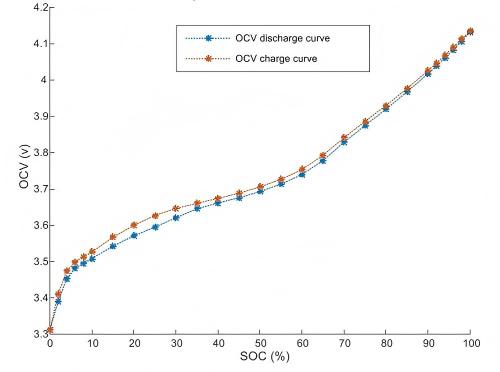
Figure 8 SOC-OCV curve
How to test SOH
SOH testing focuses on evaluating capacity fade and internal resistance increase.
Capacity test method: The battery is fully charged and then discharged to the cutoff voltage at a standard discharge current (e.g., 0.5C or 1C). The actual discharge capacity is measured and compared to the rated capacity to obtain SOH. For batteries already installed in vehicles, partial charge-segment data estimation can be used without requiring a full discharge.
Internal resistance test method: Battery aging is assessed by measuring DC internal resistance (DCIR) or AC impedance (EIS). Research shows that an SOH diagnostic method based on current data during the constant-voltage charging phase can obtain accurate results from just a single measurement point.
Advanced diagnostic methods: Incremental Capacity Analysis (ICA), Electrochemical Impedance Spectroscopy (EIS), and Equivalent Circuit Models (ECM) are widely used for SOH diagnosis. For LFP batteries, the IC method works best; for NMC batteries, IR and EIS methods are more suitable.
How to test SOP
SOP testing is typically conducted in an environmental chamber to simulate power capability under different temperatures and SOC conditions.
Standard test procedure: Place the battery system in the environmental chamber, adjust to the target temperature (e.g., -20℃, 25℃, 45℃), adjust SOC to target values (e.g., 100%, 50%, 20%), charge or discharge at constant power W for a preset duration (e.g., 10 seconds, 30 seconds, 60 seconds), record cell voltages, temperature changes, and the SOP value estimated by the BMS during the test. Determine whether SOP meets the requirements by checking whether the voltage has reached the protection threshold.
Calculation methods: The BMS typically uses static calculation based on voltage/current limits, combined with dynamic correction using Equivalent Circuit Models (ECM) and adaptive prediction based on big data and machine learning.
How to test SOF
SOF testing is essentially a comprehensive evaluation test that verifies whether the battery can perform specific functions under different operating conditions.
Test methods generally include: Under specific SOC and SOH conditions, apply a load profile simulating actual operating conditions, and monitor whether the battery can maintain the required voltage level. According to US Patent US20040024546, SOF can be obtained through the coupling calculation of SOC and SOH: SOF = f(SOC, SOH)
That is, SOF is a function of SOC and SOH. When either SOC or SOH falls below a threshold, SOF is determined to be unavailable. This method has been applied in areas such as automotive start-stop batteries and electric vehicle batteries.
Impact and applications of SOX parameters
Different SOX parameters represent different aspects of performance, but the internal relationships among the SOX members collectively constitute the indicators used by the BMS system to evaluate battery performance.
Inter-coupling relationship of SOX parameters
The various state parameters of a battery do not exist in isolation; they are mutually coupled and influence each other. Changes in SOC affect internal resistance, thereby affecting SOP. SOH degradation leads to capacity loss, which in turn affects SOC estimation accuracy. Temperature changes affect SOC, SOP, and SOH simultaneously. Academic research indicates that joint estimation of multiple states is an important direction for future BMS algorithm development.
Different application scenarios emphasize different SOX indicators
Electric vehicle batteries require comprehensive monitoring of all SOX indicators:
SOC: The most important indicator for users, determining driving range, requiring estimation error ≤5%
SOH: Affects battery life prediction and used vehicle valuation, requiring long-term stability
SOP: Directly related to acceleration performance, regenerative braking, and fast-charging capability, requiring millisecond-level response
SOF: Under extreme conditions such as low-temperature starts and hard acceleration, it must provide a clear judgment of "available or not"

Figure 9 schematic diagram of electric vehicle charging
Energy storage batteries place more emphasis on SOH and safety indicators, because energy storage scenarios do not require high instantaneous power but demand extremely high long-term cycle life and safety. Consumer electronics batteries focus more on SOC accuracy and remaining life prediction from SOH.

Figure 10 schematic diagram of an energy storage system (ESS)
Recent progress in Chinese national standards
In 2024, the national standard "Technical Specification for In-Service Testing of Power Batteries for Electric Vehicles" was initiated, aiming to unify capacity testing methods, micro-short circuit detection methods, and state-of-health estimation methods for batteries installed in vehicles. Implementation of this standard will effectively address the issues of inconsistent after-sales testing methods and low detection rates of hidden hazards, providing strong support for the safe operation of electric vehicles.
The importance of SOX
SOC, SOH, SOP, SOF—this group of seemingly simple abbreviations constitutes a complete picture of battery state monitoring. They are not only the core of BMS algorithms but also an important link connecting the entire battery lifecycle of research, production, use, and recycling. From precise laboratory testing to real-time estimation while driving, SOX parameters make the "black box" of the battery transparent and controllable.
With the development of artificial intelligence, big data, and cloud technologies, joint multi-state estimation will become the next direction for BMS evolution. More accurate sensors, smarter algorithms, and more unified standards will take battery management to new heights. For ordinary users, understanding these parameters may be the first step toward comprehending the "inner world" of electric vehicles.
Supplement: Some of the information presented above was obtained from the Internet. We are very sorry if there is any infringement! You can contact us for deletion!