Why choose sulfide?
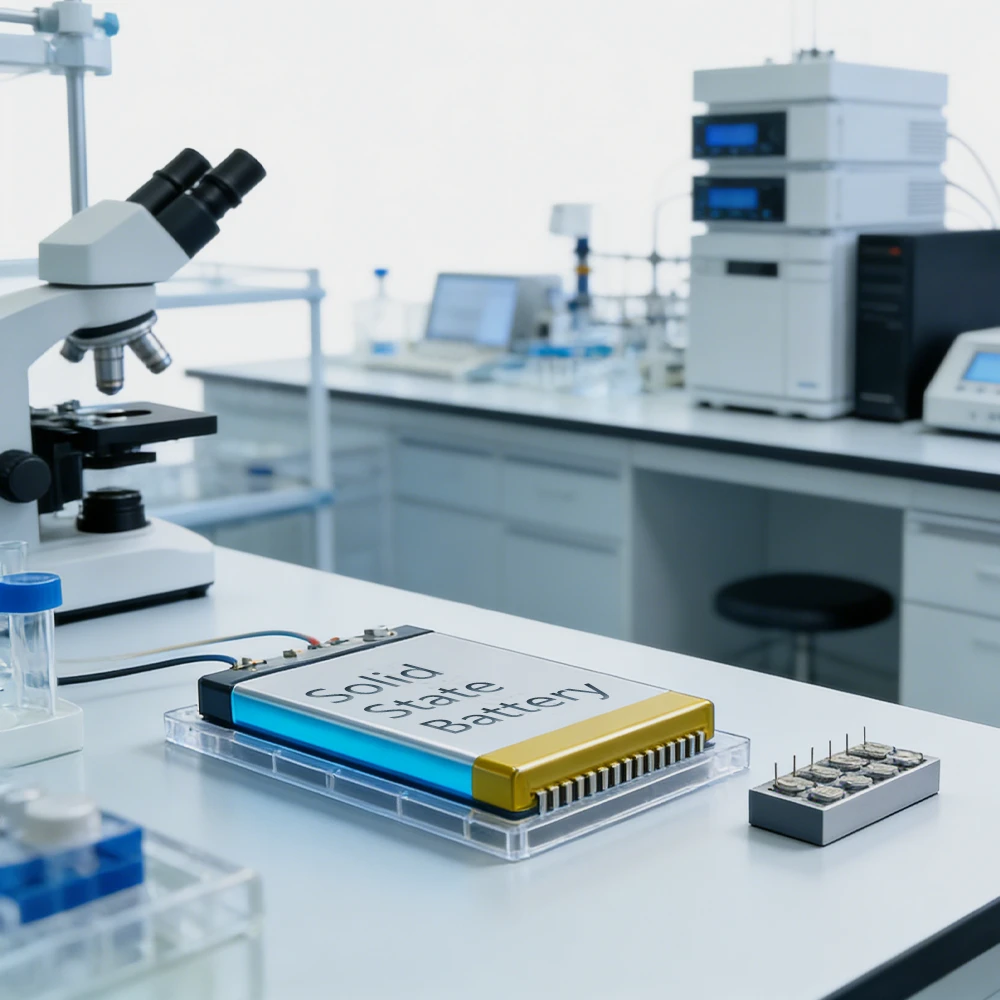
Among the three major technical routes for all-solid-state batteries (ASSB), the sulfide system stands out due to the following core advantages:
Leading ionic conductivity: Room temperature conductivity is typically 1–10 mS/cm, with laboratory cutting-edge levels exceeding 25–30 mS/cm, completely eliminating the core performance shortcoming of solid-state batteries.
Energy density ceiling: Compatible with high-nickel ternary cathodes and lithium metal anodes, first-generation commercial cells are expected to reach 350-450 Wh/kg, with long-term theoretical limits exceeding 500 Wh/kg. This enables the commercialization of eVTOLs (flying cars) and electric vehicles with a 1,200 km range.
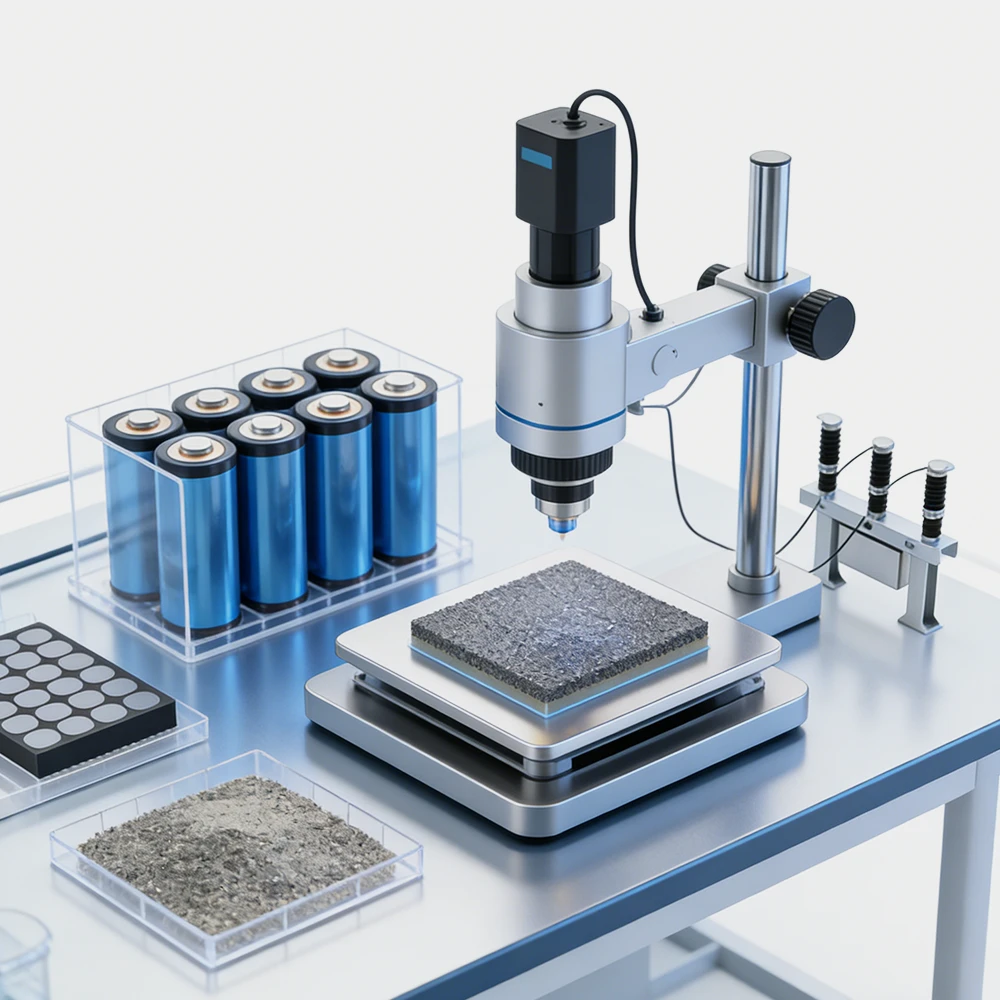
Superior machinability: Possesses intrinsic deformability, allowing for excellent solid-solid interface contact through room-temperature pressing processes.
Core challenges: Moisture sensitivity (generating toxic H2S gas upon contact with water), chemical interface degradation during cycling, and high manufacturing environment costs remain to be solved.
Technical specifications
| Feature | Sulfide | Oxide | Polymer |
| Ionic Conductivity | Extremely High (10–30 mS/cm) | Relatively High | Low (requires heating) |
| Processing Performance | Excellent (deformable, easy to press) | Poor (hard and brittle, requires high-temp sintering) | Excellent (good flexibility) |
| Energy Density Potential | Extremely High (400-500+ Wh/kg) | High | Medium |
| Industrialization Bottlenecks | Moisture sensitivity, interface degradation | Difficult solid-solid contact, extreme cost | Narrow electrochemical window, poor heat resistance |
Global industrialization landscape
The development of sulfide all-solid-state batteries has formed a clear regional division of labor, with major economies accelerating progress based on their own advantages:
Japan: technical pioneering and patent barriers
Toyota: Holds approximately 40% of the world's solid-state battery patents. Its Shizuoka pilot line plans to reach a daily capacity of 5,000 cells by the end of 2026, with mass production and vehicle integration realized by 2027-2028.
Nissan and Honda: Advancing on pilot lines in Yokohama and in collaboration with LG, respectively, with goals to complete prototype road tests or improve pilot yields by 2026.
South Korea: aggressive expansion and deep integration with automakers
Samsung SDI: Focused on showcasing "SolidStack" samples designed specifically for physical AI and humanoid robots, and is actively laying out the UAM (Urban Air Mobility) market.
SK On and LG: Adopting an "aggressive" strategy through deep cooperation with automakers like Hyundai, Mercedes-Benz, and Ford to lock in market share after future mass production.
United states: Capital-Driven and differentiated design
QuantumScape: Emphasizes a "graphite-free" design aimed at solving supply chain dependence on specific graphite sources, primarily targeting defense, aerospace, and high-performance electric racing markets.
Solid Power: Partnered with BMW to start pilot production and is accelerating technology monetization through licensing models (such as crediting Murata and Corning).
Europe: focusing on High-Value application scenarios
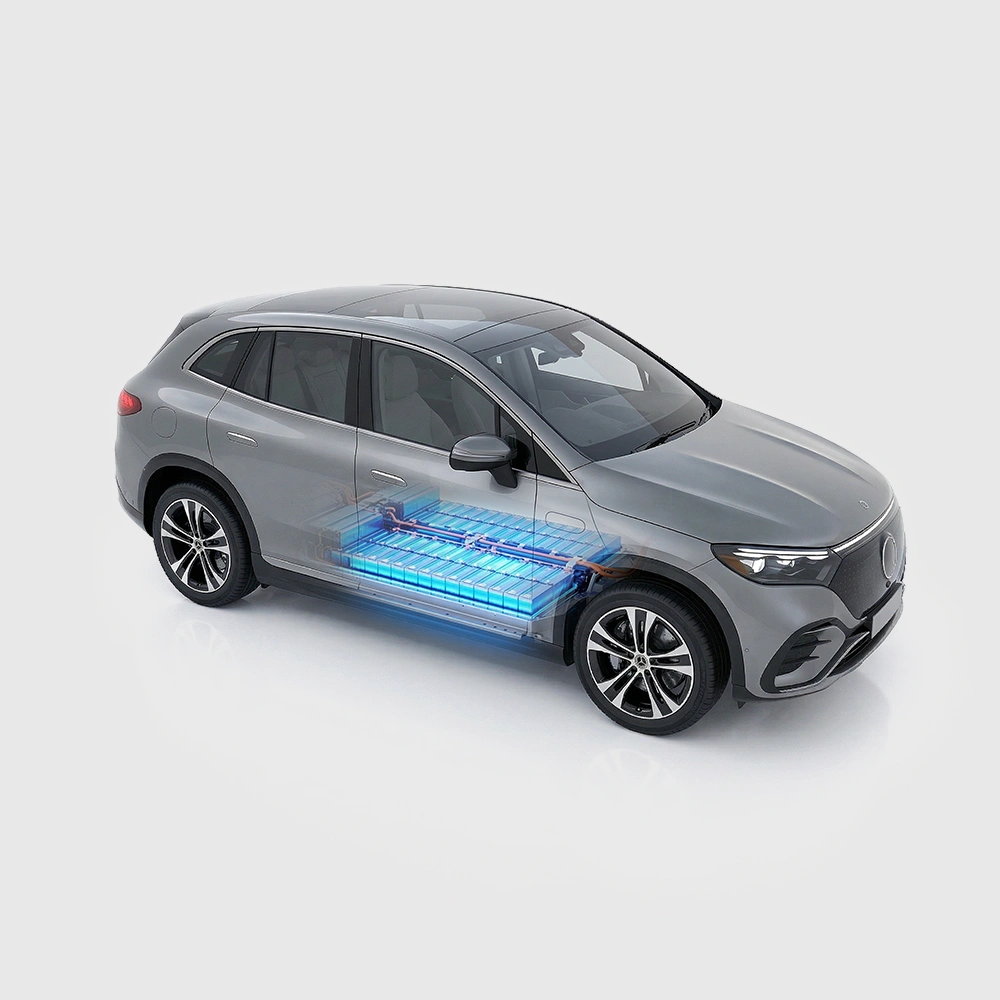
Mercedes-Benz: Has completed multi-state real-vehicle road tests, with plans for small-batch deployment in top-tier luxury models like the EQS SUV by the end of 2027.
Frontier applications: Companies like Finland's Donut Lab are targeting the commercial drone market with all-solid-state battery products.
China: full supply chain penetration and rapid iteration
Supply chain advantage: China has quickly closed the gap with Japan and South Korea, with multiple companies already capable of stable mass production of ton-level sulfide electrolytes, and electrolyte prices are steadily declining.
Technology and patent explosion: As of the end of 2025, China's share of newly disclosed patents in solid-state batteries reached 44%, ranking first in the world and demonstrating a strong catch-up momentum.
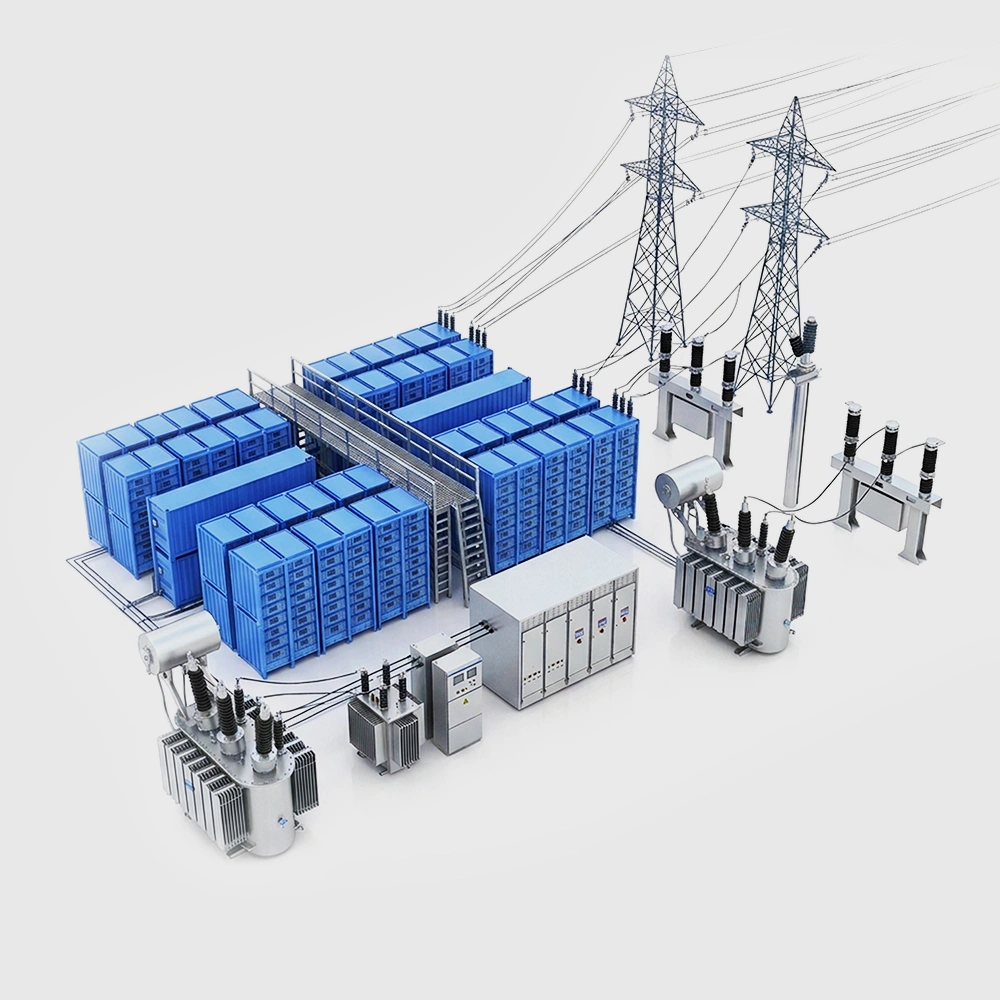
Diversified implementation: Chinese companies are moving extremely fast in the transition from semi-solid to all-solid state, and have already conducted extensive verification in commercial drones, energy storage, and high-end passenger vehicles.
Breakthroughs in core materials and supply chain
The "foundation" of industrialization lies in material mass production capabilities:
Electrolyte Mass Production: Japan achieved a ton-level breakthrough via Mitsui Mining & Smelting; Chinese companies have achieved stable mass production with ionic conductivity exceeding 10-2 S/cm, and LPSC electrolyte prices have shown a downward trend.
Cathode Optimization: Proprietary powder synthesis technologies developed by companies like Sumitomo Metal are key to solving interface stability.
Patent Evolution: As of 2025, China accounted for 44% of newly disclosed solid-state battery patents, showing a strong late-mover advantage.
Three core bottlenecks of Large-Scale mass production
Despite aggressive mass production schedules, three fundamental bottlenecks remain unresolved:
Interface impedance degradation
The solid-solid contact between the sulfide electrolyte and electrode materials degrades during charge-discharge cycles. Electrode volume expansion—especially with silicon or lithium metal anodes—leads to physical interface separation, increasing resistance and reducing effective capacity.
Current Level: Small laboratory cells can achieve 1,000 cycles with approximately 75% capacity retention, but the degradation rate of automotive-grade large-capacity cells is significantly faster.
Environmental sensitivity and manufacturing complexity
Sulfide materials are extremely sensitive to moisture, hydrolyzing into toxic H2S gas upon contact with trace amounts of water. This brings rigorous manufacturing requirements:
The entire process—from synthesis to cell assembly—must be conducted in an inert atmosphere or with a dew point below -60°C.
Equipment costs are 2-5 times higher than traditional lithium-ion production lines.
Non-standard processes (dry electrode preparation, isostatic pressing) reduce line speed and yield.
Yield gap: Current all-solid-state battery production yields are significantly lower than the 80-95% level of liquid batteries.
Trade-off between energy density and lifespan
Industry analysis reveals a sobering reality: cells reaching 400-450 Wh/kg typically cannot meet cycle life requirements, while cells meeting 1,000+ cycles struggle to exceed 400 Wh/kg in energy density.
This trade-off reflects basic laws of material physics. Higher energy density requires more active electrode materials (lithium metal, high-nickel cathodes), which exacerbate interface stability challenges. Professor Ouyang Minggao of Tsinghua University gave a pragmatic judgment: "In the next five years, all-solid-state batteries will enter the market, but the energy density will likely be around 300 Wh/kg"—significantly lower than industry targets.
Commercialization timeline
| Stage | Time Window | Key Characteristics |
| Pilot Verification | 2026 - 2027 | Pilot lines of giants like Toyota, Samsung, and Nissan ramp up; prototype samples delivered. |
| Early Commercialization | 2028 - 2030 | First batch of ASSB vehicles hit the market; estimated penetration rate of ~4%. |
| Scale Deployment | 2030 - 2035 | Costs decline as ton-level capacity is released; global penetration approaches 10%. |
Conclusion and outlook
Sulfide all-solid-state batteries are standing on the threshold of industrialization. Material science has been fundamentally verified—ionic conductivity and energy density targets have been achieved at the laboratory level. What remains is the more arduous task: engineering manufacturing processes that can produce at scale, maintain consistency, achieve acceptable yields, and have competitive costs.
2026 Key Observations:
No single region has solved all problems. Japan leads in materials and patents; South Korea excels in scaling and OEM integration; US innovators provide differentiated designs; Europe focuses on high-value applications.
The 400-500 Wh/kg goal is realistic but not imminent for mass market. Achieving this range with automotive-grade cycle life will likely require a 2028-2030 timeline.
Semi-solid batteries will fill the immediate gap. Before sulfide all-solid-state matures, semi-solid (hybrid) systems—combining reduced liquid electrolyte with a solid electrolyte framework—have entered production, utilizing existing infrastructure.
Defense and aerospace will likely be early adopters. These applications are less cost-sensitive and highly value the safety and energy density advantages of sulfide batteries.
FAQ: frequently asked questions about All-Solid-State batteries
Q1: What is an all-solid-state battery? How is it different from the batteries we use now?
A: Existing lithium-ion batteries use a liquid electrolyte to transport ions, while all-solid-state batteries use a solid electrolyte. The core advantages are extreme safety (non-flammable) and a higher energy density ceiling.
Q2: What exactly does the "sulfide route" refer to?
A: This means the solid electrolyte inside the battery used to transport ions is made of sulfide materials. It is currently recognized as the technical direction with the strongest ionic conductivity, most closely resembling liquid performance.
Q3: Why is the sulfide system considered the "ultimate route"?
A: Compared to oxide and polymer systems, sulfides have the highest ionic conductivity at room temperature, and their material is deformable, making it easier to achieve good solid-solid interface contact through pressure to meet high-rate charge/discharge demands.
Q4: Why are all-solid-state batteries considered safer than existing batteries?
A: Because they discard flammable organic liquid electrolytes. In the event of a collision or overheating, the solid electrolyte will not catch fire or explode, greatly improving the thermal safety of the battery.
Q5: What is the biggest cost challenge currently facing all-solid-state batteries?
A: It primarily stems from the rigorous manufacturing environment. Because sulfides are extremely sensitive to moisture, production lines must maintain an extremely low dew point (below -60°C) and use inert gases, making equipment investment and operating costs far higher than traditional batteries.
Q6: When will all-solid-state batteries be able to replace existing liquid batteries on a large scale?
A: Early commercialization is expected in 2028-2030, but primarily concentrated in the high-end market. Achieving full replacement in the mainstream market will depend on the progress of kiloton-level material facilities and the improvement of manufacturing yields after 2030.