Six core questions for a quick understanding of the third-generation Shenxing Ultra-Fast Charging Battery
On April 21, 2026, CATL hosted its "Beyond the Pole" Super Tech Day event in Beijing, officially unveiling the third-generation Shenxing ultra-fast charging battery alongside several other products. You can quickly grasp the core information about the third-generation Shenxing battery through the following six Q&As.
Q1: How fast is the third-generation Shenxing ultra-fast charging battery?
At room temperature, charging from 10% to 35% SOC takes just 1 minute, from 10% to 80% takes 3 minutes and 44 seconds, and a full charge (10% to 98%) takes only 6 minutes and 27 seconds. At a peak 15C charging rate, it adds 3.3 km of range per second and 100 km of range in 30 seconds. This means that in the time it takes to drink a cup of coffee, the battery can be restored from near empty to nearly full.
Q2: How does it perform in low-temperature environments?
In extreme cold of -30℃, charging from 20% to 98% takes only about 9 minutes. This performance means that the charging experience for winter users in northern regions will no longer be compromised, approaching the refueling time experience of gasoline vehicles.
Q3: Does ultra-fast charging harm battery life?
This is precisely the most difficult breakthrough for the third-generation Shenxing technology. The battery maintains capacity retention above 90% after 1,000 complete ultra-fast charging cycles. Simple calculation: at three ultra-fast charges per week, it can be used continuously for more than six years without noticeable degradation.
Q4: How does it achieve both speed and durability?
The core breakthrough lies in internal resistance. The third-generation Shenxing ultra-fast charging battery boasts the lowest internal resistance in the global ultra-fast charging industry, averaging only 0.25 mΩ, a 50% reduction compared to other ultra-fast charging batteries on the market. It also employs shoulder precision cooling and a full-process intelligent temperature control system, reducing heat generation at the source and keeping temperature rise during ultra-fast charging firmly within safe limits.
Q5: How does it compare with other batteries in the industry?
Compared with BYD's second-generation Blade Battery (9 minutes for 10% to 97% at room temperature) and Sunwoda's 15C FlashCharge 4.0 (5.5 minutes to 80%), the third-generation Shenxing leads by approximately 30% in full-charge speed at room temperature, with an even more prominent advantage in extreme cold environments.
Q6: Which vehicle models will be equipped with it? What is its market positioning?
CATL has extended its ultra-fast charging capability from the Shenxing brand to Qilin and Freevoy, announcing that its three major brands will all fully enter the "six-minute full-charge era." In terms of price positioning, Shenxing targets the mainstream market while Qilin targets the high-end segment. The ultra-fast charging proliferation across Shenxing and Qilin means that ultra-fast charging has shifted from being exclusive to luxury models to mass adoption.
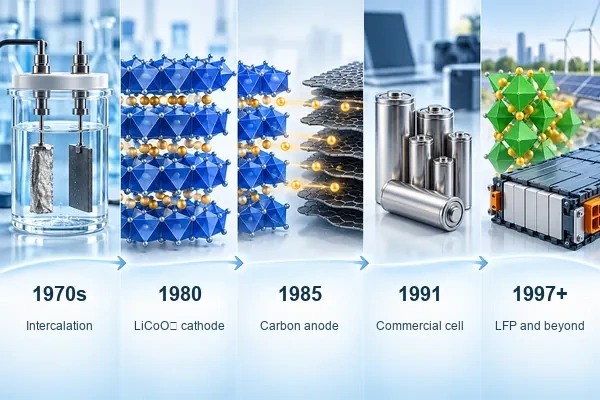
Three-generation technology evolution of the Shenxing Battery: From 10 minutes to 6 minutes
To understand the industry standing of the third-generation Shenxing ultra-fast charging battery, it should be examined in the context of the generational evolution of Shenxing technology.
| Specifications/Model | First Generation | Second Generation | Third Generation |
| Charging | 400km in 10 minutes | 520km in 5 minutes | 6 minutes 27 seconds, 10%-98% |
| Charging Rate | 4C-10C | 12C | 15C |
| Range | 700 km | 800 km | Over 1,000 km |
| Low-Temperature Performance | -10°C / 30 mins 10%-80% | -10°C / 15 mins 5%-80% | -30°C / 9 mins 20%-98% |
| Cycle Life | 3,000 | 3,000 | <10% degradation after 1,000 cycles under ultra-fast charging |
Table of three generations of Shenxing batteries
Ultra-fast charging has shifted from a flagship exclusive to a standard feature across all models. The first-generation Shenxing pioneered the LFP ultra-fast charging technology path with "400 km of range in 10 minutes of charging." The second generation pushed charging speed to "520 km of range in 5 minutes," leading the industry to promote ultra-fast charging accessibility. By the third generation, CATL has extended its ultra-fast charging capability from Shenxing to Qilin and Freevoy, with its three major brands "fully entering the six-minute full-charge era"—ultra-fast charging is no longer an exclusive label for high-end models but has become the baseline for the mainstream market.
Charging efficiency has evolved from "partial segment optimization" to "full-segment full charge." The first generation focused on "400 km of range in 10 minutes of charging." The third generation achieves complete full-charge speed from 10% to 98%, increasing the effective replenishment coverage by approximately 40%.
Fast charging and lifespan have transitioned from long-standing opposition to fundamental synergy. The focus of the first and second generations was speed breakthroughs. The third generation takes "capacity retention exceeding 90% after 1,000 ultra-fast charging cycles" as a core metric. This means that ultra-fast charging is no longer synonymous with luxury—it has become a routine daily operation.
Technical core: The triple strategy of "reduced heat generation + enhanced heat dissipation + improved precision"
Behind the third-generation Shenxing ultra-fast charging battery's combination of speed and durability lies a complete electrochemical and thermal management system engineering solution.
1. Temperature rise: The fundamental conflict between Ultra-Fast Charging and Lifespan
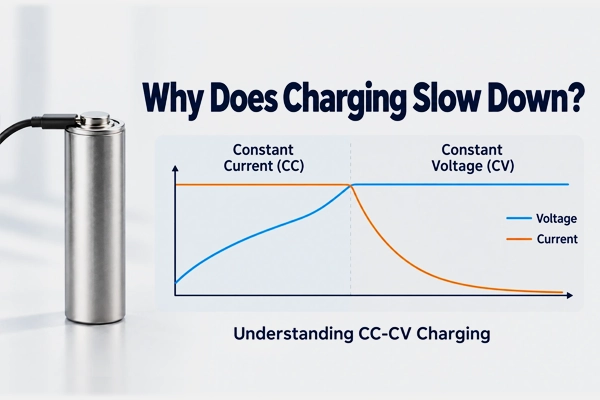
According to electrochemical principles, when charging current increases, heat generation increases quadratically. If internal resistance remains unchanged, forcibly increasing current inevitably leads to high temperatures, forcing the BMS into trickle protection mode. According to the Arrhenius equation, every 10℃ increase in battery temperature roughly doubles the rate of internal side reactions, severely impacting lifespan. Therefore, the core conflict between ultra-fast charging and long lifespan is not the magnitude of the current but the resulting temperature rise.
2. System closed-loop of three technical approaches
The third-generation Shenxing ultra-fast charging battery solves the above problems through the following three approaches:
Reduced heat generation – 50% reduction in internal resistance, reducing heat generation at the source. CATL has restructured the lithium iron phosphate system at the material genetic level, reducing average cell internal resistance to 0.25 mΩ. Coupled with a 20% improvement in heat dissipation efficiency from shoulder precision cooling design, it fundamentally reduces the amount of heat generated during the charging process.
Enhanced heat dissipation – efficient systematic thermal management. Through a full-process intelligent temperature control system, heat generated during ultra-fast charging is promptly dissipated, keeping temperature rise firmly within a safe range.
Improved precision – intelligent current curve calculation, dynamic lossless charging. High-precision SOC/SOH algorithms dynamically adjust the charging curve, matching the optimal current output based on the real-time state of the cell, making every charge a "lossless charge."
3. Compatibility and mass production feasibility
The third-generation Shenxing ultra-fast charging battery is compatible with both 400V and 800V charging platforms, adapting to various charging scenarios. On the supporting ultra-fast charging network infrastructure, CATL plans to build 4,000 "Ultra-Swap Integrated Stations" covering nearly 190 cities and 12 vertical and 11 horizontal highway networks by the end of 2026, and in collaboration with six automakers, aims to co-build a shared replenishment ecosystem, targeting more than 100,000 shared replenishment facilities constructed by the end of 2028.
Impact on the battery market and the electric vehicle industry
Accelerating the transition from ICE vehicles to EVs
Bernstein analysts noted in their research report that the third-generation Shenxing ultra-fast charging battery "effectively closes the gap with ICE vehicles." When "waiting for replenishment" is no longer a veto factor in car purchase decisions, the competition between EVs and ICE vehicles will shift from "replenishment efficiency" to total cost of ownership and driving experience, where the latter has inherent advantages.
Driving the expansion of China's battery industry chain advantage
Regarding the third-generation Qilin battery, its cell energy density reaches 280 Wh/kg. While delivering 1,000 km of range, it comes standard with 10C ultra-fast charging. The battery pack weight is controlled at 625 kg, representing a 255 kg weight reduction and 112 liters of space savings compared to similarly ranged LFP battery vehicles on the market. These lightweighting metrics translate into quantifiable vehicle-level performance gains: a reduction in energy consumption per 100 km of more than 6%, a reduction in 0-100 km/h acceleration time of about 0.6 seconds, and a reduction in braking distance from 100 km/h of 1.44 meters.
Industry research indicates that by April 2026, Chinese battery manufacturers could account for more than 70% of global battery production. CATL's technological leadership is driving this expansion.
Triggering a new round of industry-wide Ultra-Fast Charging competition
The pace of industry competition has accelerated. BYD unveiled its second-generation Blade Battery and megawatt flash charging technology in March 2026; just one month later, CATL delivered a stronger response with the third-generation Shenxing, which leads in full-charge speed at room temperature by approximately 30%. Sunwoda has already launched its 15C FlashCharge 4.0 core products. Major automakers such as Geely, Chery, and Changan are making ultra-fast charging a standard capability for their next-generation electric vehicle platforms. Ultra-fast charging is rapidly transitioning from an individual company's technological breakthrough into a baseline industry benchmark.
A paradigm shift in Ultra-Fast Charging has occurred
CATL equipping all three of its major battery brands with 10C ultra-fast charging as standard means that ultra-fast charging has shifted from a "status symbol" for high-end models to an entry ticket for the mainstream market. If the first-generation Shenxing in 2023 ushered in the "era of ultra-fast charging," then ultra-fast charging batteries like BYD's second-generation Blade Battery and CATL's third-generation Shenxing battery have truly heralded the arrival of the "ubiquitous ultra-fast charging era."
But what truly deserves attention is not the number "6 minutes" itself, but the emergence of "three irreversible trends":
First, the trend of ultra-fast charging shifting from a "luxury" to a "necessity" is irreversible. When ultra-fast charging becomes a de facto infrastructure standard, any new vehicle model lacking ultra-fast charging capability will face a pricing dilemma in the market—consumers will not pay a premium for "waiting longer and charging slower."
Second, the technology race at ultra-low internal resistance levels is irreversible. The industry-leading ultra-low internal resistance of 0.25 mΩ means that the technological competition has entered a new phase, moving from "competing on current" to "competing on resistance," potentially driving a new round of deep upgrades in materials and processes across the entire industry.
Third, the globalization of Chinese ultra-fast charging technology is irreversible. Chinese battery manufacturers already account for over 70% of global production, and their continuously refreshed ultra-fast charging records are reshaping the global benchmark for EV technology. Products such as the third-generation Shenxing and Qilin condensed matter batteries cover the full range of price segments, from mainstream to luxury. As Robin Zeng, Chairman of CATL, stated: "For Chinese technology to go global, it cannot rely solely on speed and scale, but must depend on high-quality innovation and verifiable capabilities."
And what underpins battery performance is battery testing equipment. Therefore, battery testing technology will also encompass multiple functions, including basic charge-discharge, high-end fast charging, CV and EIS testing, high and low temperature testing, internal resistance measurement, and pressure monitoring.