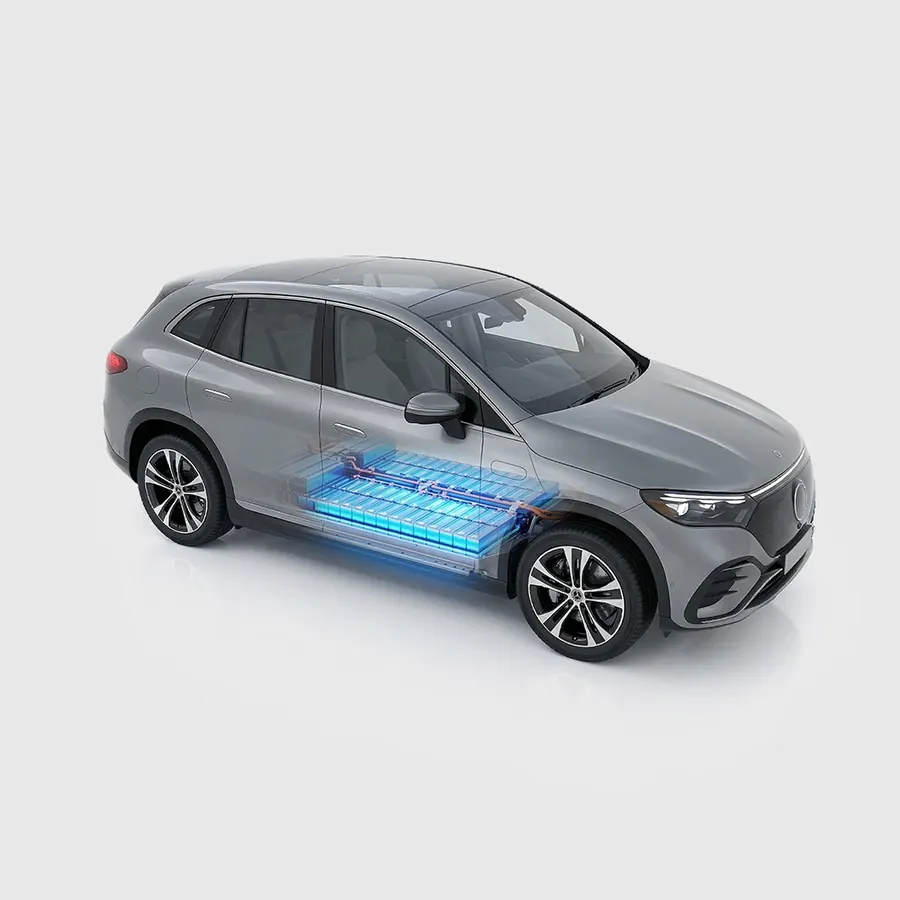
When people buy an electric vehicle, the traction battery is often reduced to a simple choice: lithium iron phosphate or ternary lithium? The former is commonly associated with cost, service life, and safety, while the latter is linked to long range and high performance. These associations capture part of the difference, but they can also suggest that every vehicle battery should be judged by the same criteria.
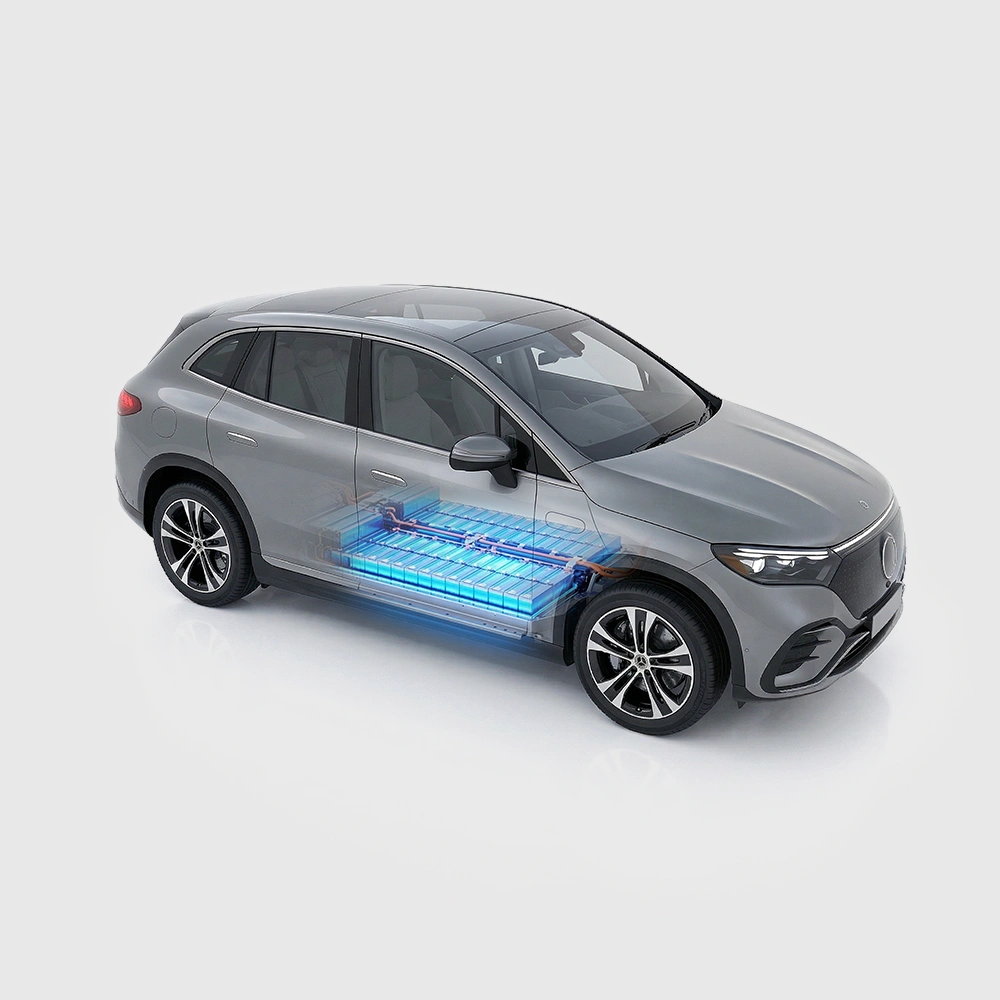
The real decision is more complex. A battery-electric car designed mainly for urban commuting, a high-performance model expected to travel long distances at highway speeds, a vehicle that frequently switches between electric and range-extender operation, and a bus that runs for many hours every day impose four different sets of requirements. Their usable-energy, peak-power, charging-speed, cycling, and temperature-adaptation needs are not the same, so the most suitable batteries will not be identical either.
The International Energy Agency (IEA) reported in Global EV Outlook 2026 that lithium iron phosphate (LFP) accounted for more than 55% of global electric vehicle battery deployment in 2025. Most of the remaining market consisted of nickel-based chemistries such as mid- to high-nickel lithium nickel manganese cobalt oxide (NCM or NMC) and lithium nickel cobalt aluminum oxide (NCA). The market's main routes are now relatively clear, but deciding which route suits a particular vehicle still requires an analysis of how that vehicle will actually be used.
The market's two main routes are LFP and nickel-based ternary chemistries
LFP's strengths are concentrated in cost, material stability, and cycle durability. Its phosphate olivine structure is relatively stable, and nickel and cobalt are not the principal metals in its cathode. Under appropriate voltage, temperature, and charge-discharge conditions, LFP generally provides good thermal stability and cycle performance. Improvements in pack integration can also offset part of the space penalty associated with lower cell-level energy density. As a result, LFP has expanded from short-range models into a much broader passenger-vehicle and commercial-vehicle market.
In the Chinese market, NCM and NCA are often grouped under the broad label "ternary lithium": NCM uses nickel, cobalt, and manganese, whereas NCA uses nickel, cobalt, and aluminum, so they are related market categories rather than the same material formulation. Their core value is energy. Increasing nickel content can raise usable cathode capacity, allowing a vehicle to carry more energy within limited mass and underbody space. This advantage becomes especially important when long range, low weight, and high performance take priority.
These routes do not correspond to a simple "entry-level" versus "premium" divide. Pack architecture, thermal management, battery management system (BMS) control, and vehicle efficiency can widen or narrow the material-level gap. LFP can be used in long-range vehicles, while NCM/NCA service life can be extended by limiting the state-of-charge (SOC) window and improving temperature control. Materials define the battery's fundamental boundaries; the vehicle system determines how much of that capability can actually be used.
Blade batteries, 4680 cells, and 800 V systems are different classifications
Traction-battery terminology becomes confusing because concepts from different levels are often compared directly. LFP, NCM, and NCA describe material chemistries. Cylindrical, prismatic, and pouch describe cell formats. Cell-to-Pack (CTP) and Cell-to-Chassis (CTC) describe pack integration. A 400 V or 800 V designation describes the approximate voltage class of the vehicle's high-voltage electrical system.
For example, 4680 primarily identifies the dimensions of a cylindrical cell and does not automatically specify a cathode chemistry. The term "blade battery" mainly refers to a long prismatic cell and its pack arrangement, so not every performance characteristic should be attributed to LFP. An 800 V architecture can reduce current and conductor losses at the same power, but it does not directly increase a cell's energy density. Before comparing traction batteries, it is necessary to establish whether the discussion concerns materials, cells, packs, or the complete vehicle. Otherwise, a conclusion may sound correct while comparing different levels of the system.
Urban and mass-market EVs prioritize total cost
Urban and mass-market battery-electric vehicles usually do not need to pursue the maximum possible range within limited space, but they are highly sensitive to vehicle price, operating cost, cycle life, and safety margins. Once the pack covers the target driving range, the benefit of further increasing energy density may be less valuable than reducing cost and extending service life. LFP has therefore become a representative choice in this market.
LFP's advantages do not mean that it has no limitations. Compared with high-nickel NCM/NCA, its cell operating voltage and specific energy are generally lower, so the same usable energy may require more volume or mass. Low temperature also increases polarization and reduces usable energy and charge acceptance. In addition, LFP has a relatively flat voltage plateau through the middle of its SOC range. Because the open-circuit voltage changes only slightly, a BMS that relies too heavily on voltage-based SOC correction may accumulate estimation error over time.
Evaluating an LFP battery for an urban EV therefore requires more than an initial capacity measurement at 25 °C. Winter usable energy, low-temperature charging, acceleration and regenerative-braking power at different SOC levels, fast-charge temperature rise, power retention after extended cycling, and SOC recalibration after rest all affect the driving experience. Material stability also cannot replace pack-level safety validation. Internal short circuits, connection faults, mechanical damage, and thermal propagation still require independent tests.
Long-range and high-performance EVs need more energy in limited space
Long-range vehicles must fit more energy into limited underbody space and vehicle mass. High-performance vehicles must also deliver substantial power across a broad SOC range. Sustained power demand rises during highway driving, while pack mass affects energy consumption, handling, and braking. Gravimetric and volumetric energy density therefore have direct value in these vehicles, which is why mid- to high-nickel NCM and NCA remain important.
Higher energy usually comes with stricter management requirements. High-nickel materials are more sensitive to high SOC, elevated temperature, and interfacial side reactions. Extended storage at full charge, frequent fast charging, and high-temperature operation can accelerate capacity loss and impedance growth. Thermal stability also depends on the anode, electrolyte, separator, cell structure, and cooling system, so it cannot be judged from the cathode name alone. Even so, high-energy routes generally demand more capable thermal control, fault monitoring, and safety redundancy.
Testing for long-range traction batteries should cover high-SOC storage, high-temperature cycling, low-temperature charging, the constant-voltage phase of fast charging, and direct-current internal resistance, peak power, and continuous power at multiple SOC and temperature points. High energy density does not automatically imply stronger fast-charging capability. Fast charging also depends on anode material, electrode thickness, porosity, electrolyte, temperature, and charging strategy. Potential lithium plating during low-temperature or high-SOC fast charging cannot be diagnosed from charging time or a single voltage curve alone; independent evidence may include coulombic efficiency, relaxation voltage, impedance, three-electrode measurements, or post-test disassembly.
Plug-in hybrid and range-extended EV batteries are smaller but switch power more often
Plug-in hybrid electric vehicles (PHEVs) and range-extended electric vehicles (EREVs) combine an electric drivetrain with a combustion-based power source. Their packs are usually smaller than those in long-range battery-electric vehicles, yet they may experience more frequent discharge, charging, engine engagement and disengagement, regenerative braking, and changes in power direction. The battery must store energy while repeatedly delivering and absorbing power within a relatively limited capacity.
These vehicles may use either LFP or NCM. Products that prioritize cost, frequent cycling, and a larger safety margin are more likely to use LFP, but designers must allow for volume, mass, and low-temperature limitations. Vehicles seeking longer electric-only range or more compact packaging may choose NCM, although the combined management of high SOC, elevated temperature, and frequent cycling becomes more important. The decisive factors are not the labels "plug-in hybrid" or "range extender," but electric-only range, maximum charge-discharge power, the usable SOC window, and engine-control strategy.
Laboratory testing for PHEV and EREV batteries should include partial-SOC cycling and bidirectional pulses. Discharge pulses simulate acceleration, climbing, and power-source transitions; charge pulses simulate regenerative braking. Beyond capacity, engineers should monitor charge acceptance, peak and continuous power, energy efficiency, temperature rise, and power fade. A battery can retain substantial capacity yet fail to meet acceleration or regenerative-braking requirements because its internal resistance has increased.
Buses and logistics vehicles must include operating efficiency in battery selection
Buses, urban logistics vehicles, and other high-utilization commercial vehicles often follow relatively fixed routes, loads, and charging schedules. They operate for long hours, process large amounts of energy, and lose revenue when unplanned downtime occurs. For these vehicles, the ability to complete each day's duty cycle reliably, the time required for charging, and the energy and power available after several years matter more than maximizing cell-level specific energy.
LFP is well suited to many commercial applications because of its cost and cycle durability. Fixed routes allow capacity to be sized around known daily mileage, and a larger pack may be less restrictive than it would be in a passenger car. For long-haul trucks and other vehicles where payload and range dominate, however, LFP and higher-energy nickel-based routes must still be reassessed against charging infrastructure, available chassis space, and payload loss. There is no single answer for every commercial vehicle.
Lithium titanate (LTO) is a more specialized route. The term usually refers to a battery with a lithium titanate anode. Its higher lithium-insertion potential helps reduce the risk of lithium plating on a graphite anode during low-temperature and high-current charging, making LTO suitable for operating vehicles that prioritize rapid charging, low-temperature power, and very frequent cycling. The tradeoff is a lower full-cell operating voltage and energy density, so the pack may be heavier and larger, with a higher initial cost. LTO's system-level benefits are easier to justify only when shorter charging stops and higher vehicle availability create sufficient value.
Commercial-vehicle tests should reproduce real duty cycles as closely as possible, including multiple charging events per day, sustained high-power output, variable loads, summer and winter temperatures, and heat accumulation caused by short intervals between charging sessions. Results should include not only cycle count but also cumulative energy throughput, usable energy, charging time, peak temperature, module temperature spread, power retention, and efficiency. Cycle counts obtained at different depths of discharge and temperatures cannot be ranked directly.
LMFP, sodium-ion, and all-solid-state batteries are at different development stages
Lithium manganese iron phosphate (LMFP) is an upgrade path for phosphate cathodes. By introducing manganese to raise operating voltage, LMFP aims to increase energy while retaining some advantages of phosphate chemistry. It must still address electronic and ionic transport, dual voltage plateaus, manganese-related interfacial reactions, and manufacturing consistency. LMFP is better understood as a potential new balance between LFP and higher-energy routes than as a mature, universal replacement for LFP.
Sodium-ion batteries are not lithium-ion batteries, but they have become candidates for small urban vehicles, low-temperature applications, and hybrid battery packs. The IEA's 2026 outlook describes sodium-ion technology as entering a scale-up phase while noting that its energy density and supply-chain maturity still lag behind mainstream lithium-ion systems. All-solid-state batteries remain at an earlier engineering-validation stage. Interfacial contact, stack pressure, operating temperature, manufacturing yield, cost, and pack integration are still critical issues. Market terms such as "semi-solid," "quasi-solid," and "all-solid-state" are not used consistently, so any comparison should first establish liquid content, operating pressure, temperature, and actual production status.
Range, acceleration, fast charging, and life require different test metrics
Driving range first depends on how much energy a battery can deliver under the target operating conditions. Battery output energy can be expressed as:
E = ∫ U(t) × I(t) dt
LFP and NCM cells with the same ampere-hour capacity do not provide the same watt-hour energy because their operating voltages differ. Batteries with the same nominal energy may also deliver different usable energy after low-temperature operation, high-rate use, or aging. A range evaluation must therefore specify temperature, rate, SOC window, and cutoff conditions.
Acceleration and regenerative braking concern power. Instantaneous power can be expressed as:
P(t) = U(t) × I(t)
A traction battery must supply discharge power and absorb charging pulses from regenerative braking. Low SOC can limit discharge power, while high SOC can limit regenerative charge acceptance, so power tests must cover multiple SOC and temperature points. Direct-current resistance and power results also cannot be compared directly when pulse duration, sampling time, or rest conditions differ.
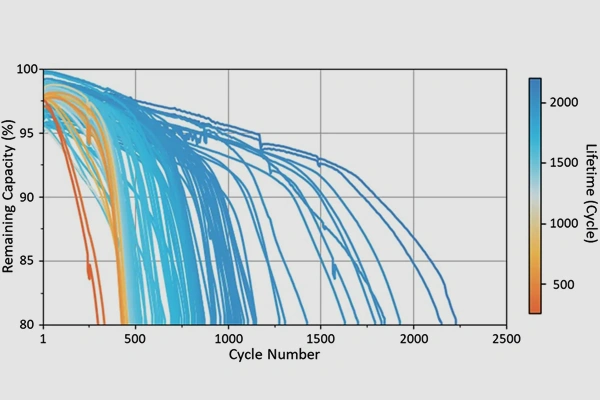
A fast-charging evaluation should not report only the time required to reach a particular SOC. It should record starting temperature, preconditioning, SOC calibration, capacity baseline, input energy, the constant-voltage phase, temperature rise, efficiency, and post-charge performance changes. Life evaluation must also look beyond capacity retention: a vehicle may lose acceleration, fast-charging, or regenerative-braking capability through impedance growth before capacity reaches its end-of-life threshold.
Translate vehicle requirements into laboratory test profiles
Traction-battery testing must convert range, acceleration, fast-charging, and life targets into sequences of current, voltage, power, SOC, temperature, and time. A reproducible validation process normally includes five steps:
Define the vehicle's target range, available battery space, peak and continuous power, fast-charging requirements, daily mileage, ambient temperatures, usable SOC window, and end-of-life criteria.
Following the cell datasheet and project protocol, measure baseline capacity, energy, efficiency, and initial internal resistance at specified temperature, rest time, charge-discharge rate, and cutoff conditions.
Apply charge and discharge pulses at multiple SOC and temperature points, recording voltage response, direct-current internal resistance, peak power, continuous power, temperature rise, and recovery during rest.
Import dynamic profiles representative of the target vehicle. Urban EV profiles emphasize stop-start operation and regenerative braking; long-range EV profiles add sustained highway power and fast charging; PHEV and EREV profiles add engine engagement and bidirectional power switching; commercial-vehicle profiles reproduce actual shifts, loads, and charging schedules.
At regular intervals during cycling, repeat the same capacity, energy, resistance, and pulse diagnostics to distinguish capacity loss, power fade, and test drift.
IEC 62660-1 covers performance testing of lithium-ion cells for electric road vehicles, while ISO 12405-4 covers performance testing of traction battery packs and systems. Both can inform the development of a project protocol. Specific conditions must still be selected from the cell datasheet, vehicle requirements, and applicable standards; an example profile should not be treated as a universal procedure for every traction battery.
How Neware equipment and software support traction-battery validation
The Neware CE-6000 Series is designed for high-power battery applications including electric vehicles. Neware describes the platform as supporting pulse tests, drive-cycle simulation, end-of-line (EOL) tests, and BMS tests from cells to battery packs. Equipment selection for traction cells should consider voltage, current, measurement ranges, response, sampling, and channel count. Module and pack testing must also account for system voltage, continuous power, energy regeneration, communications, safety interlocks, and cooling conditions.
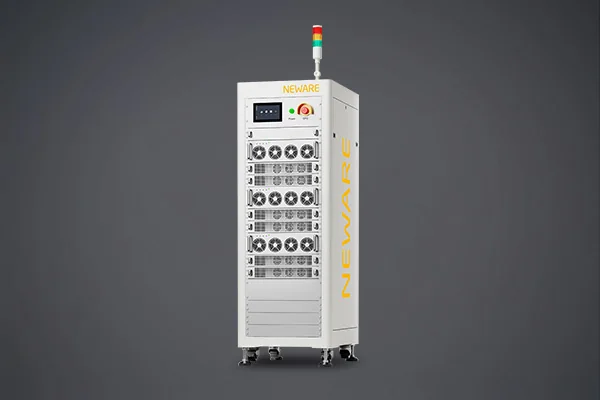
Figure 1. Neware CE-6000 Series module battery test system. The appropriate configuration depends on voltage, current, power, channels, and safety limits.
On the software side, BTS can organize constant-current, constant-voltage, constant-power, pulse, rest, cycle, and protection conditions into reusable test steps. BTSDA is used to inspect curves, compare samples, and export capacity, energy, power, and cycling data. With AUX channels, surface temperature or individual-cell voltage can be recorded on the same timeline as electrical changes, temperature differences, and cell-to-cell consistency. The purpose of this workflow is not to declare one material route superior; it is to compare different routes under explicit and repeatable conditions.
A traction-battery route is the result of vehicle-level tradeoffs
For moderate-range battery-electric vehicles that prioritize cost and cycle life, LFP is generally highly competitive. For vehicles constrained by pack mass and space that pursue long range and high performance, the energy advantage of NCM/NCA remains important. PHEVs and EREVs should establish electric-only range, power transitions, SOC window, and cycling frequency before choosing between LFP, NCM, and other routes. LFP is a major choice for high-utilization commercial vehicles, while LTO suits specialized scenarios where charging time and low-temperature power carry greater value.
The future market will not converge on a single battery. LMFP, sodium-ion, and all-solid-state technologies seek new balances in energy, resources, low-temperature behavior, or next-generation architectures, but their commercial maturity differs. The useful question is not "Which material is best?" It is which battery system can perform its task reliably over time within the target vehicle's temperature, SOC, power, cost, and life boundaries.