The dilemma of power systems and the opportunity for energy storage
Currently, global power systems are facing unprecedented dual challenges. On one hand, the proportion of renewable energy sources such as wind and solar power in the electricity generation mix continues to rise. However, their inherent volatility and intermittency contradict the "instantaneous balance" pursued by power grids—surges in generation occur during sunny noons, requiring thermal power to urgently ramp up after nightfall; electricity surpluses appear on windy days, yet shortages emerge when the wind subsides. This "weather-dependent" characteristic places immense pressure on grid frequency stability and load balancing. On the other hand, the peak-to-valley difference in overall electricity load is widening. Short-duration peak loads, such as air conditioning in summer and heating in winter, force power grids to configure massive redundant installed capacity based on "maximum possible demand," resulting in asset idleness and resource waste for most of the year.

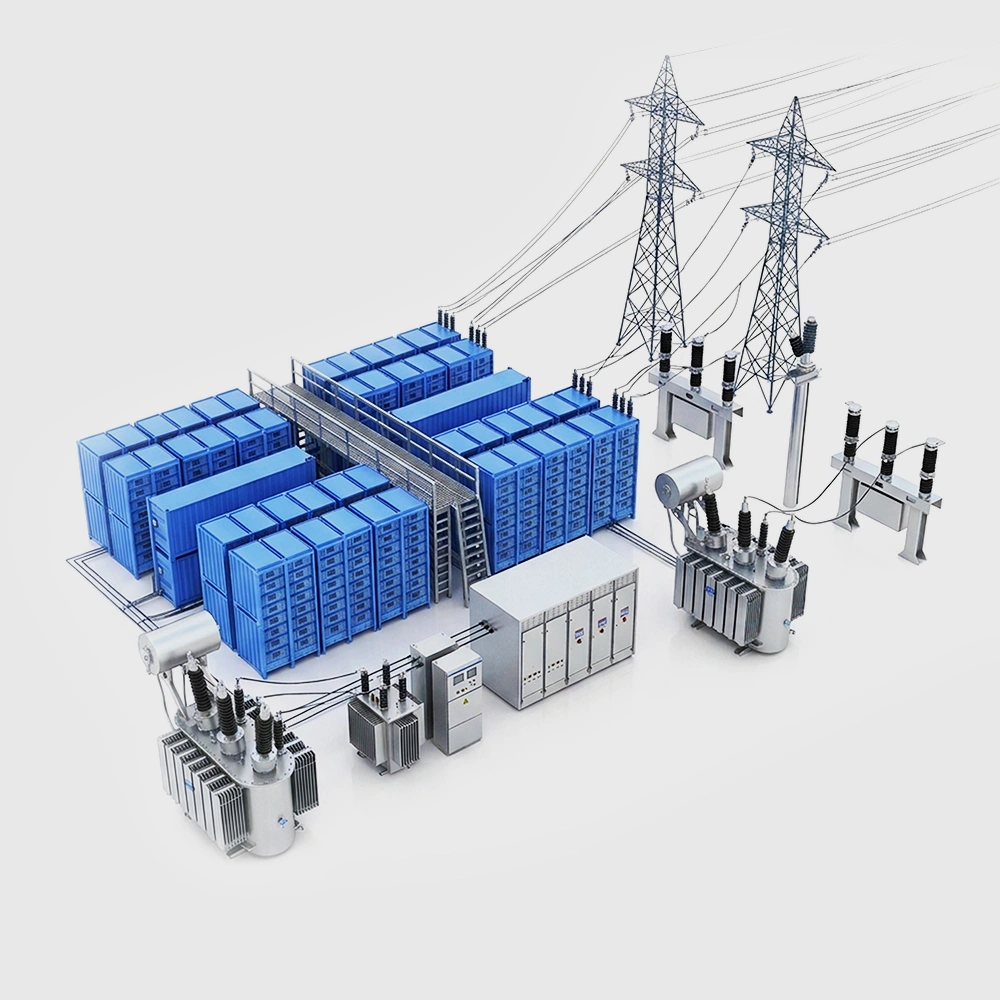
Figure 1 clean energy power station
Against this backdrop, energy storage is regarded as the key to solving the dilemma. However, pumped hydro storage is limited by geographical conditions, while electrochemical energy storage stations require enormous investment and have long payback periods. At this moment, a large-scale, widely distributed "shadow energy storage system" that remains idle for most of the day is coming into view—that is, tens of millions of electric vehicles. According to forecasts, China's electric vehicle fleet may reach 300 million vehicles by 2040. If these onboard batteries are aggregated and dispatched, their overall power support capacity to the grid could reach 2.9 to 3.5 billion kilowatts. How to awaken this dormant resource? The answer lies in V2G (Vehicle-to-Grid) technology.

Figure 2 smart grid system simulation diagram
In-depth analysis of the V2X family
Before discussing V2G, it is necessary to clarify the definitions and boundaries of each member within the V2X (Vehicle-to-Everything) family. They share the technical core of "electric vehicles discharging to external systems," but the objects they serve and the scenarios in which they operate are fundamentally different.
What are V2L, V2V, V2H, and V2G? What are the differences?
V2L (Vehicle-to-Load) is the most basic and direct form. It allows electric vehicles to supply power to external electrical devices through an adapter or a built-in socket—powering induction cookers and speakers during camping, driving power tools in field operations, or temporarily supplying electricity for household lighting and refrigerators during urban power outages. V2L is essentially a unidirectional "vehicle-to-load" discharge, requiring no communication with the grid, and is purely a "portable power outlet" function inherent to the vehicle.

Figure 3 power supply from a vehicle during camping
V2V (Vehicle-to-Vehicle) serves as "mutual rescue" between electric vehicle owners. When an electric vehicle runs critically low on power and no charging station is nearby, another fully charged electric vehicle can directly recharge it using a V2V charging gun. This is similar to "borrowing fuel" for traditional gasoline vehicles, but the current transmission requires the vehicles to support bidirectional charging functionality as well as dedicated V2V connection equipment.
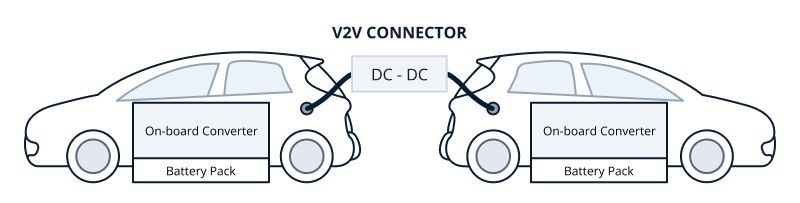
Figure 4 V2V schematic diagram
V2H (Vehicle-to-Home) expands the scale of discharge from a single appliance to an entire house. Electric vehicles equipped with V2H functionality can work in coordination with home energy storage systems and photovoltaic power generation: during the day when the vehicle is parked, surplus solar power can be stored in the vehicle's battery; during evening peak electricity prices or sudden power outages, the vehicle automatically switches to "home backup power" mode, supplying electricity to critical loads throughout the house for hours or even days. V2H achieves a closed-loop "vehicle + home" energy microgrid.
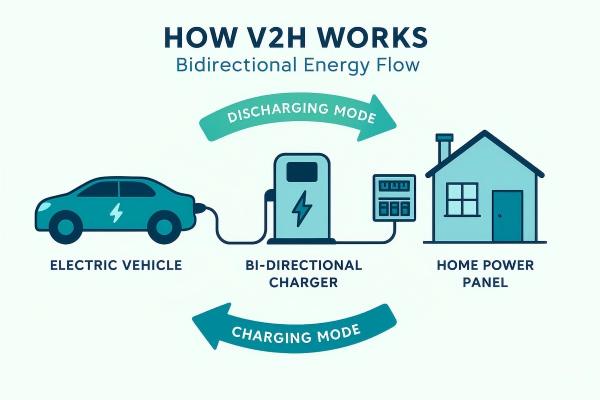
Figure 5 V2H schematic diagram
V2G (Vehicle-to-Grid) is the most technologically complex and strategically valuable component of the V2X family. It enables bidirectional energy and information flow between electric vehicles and the public power grid. During periods of high grid load (when electricity prices are high), electric vehicles feed power back to the grid; during periods of low grid load (when electricity prices are low), the vehicles automatically charge to store energy. Every electric vehicle connected to a V2G charging station functions as a miniature distributed energy storage unit, subject to unified dispatch by the grid.

Figure 6 V2G principle structure diagram
The core difference among the four lies in the energy flow direction and interaction objects: V2L is "vehicle → device," V2V is "vehicle → vehicle," V2H is "vehicle → home," while V2G is "vehicle ↔ grid," possessing bidirectional interaction and market transaction characteristics.
Advantages and disadvantages of the V2X family
The advantage of V2L lies in its low technological barrier and practical functionality. It has already become a standard feature in many new vehicle models, significantly expanding the life scenarios for electric mobility. Its disadvantage is the limited energy capacity, which cannot support long-duration high-power loads, and it is purely unidirectional, not participating in energy trading.
The advantage of V2V lies in providing a "mobile rescue" solution for range anxiety, enhancing users' sense of security. However, its disadvantage is relatively low efficiency, with energy loss occurring through two conversions, and it requires both vehicles to simultaneously possess bidirectional functionality, resulting in currently low adoption rates.
The advantage of V2H lies in deeply integrating household energy consumption with electric vehicles. When combined with photovoltaic systems, it can significantly reduce electricity expenses and provide genuine "energy security" during grid failures. Its disadvantage is the relatively high system investment, requiring bidirectional charging/discharging equipment and a home energy management system. Additionally, the vehicle must be parked at home for extended periods, making it suitable for users with detached homes. Currently, Tesla has a well-established complementary product called Powerwall, which is highly suitable for V2H applications. The new Model Y performance version will support this functionality, while currently the Tesla Cybertruck supports this feature.

Figure 7 Tesla Powerwall scenario diagram (integrated with grid, photovoltaics, and electric vehicles)
The advantages of V2G are the most prominent: for the grid, it represents the lowest-cost flexible resource, capable of participating in auxiliary services such as peak shaving, frequency regulation, and reserve capacity, while delaying grid expansion investments; for vehicle owners, it serves as an income-generating tool that "earns money while parked"—according to estimates, the average annual net income can reach 3,888 yuan; for society, it promotes renewable energy consumption and reduces overall power system costs. However, the challenges of V2G are equally significant: first, concerns about battery life—although research has demonstrated that the impact is controllable under reasonable charge-discharge strategies, the psychological barrier for users still needs to be addressed; second, standardization and interoperability issues—the communication protocols and settlement mechanisms among vehicles, charging stations, and the grid have not yet been fully unified; third, relatively high hardware costs—bidirectional charging stations are approximately twice as expensive as conventional ones.
The impact of V2G on power grids, energy storage, and power systems
The large-scale application of V2G technology will fundamentally reshape the operational logic of the power system from the ground up.
For the power grid, tens of millions of electric vehicles constitute a distributed "virtual power plant." They can respond to grid dispatch commands at the millisecond level, providing frequency regulation services faster than traditional thermal power; they can discharge collectively during peak loads on summer evenings, shaving peaks and filling valleys, thereby reducing reliance on peaking units such as gas turbines; and they can increase charging power when renewable energy generation is abundant, absorbing excess electricity and reducing curtailment rates of wind and solar power. Pilot projects have already demonstrated that V2G applications can achieve a year-on-year decrease of 18% in the peak-to-valley difference of power supply.

Figure 8 "virtual power plant" system concept diagram
For energy storage, V2G essentially involves "leasing" the battery assets of electric vehicle users. This means that the grid and electricity markets can obtain massive distributed energy storage capacity without paying high upfront construction costs for energy storage stations, merely by incentivizing user participation through price signals. This "asset-light, widely distributed" energy storage model will fundamentally transform the investment return paradigm of traditional energy storage.
For the power system as a whole, V2G drives the evolution of electricity markets from "generation following load" to "interaction between generation and load." Users are no longer passive consumers but rather "prosumers"—they autonomously decide charging and discharging behaviors based on electricity price signals, participating in electricity spot markets and ancillary service markets through aggregators. This will give rise to brand-new business models and market rules, driving the evolution of the power system toward greater flexibility, openness, and market-orientation.
Practical application cases of V2G
In the past, practical cases of V2G were relatively scarce. However, recently, with grid overload and surging peak-shaving pressure, V2G solutions have been vigorously promoted. Just recently, numerous implementation cases have gained significant attention.
Case 1: AC V2G technology testing in Hubei, China
In March 2026, the AC V2G technology for electric vehicles, jointly developed by State Grid Hubei Electric Power Research Institute and Dongfeng Motor, completed application testing, achieving flexible switching between online charging and discharging. Unlike DC V2G previously deployed at public stations, AC V2G is primarily targeted at residential communities and office parking lots. Designed for the characteristic of private vehicles being connected to the grid for extended periods, it allows owners to automatically switch between charging and discharging via their mobile phones without manual plugging and unplugging, enabling "participation in the electricity market from their doorstep." Hubei is currently formulating discharge pricing policies; referencing provinces that have already issued such policies, vehicle owners could achieve an annual net income of up to 3,888 RMB.
Case 2: V2G vehicle-grid interaction pilot in Hunan, China
In March 2026, the first batch of district-level V2G vehicle-grid interaction pilots in Hunan Province were launched in Wangcheng District, Changsha. Vehicle owners pay 12 yuan for charging during off-peak hours and receive 22 yuan for discharging during peak hours, earning a net profit of 10 yuan per charge-discharge cycle. The pilot deploys 22 kW bidirectional smart terminals, achieving full-link connectivity across "vehicle-charger-grid-cloud." The peak-to-valley difference in the distribution district decreased by 18% year-on-year. According to calculations, participating vehicle owners can earn 0.7-0.9 yuan per kilowatt-hour, with average annual income for ordinary household vehicles potentially exceeding 1,000 yuan.
Case 3: Ningbo's "PV-storage-charging-discharging" integrated station, China
In March 2026, the first "PV-Storage-Charging-Discharging" integrated charging and swapping station in Beilun District, Ningbo, was put into operation. The station is equipped with V2G bidirectional charging/discharging piles, combined with photovoltaic and energy storage systems, achieving peak shaving and valley filling through S2G (Station-to-Grid) technology. Based on a virtual power plant platform, the entire station possesses the capability for bidirectional interaction and coordinated response with the grid, transforming electric vehicles here into mobile distributed energy storage units.
Case 4: Sichuan's first V2G reverse power feed, China
In April 2025, a resident in Shuangliu District, Chengdu, Sichuan, sold electricity from their electric vehicle back to the grid through a V2G charging station, earning 5.2 yuan for 5.2 kilowatt-hours of electricity. This marked the first case in Sichuan where an electric vehicle injected power into the 10 kV public grid. This transaction took the first step toward large-scale application of vehicle-grid interaction and verified the feasibility of V2G technology in the Southwest China region.
Case 5: BMW and E.ON commercial V2G service, Germany
In February 2026, BMW and E.ON launched Germany's first commercial V2G service nationwide. The package includes the BMW Wallbox Professional (11kW), E.ON V2G electricity tariff, and a smart meter. Users simply need to keep their vehicles connected to the V2G system to receive a bonus of up to 720 euros per year—regardless of whether the battery actually charges or discharges. The first 100 iX3 customers can also receive a 700 euro discount on the wallbox. This service utilizes intelligent algorithms to automatically manage charging and discharging, optimizing grid stability and user revenue while ensuring battery life protection.
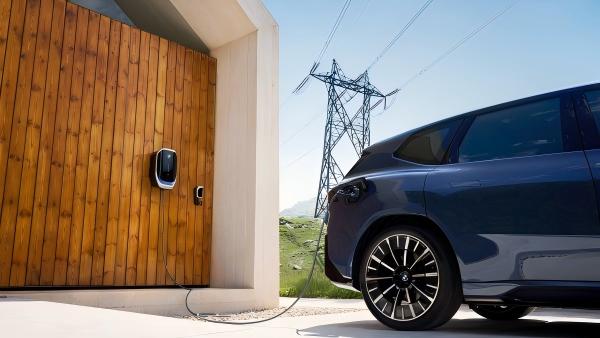
Figure 9 E.ON and BMW launch Germany's first commercial V2G product
Future prospects of V2G
The application potential of V2G extends far beyond the basic notion of merely "earning profits from peak-valley price differences." When V2G technology becomes fully widespread, future life scenarios will be completely transformed:
In the early morning, your electric vehicle sells the surplus solar power stored yesterday to the grid during your commute to work, and your phone receives a payment notification. In the morning, the V2G charging stations downstairs at your company detect local grid frequency fluctuations, automatically aggregating dozens of electric vehicles in the building to participate in frequency regulation, with each vehicle earning additional ancillary service revenue. In the evening, as you prepare to head home, you receive a push notification from the grid app: a severe typhoon warning for tonight, recommending that you reserve power for emergencies—with a simple tap confirmation, your vehicle automatically switches to "home backup power mode." Late at night, when the typhoon causes a community power outage, your home remains lit and the refrigerator continues running, all powered silently by the electric vehicle parked at your doorstep.
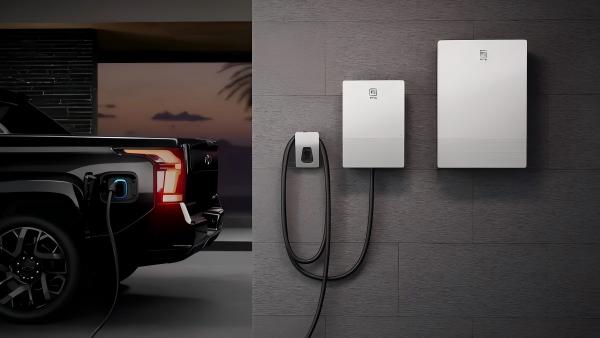
Figure 10 conceptual diagram of future V2G coverage
Supplement: Some of the information presented above was obtained from the Internet. We are very sorry if there is any infringement! You can contact us for deletion!