The dual revolution of electrification and intelligence
As the penetration rate of electric vehicles continues to rise, the automotive industry is undergoing a transformation even more profound than "electrification"—intelligence. If electrification represents a restructuring of the automotive powertrain, then intelligence signifies a fundamental reshaping of the relationship between humans and vehicles.
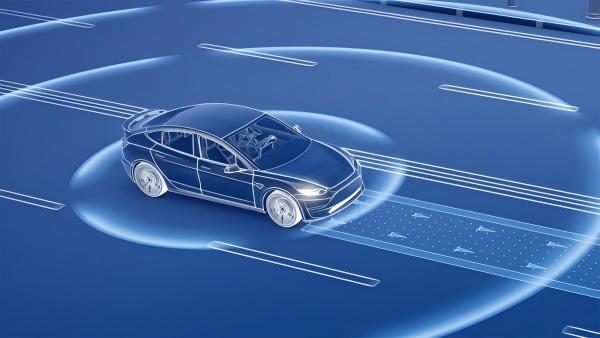
Figure 1 schematic diagram of AI sensors for intelligent driving
In 2026, global sales of new energy vehicles accounted for more than one-third of total new vehicle sales, but the true revolution lies not in the form of power, but in driving autonomy itself. The explosive evolution of artificial intelligence has enabled vehicles to transition from "manipulated tools" to "autonomous decision-making agents." Breakthroughs in end-to-end foundation models, world models, and multimodal perception allow machines to "see" the road, "understand" scenarios, and "anticipate" risks in ways akin to human drivers.
The development of intelligent driving has progressed through three stages: the early rule-based era, which relied on manually written code by engineers; the mid-term perception fusion era, which depended on high-definition maps and multi-sensor integration; and by 2026, the industry has entered the "end-to-end" era—where perception, decision-making, and control are integrated into a single large model, making driving behavior more human-like, akin to that of a "veteran driver."
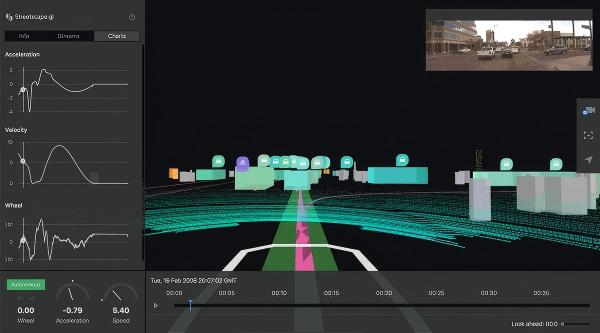
Figure 2 visualization of autonomous driving AI decision-making
Against this backdrop, in February 2026, Tesla officially rolled out its first production model to completely eliminate the steering wheel and pedals—the Cybercab—propelling intelligent driving to an unprecedented level. When vehicles no longer require human intervention, and when mobility truly becomes a "service on demand," a new era has dawned.
In-depth analysis of Cybercab
Cybercab—a smart vehicle without pedals or a steering wheel. What makes it so special?
Features and performance of Tesla Cybercab
The design philosophy of Cybercab is entirely centered on "autonomous driving," redefining the conventional definition of automobiles from the outside in.
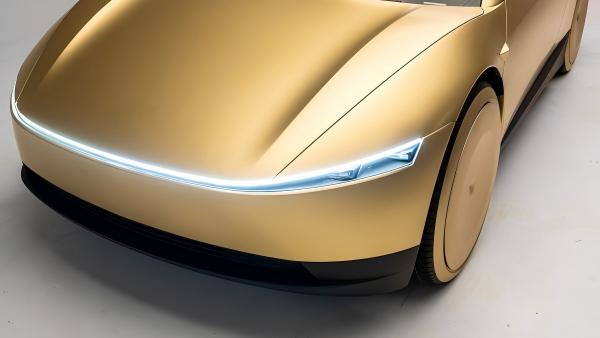
Figure 3 Tesla Cybercab exterior
In terms of exterior design, the Cybercab features a two-door, two-seat layout with gull-wing doors, eliminates traditional side mirrors, and achieves an extremely low drag coefficient. The vehicle is optimized specifically for ride-hailing services—Tesla statistics show that 91% of ride-hailing trips carry no more than two passengers, making the two-seat configuration precisely aligned with the highest-frequency use case.
In terms of interior design, the Cybercab is truly astonishing: there is no steering wheel, no accelerator pedal, no brake pedal, and no handbrake—all physical interfaces related to human takeover have been eliminated. The cabin features only a 21-inch central touchscreen for passenger interaction, ensuring the purity of Level 5 autonomous driving from a hardware perspective.
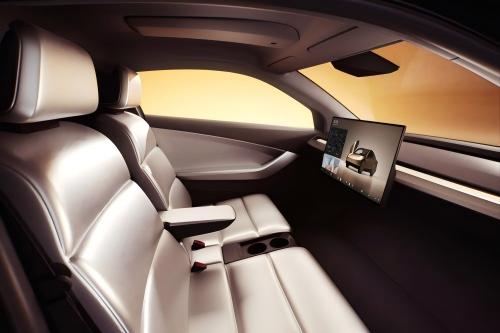
Figure 4 Cybercab interior view
At the intelligence level, the Cybercab is equipped with the next-generation FSD (Full Self-Driving) system, adopting a pure vision approach: eight 5-megapixel cameras, 4D millimeter-wave radar, and ultrasonic sensors achieve 360-degree perception with a maximum detection range of 250 meters. The system is built on an end-to-end neural network architecture, directly connecting camera perception to steering, braking, and other execution controls, replacing complex manual rule sets. Combined with a world model (a model that predicts physics and interactions in virtual environments), Cybercab is not just "learning to drive"—it is "learning to anticipate."
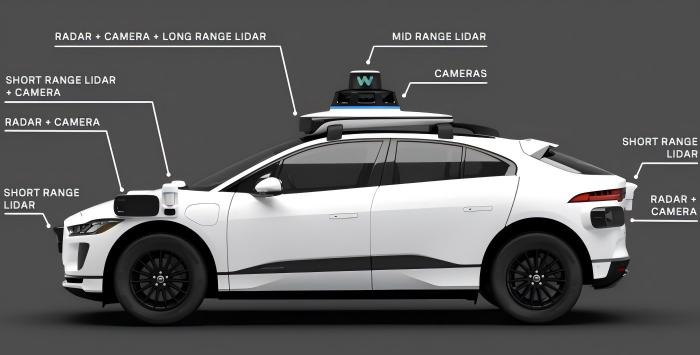
Figure 5 example diagram of autonomous driving sensor suite
From a safety perspective, Tesla's supervised FSD data shows that the average interval between major collisions is approximately 5.3 million miles (about 8.52 million kilometers), while the average interval between minor collisions is approximately 1.6 million miles (about 2.57 million kilometers). Both figures are higher than the average for human driving in the United States. This provides quantifiable support for the assertion that "machine driving is safer."
Market positioning: Production signals and pricing expectations
Tesla has formulated aggressive production plans for the Cybercab. On February 18, 2026, the first production vehicle rolled off the line at the Gigafactory in Texas, with mass production scheduled to begin in April 2026 and a long-term annual production target of millions of units.
In a public response, Elon Musk confirmed that the Cybercab will be priced under $30,000, making it Tesla's most affordable product, even lower than the price of the Model 3 in the North American market. Customers are expected to be able to purchase the Cybercab at this price by 2027.
However, initial production units will all be allocated to Tesla's self-operated Robotaxi fleet and will not be sold to individual consumers initially. Paid passenger service is planned to launch in the first quarter of 2027 in Austin, Los Angeles, and San Francisco. Users will be able to hail a Cybercab through the Tesla App, with an estimated fare of $0.20 per mile (approximately $0.124 per kilometer), roughly one-fifth of the cost of traditional taxi services.
Impact on the market
The mass production of the Cybercab will have far-reaching implications across multiple dimensions.
For consumers, the boundary between "car ownership" and "car usage" will be redefined. Purchasing a $30,000 vehicle that can "go out and earn money on its own" transforms the car from a "consumption asset" into a "productive tool." The scenario envisioned by Elon Musk is this: the Cybercab takes you to work in the morning, then goes off to operate as a ride-hailing vehicle on its own, and picks you up in the evening—the car is no longer an expense but a source of income.
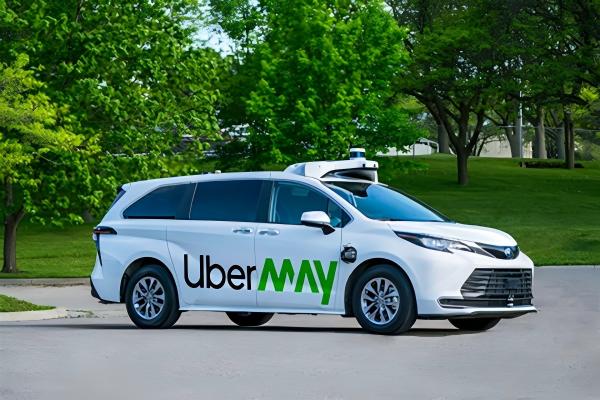
Figure 6 driverless ride-hailing vehicle developed in collaboration between Uber and May Mobility
For the mobility industry, the Cybercab's operating cost of $0.20 per mile will fundamentally disrupt the ride-hailing business model. In traditional ride-hailing, driver costs account for over 70% of expenses, while the Cybercab completely eliminates this line item. Once deployed at scale, Robotaxi pricing could undercut even public bus costs, leading to a structural transformation of the mobility industry.
For the global competitive landscape, the Cybercab shifts the competition in autonomous driving from "who can build a self-driving car" to "who can mass-produce self-driving cars at scale." Leveraging innovations such as gigacasting and the Unboxed manufacturing process, Tesla has reduced per-vehicle costs to under $25,000, establishing a significant scale advantage. Meanwhile, Chinese companies represented by Apollo Go and Pony.ai have forged a differentiated path centered on "LiDAR + gradual scaling." These two approaches are now engaged in a decisive showdown on the global stage.
Panorama of the AI and intelligent driving market
AI currently spans multiple dimensions across various fields, and research in the automotive sector is currently focused primarily on intelligent driving.
The player landscape in intelligent driving
Beyond the Cybercab, the global intelligent driving market has formed a diversified landscape.
The U.S. camp is represented by Tesla's pure vision + end-to-end approach, while Waymo adheres to the steady path of LiDAR + high-definition maps, already operating fleets without safety drivers in multiple cities.
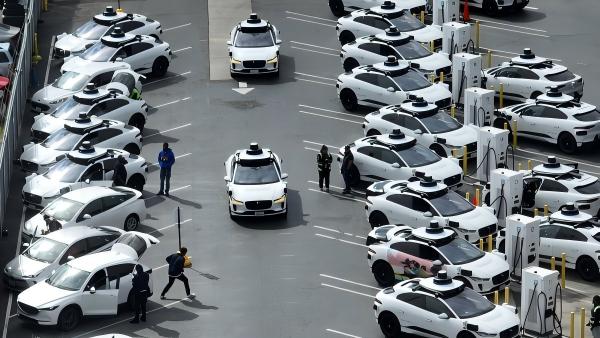
Figure 7 Robotaxi autonomous driving fleet
The Chinese camp focuses on LiDAR + vehicle-to-everything (V2X) coordination + gradual scaling as its main approach. Baidu's Apollo Go is already operating in 22 cities worldwide, including Beijing, Wuhan, Shenzhen, and Hong Kong, and launched the country's first steering-wheel-free Level 4 Robotaxi service in Shanghai's Pudong district in July 2025. Pony.ai's seventh-generation vehicles are deployed in Guangzhou and Shenzhen. WeRide's GXR has launched paid services in Beijing.
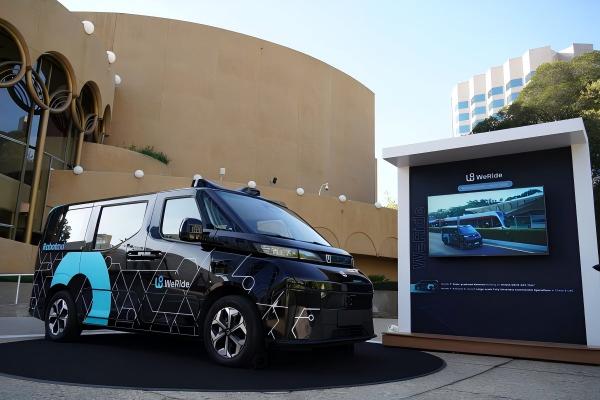
Figure 8 WeRide Robotaxi service
In the consumer-grade intelligent driving sector, the penetration rate of new vehicles equipped with Level 2 and above autonomous driving features has reached 66.1%, with the penetration rate of Level 2+ features in the 100,000 to 200,000 RMB price range reaching as high as 74.83%. BYD's Song PLUS EV includes urban Navigate on Autopilot (NOA) as a standard feature. Geely's Galaxy L7 has made "free upgrade to urban NOA + lifetime OTA for the smart cockpit" its core selling point, resulting in a 200% surge in orders. Huawei's Qiankun intelligent driving ADS series now covers multiple brands including AITO, Voyah, and SAIC, with prices reaching into the 180,000 to 220,000 RMB range.
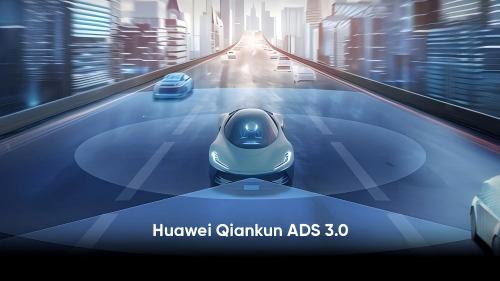
Figure 9 Huawei Qiankun intelligent driving ADS 3.0
Risks and challenges of intelligent driving
The large-scale deployment of intelligent driving still faces multiple obstacles.
On the technical level, the black-box nature of end-to-end models presents challenges in interpretability. Vehicle owners have reported that advanced intelligent driving features promised at the time of purchase were not delivered due to supplier Zongmu Technology's business collapse and a shift in technical approach from high-definition maps to a "perception-centric" strategy. In some cases, vehicles exhibited safety hazards such as sudden sharp steering movements and navigation errors.
On the regulatory level, current U.S. regulations generally require production vehicles to retain manual control mechanisms, meaning the Cybercab will still need additional exemptions and approvals to operate on roads in more cities. Since January 1, 2026, China has implemented its first set of mandatory national standards for intelligent connected vehicles, including the "Technical Requirements for Automotive Cybersecurity" and "General Technical Requirements for Automotive Software Updates," which establish clear specifications for OTA updates, data recording, and related areas.
On the liability level, there remains a legal gap regarding who bears responsibility in the event of an accident involving fully autonomous driving without human intervention. The $243 million settlement in the lawsuit filed by a survivor of a Model S accident equipped with Autopilot against Tesla serves as a reminder to the industry that the boundary between "autonomous driving" and "driver assistance" must be clearly defined.
Truly applicable scenarios for intelligent driving
Current industry consensus holds that the early large-scale application of intelligent driving will focus on three types of scenarios:
First, Robotaxi ride-hailing. Cities such as Wuhan, Beijing, and Shenzhen have already opened large areas for road testing, and Apollo Go has achieved operational breakeven on a per-vehicle basis in these locations, validating the business model of "200,000 RMB-level autonomous vehicles plus scaled operations."
Second, freight logistics on structured roads. Closed environments such as ports, mining areas, and industrial parks have a higher acceptance of autonomous driving and have become the priority deployment scenarios for Level 4 technology.
Third, high-frequency assistance scenarios for private vehicles. Functions such as urban Navigate on Autopilot (NOA), highway NOA, and automated parking are becoming core factors in vehicle purchase decisions. According to a McKinsey report, ADAS features have risen to become the third most important factor influencing car buying.
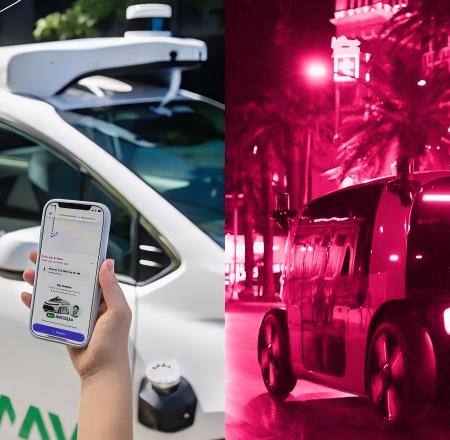
Figure 10 autonomous driving providing mobility services
Adjacent markets driven by AI-powered intelligent driving
The rapid growth of intelligent driving is giving rise to new demands across the industrial chain.
The power battery market is the first to feel the impact. Level 4 and above autonomous driving places higher demands on batteries: they must support high-performance computing chips (the NVIDIA Drive Thor consumes over 600W), possess failure predictability and isolability, maintain voltage fluctuations within ±5%, and withstand extreme environmental temperatures ranging from -30℃ to 55℃. Robotaxi vehicles can accumulate annual mileage of 70,000 to 100,000 kilometers, requiring batteries to have a cycle life of no less than 4,000 cycles and a calendar life of at least eight years.
The battery testing and BMS market also benefits from this trend. Autonomous driving requires advanced battery functionalities such as real-time State of Health (SOH) prediction, redundant dual-BMS architectures, and module-level fault isolation, driving a surge in demand for high-precision battery testing equipment.
The AI computing power and data center market is also experiencing significant growth. Tesla's Full Self-Driving (FSD) accumulated mileage has exceeded 8 billion miles, forming a data flywheel of "on-vehicle collection, cloud-based training, and model updates," which fuels continuous investment in cloud-based training computing power.
The development of autonomous driving
Current status: Assisted driving widespread, autonomous driving in early stages
In 2026, intelligent driving presents a clear "dual-track" landscape: the consumer market is dominated by Level 2 and Level 2+ assisted driving, with Level 2 features becoming standard and urban Navigate on Autopilot (NOA) accelerating in adoption; the commercial operations market is primarily focused on Level 4 autonomous driving, though currently operating within defined areas and specific scenarios.
Under Tesla's supervised mode, the average interval between serious accidents involving FSD has reached 5.3 million miles, with a safety level approximately eight times the average on U.S. roads. However, the word "supervised" is key—currently, all consumer vehicles still require drivers to remain ready to take over at any moment, with fully autonomous driving only applicable to dedicated vehicles such as Robotaxis.
Challenges: The "Last Mile" of autonomous driving.
Multiple gaps remain on the path from "assisted" to "autonomous."
Technical gap: Although end-to-end models have significantly improved generalization capabilities, long-tail scenarios such as extreme weather, roads without lane markings, and construction zones still require breakthroughs. The virtual predictive capabilities of world models are gradually addressing this shortcoming.
Regulatory gap: China has already established access standards for Level 3 autonomous driving, but large-scale Level 4 operations still require case-by-case approvals across different cities. The U.S. federal exemption process lacks a clear timeline, leaving the Cybercab facing the potential predicament of being "built but legally unable to operate."
Trust gap: According to surveys, 71.8% of consumers believe that the data rights for smart cockpits should belong to users, and the majority explicitly indicate that vehicle data security directly influences their car purchase decisions. When vehicles operate fully autonomously, public trust in technological reliability will take time to cultivate.
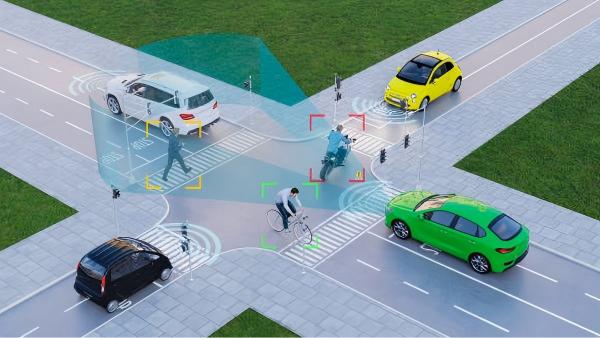
Figure 11 conceptual diagram of smart transportation under autonomous driving
The future: Autonomous driving guidelines need to be collectively established
The implementation of national standards such as the "Technical Requirements for Automotive Cybersecurity" and the "Data Recording System for Autonomous Driving of Intelligent Connected Vehicles" signals that the regulatory framework is taking shape. However, the ultimate guidelines for autonomous driving will require the participation of technology providers, policymakers, users, insurance institutions, and society as a whole.
Responsibility attribution: In the event of an accident involving a vehicle without a steering wheel, should responsibility fall on the automaker, the operator, or the AI system? The law needs to clearly define these boundaries.
Data sovereignty: Who owns the vast amounts of road data collected by vehicles? How can the demands of algorithm training be balanced with the protection of personal privacy?
Ethical choices: In emergency avoidance situations, how should the AI's decision-making logic be designed? This is not merely a technical question but a philosophical one.
As Elon Musk has stated, money may become less important in the future because AI and robots will be able to produce enough goods and services. But when machines take over driving and labor, the question humanity must consider is: what kind of agreement should we establish with technology?
The birth of the Cybercab is not an endpoint, but a beginning. It marks the moment when humanity hands over the right to drive to machines—this is not just a triumph of technology, but the beginning of trust. And this trust is something the entire market must collectively safeguard.
Supplement: Some of the information presented above was obtained from the Internet. We are very sorry if there is any infringement! You can contact us for deletion!