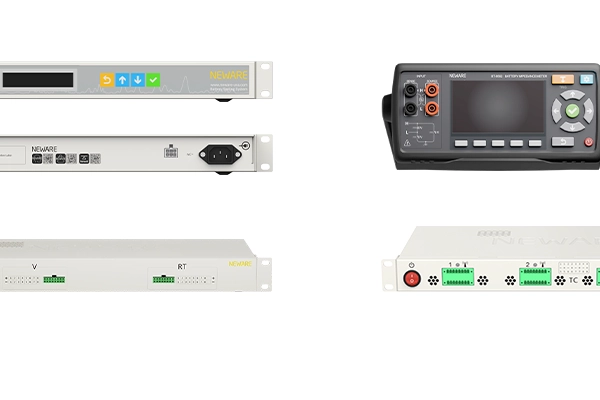
Commercialization hurdles and low-current degradation in solid-state batteries
Solid-state lithium metal batteries (SSBs) pair a metallic lithium anode with a solid-state electrolyte (SSE), combining high theoretical specific capacity, low electrochemical potential, and enhanced safety prospects. Consequently, they are widely regarded as a promising candidate for next-generation electric vehicles and high-energy-density storage applications. To become commercially viable, practical SSBs must achieve high current density, high areal capacity, and long cycle life simultaneously. In laboratory and pilot testing, however, internal short circuits driven by lithium dendrite penetration and solid–solid interface degradation remain major obstacles.
Historically, researchers have relied on parameters such as critical current density (CCD), critical stripping current (CSC), and kinetics-limited mass transport models to explain interfacial void formation and cell failure. For instance, when stripping current density or areal capacity exceeds kinetic replenishment limits, lithium-ion transport toward the interface cannot keep pace with lithium dissolution, leading to vacancy accumulation and interfacial voids. As contact area shrinks, local current density concentrates, overpotential rises, and dendrite propagation becomes more likely. Meanwhile, deposition-induced local stress and crack growth within solid electrolytes have also received extensive attention.
Despite these insights, a persistent discrepancy has puzzled the battery community: even when initial solid–solid contact is carefully engineered and cells are cycled at mild current densities well below CCD or CSC with modest areal capacities, many SSBs still suffer gradual polarization buildup, interfacial deterioration, and eventual short-circuiting after hundreds of cycles. This behavior indicates that beyond single-step kinetic limits, repeated cycling itself introduces a cumulative degradation mechanism over time.
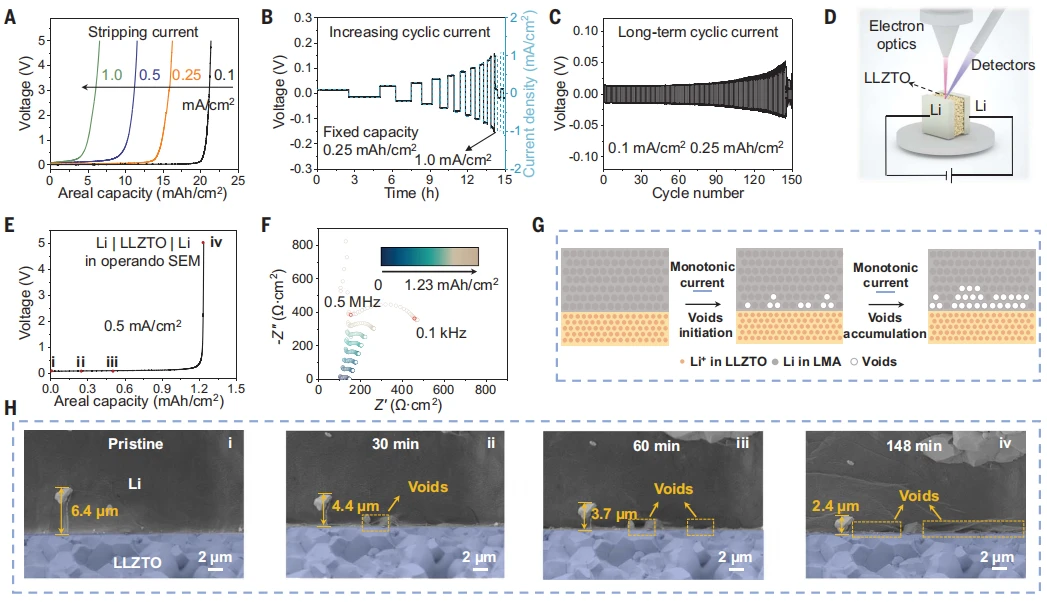
Figure 1. Electrochemical responses and interfacial void evolution in Li | LLZTO | Li symmetric cells under stripping and cyclic currents. Source: Science, April 2025.
From structural fatigue mechanics to electrochemical cycling
In April 2025, a research team led by Prof. Wei Luo at Tongji University and Prof. Yunhui Huang at Huazhong University of Science and Technology, together with collaborators, published Fatigue of li metal anode in solid-state batteries in Science (with Tengrui Wang as first author). By combining operando scanning electron microscopy (operando SEM) observations, phase-field modeling, and systematic electrochemical cycling experiments, the study brings classical materials fatigue mechanics into the SSB domain to explain cyclic anode degradation.
In mechanical and structural engineering, metallic components subjected to cyclic loading well below their ultimate tensile strength can still accumulate microscopic plastic damage over repeated load–unload cycles, eventually nucleating micro-cracks, propagating cracks, and fracturing. Fatigue accounts for a substantial portion of engineering metal failures. The authors demonstrate that lithium metal anodes in SSBs experience an analogous cyclic electro-chemo-mechanical stress state during repeated charge–discharge cycling: lithium plating induces local volumetric expansion and compressive stress, while lithium stripping causes contraction and vacancy generation. Over repeated cycles, this alternating load drives fatigue-like structural evolution in the lithium anode.
Using garnet-type LLZTO symmetric cells as a primary model system, the researchers tracked interfacial evolution even at a low current density of 0.1 mA/cm² and low areal capacity. Operando observations showed that the lithium metal anode does not remain mechanically static under mild cycling. Instead, localized crystallographic defects, slip bands, micro-voids, and micro-cracks progressively emerge near the anode–electrolyte interface as cycle numbers increase. Macroscopically, the cell voltage profile transitions from an initial flat, steady overpotential plateau to a gradual upward drift, followed by an accelerated polarization inflection leading toward failure.
The study outlines this fatigue progression across three consecutive stages and connects it quantitatively to metallic fatigue laws:
Micro-void and micro-crack initiation: During early cycling, pre-existing surface roughness, grain boundaries, or minor contact non-uniformities act as stress and current concentrators. Cyclic plating and stripping stresses trigger localized slip bands and vacancy clustering, nucleating initial micro-voids and micro-cracks with minimal immediate voltage change.
Steady void propagation and coalescence: With continued cycling under alternating electro-chemo-mechanical loads, nucleated micro-voids expand and coalesce, steadily reducing effective interfacial contact area. Local current density rises accordingly, driving progressive overpotential and interfacial impedance growth.
Unstable expansion and interfacial failure: Once void size and areal fraction exceed a critical threshold, local current crowding intensifies sharply. Degradation enters a nonlinear, unstable expansion regime marked by a steep polarization inflection in the voltage curve, creating conditions prone to localized dendrite growth and short-circuiting.
By correlating cycle life across varying current densities and areal capacities, the authors show that lithium anode fatigue follows relationships analogous to metallic fatigue crack growth and the Coffin-Manson law. Building on this framework, they introduce fatigue-limited current (FLC) as a complementary metric to CCD and CSC to better evaluate long-term cycling stability under cyclic loading.
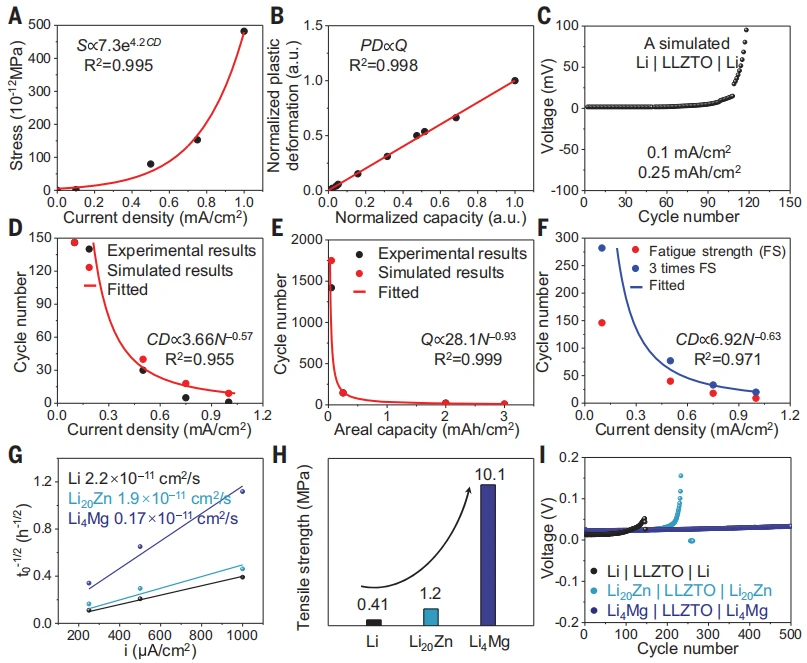
Figure 2. Quantitative electro-chemo-mechanical fatigue scaling and alloy comparisons for lithium metal anodes. Source: Science, April 2025.
Key factors governing anode fatigue and design implications
Beyond establishing the core fatigue mechanism, the study and its supplementary analyses examine several practical variables and material strategies that influence fatigue progression in SSBs:
Mechanical strengthening via lithium alloys: Introducing alloying elements such as zinc, magnesium, or silver into lithium increases mechanical strength, hardness, and resistance to creep and fatigue damage. Strengthened alloy anodes suppress rapid slip-band formation and micro-void nucleation, extending cycle life.
Sensitivity to initial interfacial defects: Controlled comparisons show that pre-existing voids, scratches, or surface contaminants at the lithium–electrolyte interface markedly shorten the initiation stage, accelerating entry into void propagation and polarization instability. This underscores the importance of clean, uniform interface fabrication.
Stack pressure and mechanical constraint: The study evaluates both constant-pressure and fixed-displacement (non-constant pressure) setups alongside varying stack pressure levels. Moderate stack pressure promotes lithium creep to replenish interfacial contact, whereas excessive pressure risks forcing lithium into electrolyte grain boundaries or micro-cracks. Enhancing intrinsic anode fatigue resistance helps reduce reliance on heavy external stack pressure fixtures.
Broader electrolyte and electrode relevance: Supplementary discussions extend the fatigue perspective to sulfide and polymer solid electrolytes, sodium metal batteries, and structural fatigue in cathode particles, highlighting electro-chemo-mechanical fatigue as a broad consideration across solid-state battery design.
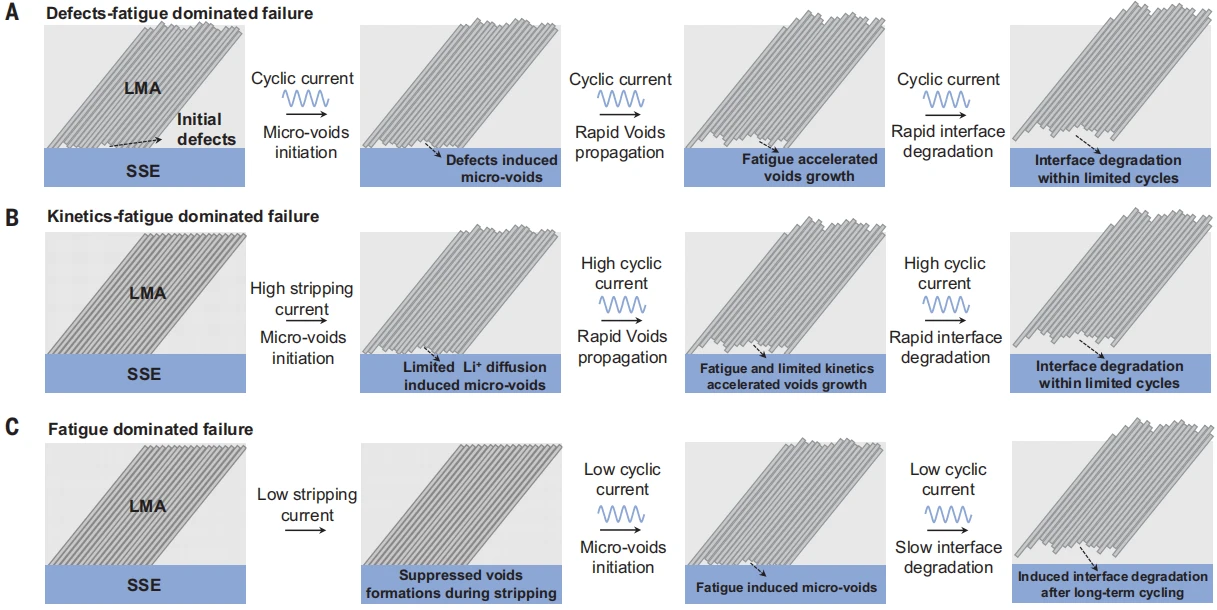
Figure 3. Interfacial micro-void evolution pathways between lithium metal anode and solid-state electrolyte across distinct regimes. Source: Science, April 2025.
Role of neware battery testing equipment in cycling and coupled experiments
Validating fatigue laws and comparing material or mechanical configurations over extended cycles require precise current control and uninterrupted data acquisition. According to the Materials and Methods section of the paper, NEWARE battery testing systems were employed in both long-term electrochemical cycling and coupled diagnostic measurements:
Long-term galvanostatic cycling tests: Standard NEWARE CT-4008 battery testing systems were used to run long-term galvanostatic charge–discharge cycling across multiple current densities and areal capacities. By continuously logging voltage responses, polarization inflection points, and cycle counts, the systems provided the quantitative datasets needed to map cycle life against current density and capacity.
Coupled in-situ ultrasonic imaging experiments: To visualize interfacial void evolution non-destructively inside pouch cells, the researchers performed in-situ ultrasonic transmission imaging on polymer-based solid-state pouch cells (Li | PEO | Li). Each pouch cell was immersed in a low-viscosity silicone oil bath for stable acoustic coupling and connected to a NEWARE CT-4008T battery testing system alongside ultrasonic transmitting/receiving transducers and a data acquisition unit. While the CT-4008T maintained controlled cyclic charge–discharge operation, synchronized ultrasonic waveforms tracked real-time interfacial contact loss and impedance growth across cycles.
Reliable galvanostatic regulation, flexible test-step programming, and high-resolution time-series logging enabled the researchers to distinguish monotonic stripping behavior from cyclic fatigue responses, pinpoint transitions from steady to unstable polarization, and evaluate alloy modifications, interface treatments, and stack pressure strategies.
About NEWARE CT-4008 / CT-4008t battery testing systems
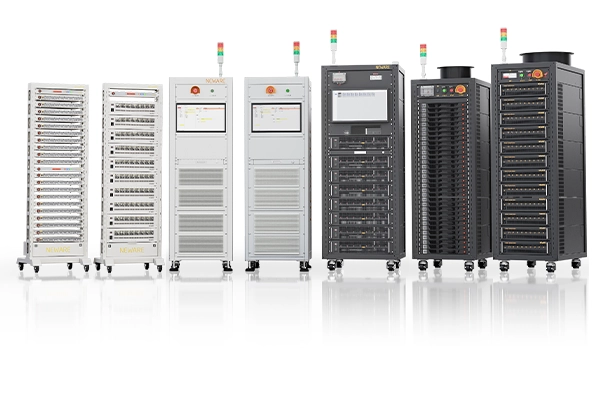
The NEWARE CT-4008 / CT-4008T series is a multichannel battery testing platform developed by NEWARE for academic research institutes, corporate R&D centers, and cell testing laboratories:
Broad electrochemical testing capabilities: Designed for coin cells, pouch cells, cylindrical cells, and emerging chemistries—including lithium-ion, solid-state, and sodium-ion batteries—the platform supports constant-current (CC), constant-voltage (CV), CC-CV, rate capability, cycle-life, and rest/self-discharge protocols.
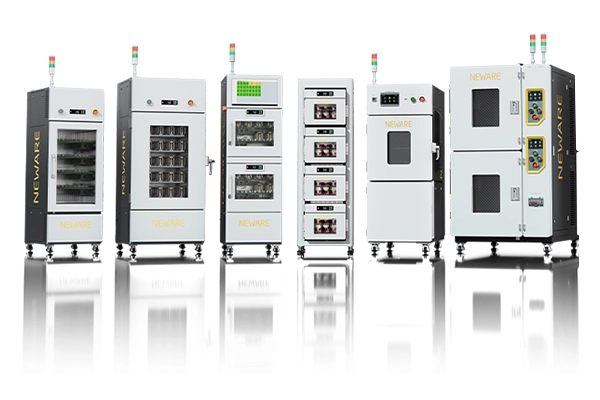
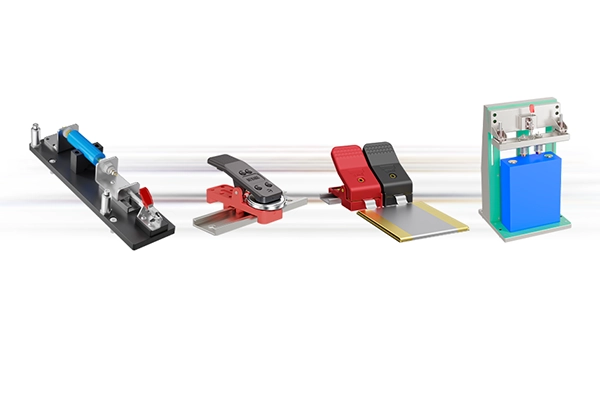
Seamless integration with in-situ and external setups: With independent channel control and compact system architecture, CT-4008 / CT-4008T testers integrate smoothly with operando microscopes, ultrasonic imaging rigs, in-situ XRD/Raman cells, environmental chambers, and pressure-monitoring fixtures for synchronized electro-chemo-mechanical characterization.
Long-term stability and data traceability: Engineered for continuous multi-week or multi-month operation with precise sampling, the system logs voltage, current, capacity, energy, time, and cycle metrics to support rigorous degradation analysis and material screening.
References
Wang, T., et al. Fatigue of Li metal anode in solid-state batteries. Science, April 2025.