Introduction
With the rapid evolution of the new energy industry, performance requirements for power batteries and energy storage batteries continue to escalate. From traditional lead-acid batteries to ternary lithium batteries, lithium iron phosphate batteries, and future solid-state batteries, core indicators of batteries such as energy density, cycle life, and safety performance keep breaking through. Correspondingly, supporting battery test equipment has also undergone multiple rounds of technological innovation. As the core support for the entire process of battery R&D, production, and quality inspection, the performance of battery test equipment directly determines the accuracy and efficiency of battery performance evaluation. As the "heart" of test equipment, the technological iteration of the power module leads the development direction of the battery test industry.
1. Development history of batteries and battery test equipment
1.1 Iterative evolution of battery technology
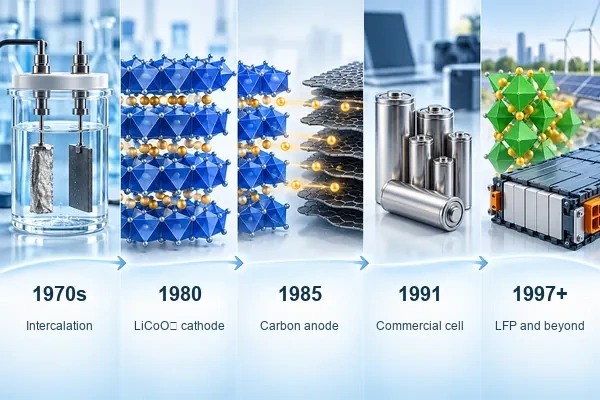
The development of batteries began with the invention of the Voltaic pile by Alessandro Volta in 1800, marking humanity’s entry into the era of electrochemical energy. Subsequently, lead-acid batteries, nickel-cadmium batteries, and nickel-metal hydride batteries came out one after another and were gradually applied in transportation, communications, energy storage, and other fields. However, limited by shortcomings such as low energy density, short cycle life, and poor environmental compatibility, they could hardly meet the needs of high-end equipment and the new energy industry. Entering the 21st century, lithium-ion batteries have rapidly risen and become mainstream due to their advantages of high energy density, long cycle life, no memory effect, and environmental friendliness, and are widely used in new energy vehicles, portable electronic devices, energy storage systems, and other scenarios. In recent years, breakthroughs have been made in new battery technologies such as solid-state batteries and sodium-ion batteries, which have put forward higher requirements for the accuracy, speed, and flexibility of battery testing, and further promoted the technological upgrading of battery test equipment.
1.2 Iteration of battery test equipment
Early battery test equipment was dominated by unidirectional power supplies, which only supported battery charging; discharging required an independent electronic load, resulting in low test efficiency and insufficient test accuracy, and only meeting basic charge-discharge cycle test requirements. With the development of battery technology, conventional bidirectional power supplies emerged, realizing the integration of "charging + discharging", improving test efficiency, and becoming the mainstream configuration of battery test equipment.
However, as power batteries and energy storage batteries impose higher requirements on test accuracy, dynamic response speed, and seamless switching capability, the inherent shortcomings of conventional bidirectional power supplies have gradually become prominent. In this context, bipolar power supplies, with their unique topology and performance advantages, have been gradually applied in high-end battery test scenarios, becoming core equipment for battery R&D and high-precision performance testing, and driving battery testing toward "high precision, high speed, and full-scenario applications".
2. Principles and functions of battery test equipment
The core of battery test equipment consists of a power module and a control module. Its working principle is to output stable voltage and current through the power module to simulate the charge-discharge process of batteries under different working conditions. Meanwhile, the control module collects parameters such as voltage, current, temperature, and capacity of the battery, and combined with data analysis software, achieves accurate evaluation of battery performance.
The core functions of battery test equipment focus on battery performance evaluation, and mainly include the following categories according to the needs of different test scenarios:
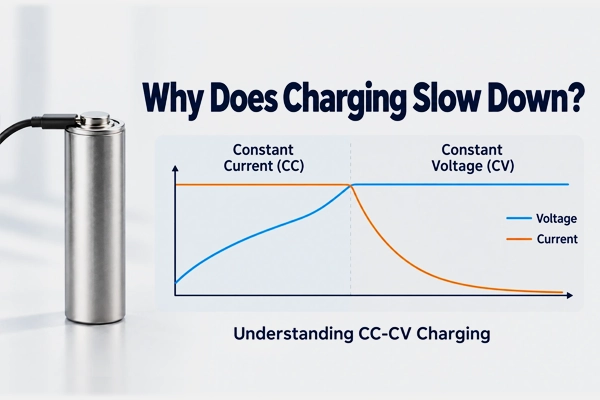
Basic charge-discharge test: Including constant current charge-discharge (CC), constant voltage charge-discharge (CV), constant power charge-discharge (CP), etc., used to test basic parameters such as battery capacity and charge-discharge efficiency.
Dynamic condition test: Simulates dynamic load changes of batteries in practical applications, such as NEDC and WLTP driving cycles for new energy vehicles, and peak-shaving and valley-filling conditions for energy storage systems, used to test the dynamic response capability and cycle life of batteries.
High-precision performance test: Including Direct Current Internal Resistance (DCIR) test, Hybrid Pulse Power Characterization (HPPC) test, capacity attenuation test, etc., used to accurately evaluate the power characteristics and internal resistance change rules of batteries, providing core data support for battery R&D.
Among the power types used in battery test equipment, conventional bidirectional power supplies can realize bidirectional energy flow (charging + discharging) but suffer from current zero-crossing interruption and slow response speed. Bipolar power supplies also belong to bidirectional power supplies, but different from conventional ones, they adopt a 4-quadrant topology to realize bidirectionally and continuously adjustable voltage and current, with seamless energy flow, no interruption, and no dead time.
3. Detailed analysis of conventional bidirectional power supplies and bipolar power supplies
3.1 Conventional bidirectional power supply
A conventional bidirectional power supply adopts a topology of "unidirectional AC/DC rectifier + bidirectional DC/DC converter". Its core feature is to realize bidirectional energy flow, but the charging and discharging loops are two sets of independent power devices. During charging, the unidirectional AC/DC rectifier converts grid AC power to DC power, charging the battery through the bidirectional DC/DC converter. During discharging, the battery outputs DC power through the bidirectional DC/DC converter.
Since the charging and discharging loops are independent of each other, when switching between charging and discharging, the conventional bidirectional power supply must first turn off the charging loop, wait for a certain dead time, and then turn on the discharging loop, resulting in current zero-crossing interruption—the most critical inherent shortcoming.
3.2 Bipolar power supply
A bipolar power supply adopts a single topology of "bidirectional AC/DC rectifier + 4-quadrant DC/DC converter". Its core feature is that charging and discharging share the same set of power devices, with bidirectionally and continuously adjustable voltage and current, and no need to switch charge-discharge loops.
Its working principle: During charging, the bidirectional AC/DC rectifier converts grid AC power to DC power, and the 4-quadrant DC/DC converter outputs positive current to charge the battery. During discharging, the battery outputs DC power, and the 4-quadrant DC/DC converter outputs negative current. The whole process has no loop switching; the current transitions smoothly from positive to negative, with no zero-crossing interruption and no dead time.
With its unique topology, the bipolar power supply overcomes the inherent shortcomings of conventional bidirectional power supplies, with the following core features:
Seamless current zero-crossing: No loop switching is required during charge-discharge transition; current flows smoothly from positive to negative without interruption or waveform distortion.
Fast response speed: Extremely short current response time, capable of quickly tracking complex conditions such as dynamic pulses and HPPC to meet high-precision test requirements.
Flexible functions: Supports multiple working modes including CC, CV, CP, and CR, and can implement complex programmable test sequences suitable for different battery types and test scenarios.
4. Advantages and applications of bipolar power supplies
4.1 Advantages of bipolar power supplies in battery testing
4.1.1 Improved accuracy of test data
The core demand of battery testing is to obtain true and accurate battery performance data. The current zero-crossing interruption and response delay of conventional bidirectional power supplies cause voltage rebound and waveform distortion, which further affect the measurement accuracy of key parameters such as DCIR and peak power. The seamless zero-crossing and fast-response characteristics of bipolar power supplies avoid these problems, ensuring real-time and accurate current and voltage sampling, providing reliable data support for battery R&D and design optimization, and preventing detours in R&D and substandard product performance caused by biased test data.
4.1.2 Adaptation to the development of new-type batteries
With the development of new-type batteries such as solid-state batteries and sodium-ion batteries, their requirements for test accuracy and dynamic response speed have increased significantly, which conventional bidirectional power supplies can no longer meet. The high precision, high flexibility, and seamless switching characteristics of bipolar power supplies make them suitable for high-end test scenarios such as HPPC testing and dynamic condition simulation, while meeting the special test requirements of new-type batteries, providing core support for their R&D.
4.1.3 Guaranteed test stability
Bipolar power supplies adopt a single topology with simpler circuit design and fewer fault points. They effectively avoid equipment failure or battery damage caused by circuit switching and interruption during testing, ensuring the safety and stability of the test process, especially for high-energy-density and high-power battery test scenarios.
4.2 Application scenarios of bipolar power supplies
4.2.1 Cyclic voltammetry test
Cyclic voltammetry tests study the kinetics and mechanism of electrochemical reactions by controlling the battery voltage to change linearly at a set rate and monitoring the corresponding current response. During voltage scanning, the current switches between positive and negative. If the power supply performs switching actions during current polarity transition, jitter will inevitably occur at the zero-crossing point. Bipolar power supplies achieve continuous transition during current polarity switching without any switching action, naturally smoothing the zero-crossing point and ensuring accurate and reliable cyclic voltammetry curves.
4.2.2 DCIR test
DCIR is a core parameter for evaluating battery power characteristics and cycle life. Its test principle is to measure the voltage variation (ΔV) through an instantaneous current step to calculate internal resistance. If the power supply has current zero-crossing interruption, voltage rebound occurs during the current step, leading to deviation in ΔV measurement and underestimated, distorted resistance results. The seamless zero-crossing and fast-response characteristics of bipolar power supplies ensure no interruption or voltage rebound during instantaneous current steps, accurately measuring ΔV and ΔI to obtain true DCIR data.
4.2.3 Dynamic condition simulation test
Dynamic condition simulation (e.g., NEDC, WLTP) simulates the actual operating state of batteries in new energy vehicles and energy storage systems, where current switches frequently between positive and negative. The power supply is required to have fast response speed and seamless switching capability. The response delay and interruption of conventional bidirectional power supplies prevent the current from tracking condition changes, resulting in distorted simulation and failure to truly evaluate battery performance in practical applications. Bipolar power supplies quickly track dynamic load changes and accurately simulate real-world conditions, providing reliable support for battery life evaluation and system optimization.
5. Conclusion
The iteration of power modules in battery test equipment, from conventional bidirectional power supplies to bipolar power supplies, is essentially an inevitable outcome of the development demands of battery technology. With their cost advantage, conventional bidirectional power supplies will still play a role in low-to-mid-end battery test scenarios. However, with the growing demand for high-end battery R&D and high-precision testing, bipolar power supplies, with their core advantages of seamless zero-crossing and fast response, will gradually become the mainstream configuration of battery test equipment, leading the battery test industry toward high precision, high speed, and full-scenario applications.