The CE-6000 series includes ultra-high-voltage options up to 3000V, making it suitable for grid-scale energy storage systems, next-generation battery technology R&D, high-voltage battery clusters, and power conversion system (PCS) validation.
| Model | Voltage | 100A | 200A | 300A | 600A | 900A | 1500A |
| CE-6000 | 500V / 600V / 800V / 1000V | 100A ~ 1500A | |||||
| 1500V | 200A ~ 900A | ||||||
| 2500V | 300A | ||||||
| 3000V | 300A | ||||||
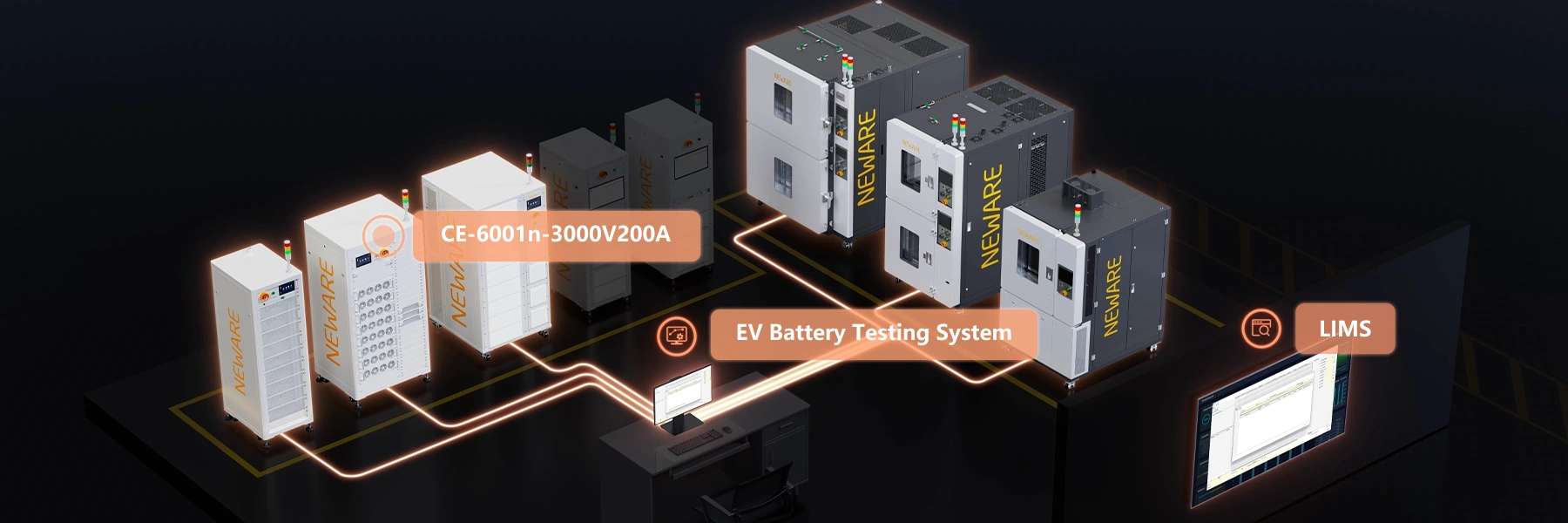
Verifying the performance, safety, and reliability of high-power EV battery packs demands realistic emulation of real-world operating conditions, precise measurement of electrical parameters, and flexible adaptation to diverse testing scenarios. As high-power and ultra-high-voltage EV battery technologies advance, the need for testing solutions that combine high efficiency, high precision, and scalability has become increasingly critical.
NEWARE Ultra-High Voltage Battery Cluster Solution is specifically engineered to address these challenges, providing a comprehensive, integrated testing solution for verifying high-power EV battery packs, from R&D validation to production-line testing. The single-channel voltage range covers 500V to 3000V, with a current range of 100A to 1500A (customizable to match specific battery pack specifications).
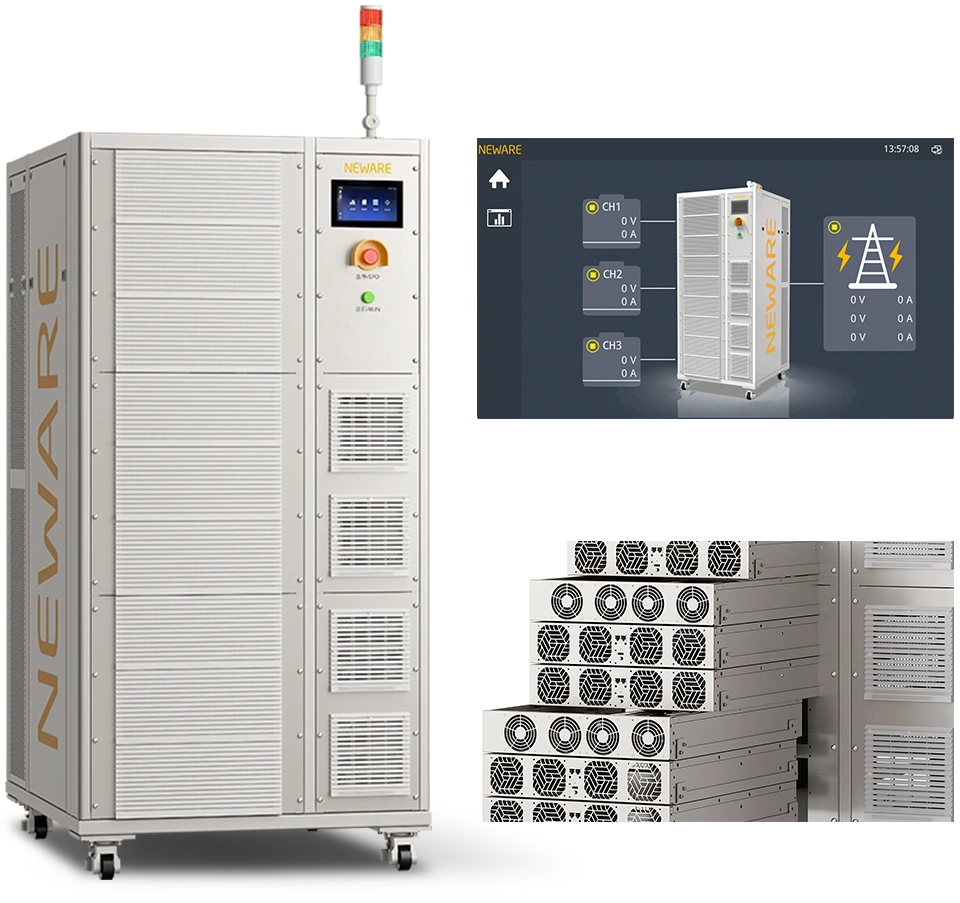
Comprehensive testing of high-power EV battery packs is the key to optimizing their functional performance and enhancing safety protection capabilities, and the core of this process is to conduct highly realistic and accurate emulation of the actual operating environment of electric vehicles. NEWARE's high-power EV battery pack testing solution fully supports the full-process testing needs of battery packs from R&D to validation. The solution features a single-channel output power of 300kW and a maximum test voltage of 3000V, and is core-integrated with high-voltage Silicon Carbide (SiC) technology. Relying on its excellent high-frequency and low-loss characteristics, it achieves ultra-high energy efficiency in a compact equipment space, greatly reduces energy consumption losses during the testing process, and effectively cuts down operational costs related to equipment operation and maintenance as well as energy consumption, perfectly adapting to the large-scale and high-efficiency testing needs of high-power and ultra-high-voltage EV battery packs.
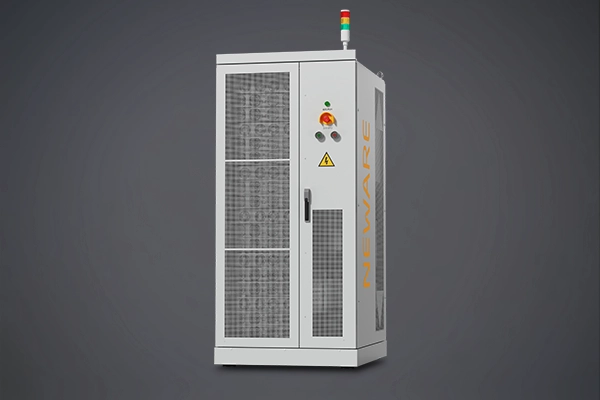
Voltage & Current Accuracy: ±0.02% F.S.
Recording Frequency: 100Hz
Current Conversion Time: ≤20ms
Current Response Time: ≤10ms
Minimum Pulse Width: 100ms
Feedback Efficiency (Max): 96%
Voltage & Current Accuracy: ±0.02% F.S.
Recording Frequency: 100Hz
Current Conversion Time: ≤20ms
Current Response Time: ≤10ms
Minimum Pulse Width: 100ms
Feedback Efficiency (Max): 96%
- Power supply customization: Default 3-phase 380 VAC, optional 208 VAC for North American markets.
- Channel configuration flexibility: Adjustable channel density & current range based on specific testing requirements.
- Software integration: Compatible with LIMS systems for seamless data traceability.
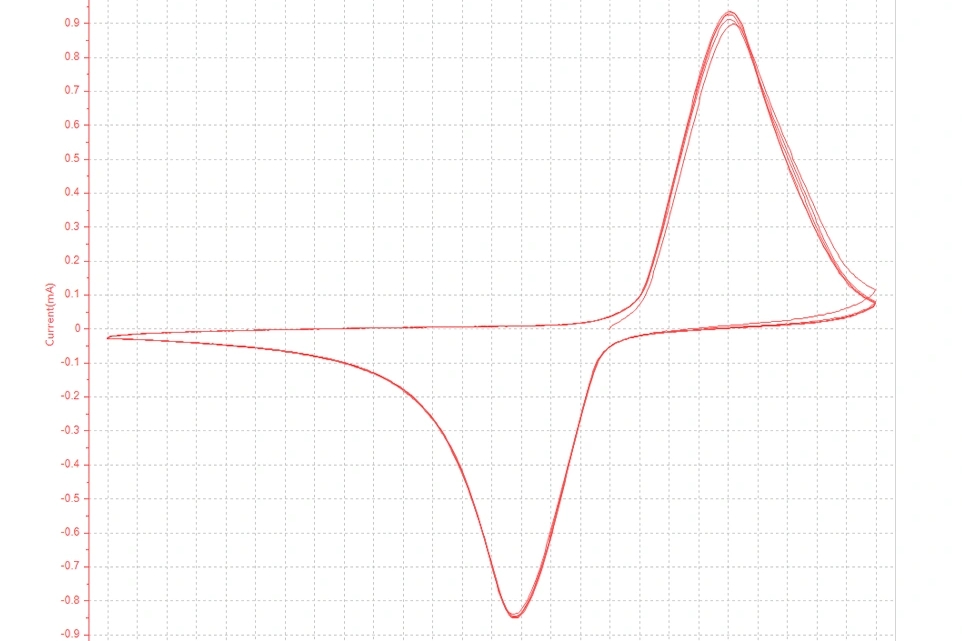
This article provides a detailed overview of cyclic voltammetry, electrochemical impedance spectroscopy, and charge/discharge testing, summarizing their principles and procedures.
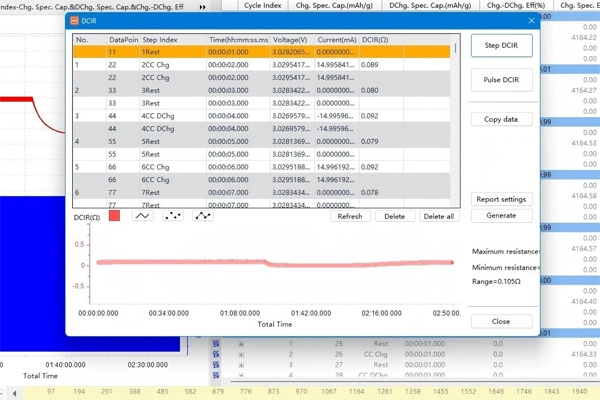
Direct Current Internal Resistance (DCIR) refers to the ratio of the voltage change to the corresponding discharge current change of a battery under operating conditions. It can be measured by battery testing equipment under specific settings and is a critical parameter for evaluating electrode materials.
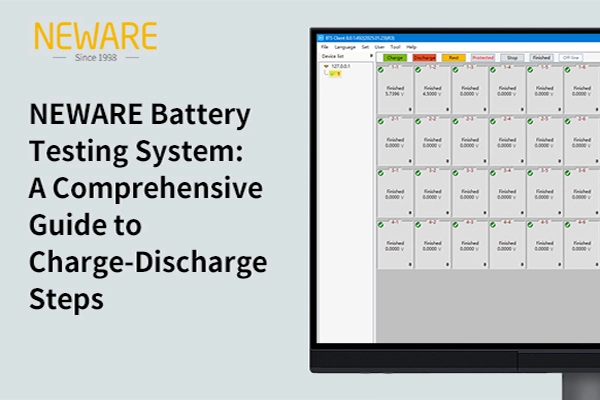
In the research, development, quality verification, and application of lithium-ion batteries, accurate, reliable, and efficient testing is the foundation for obtaining authentic battery performance da
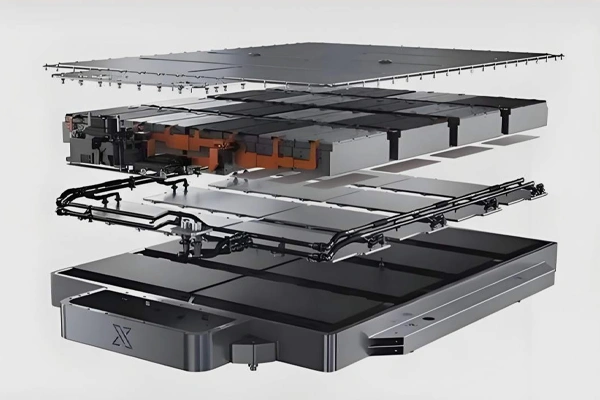
This article aims to systematically sort out the technological development trajectory from CTM, CTP to CTC/CTB, analyze their advantages and disadvantages as well as applications, and look forward to their impact on the future industrial landscape and the testing field.