Introduction
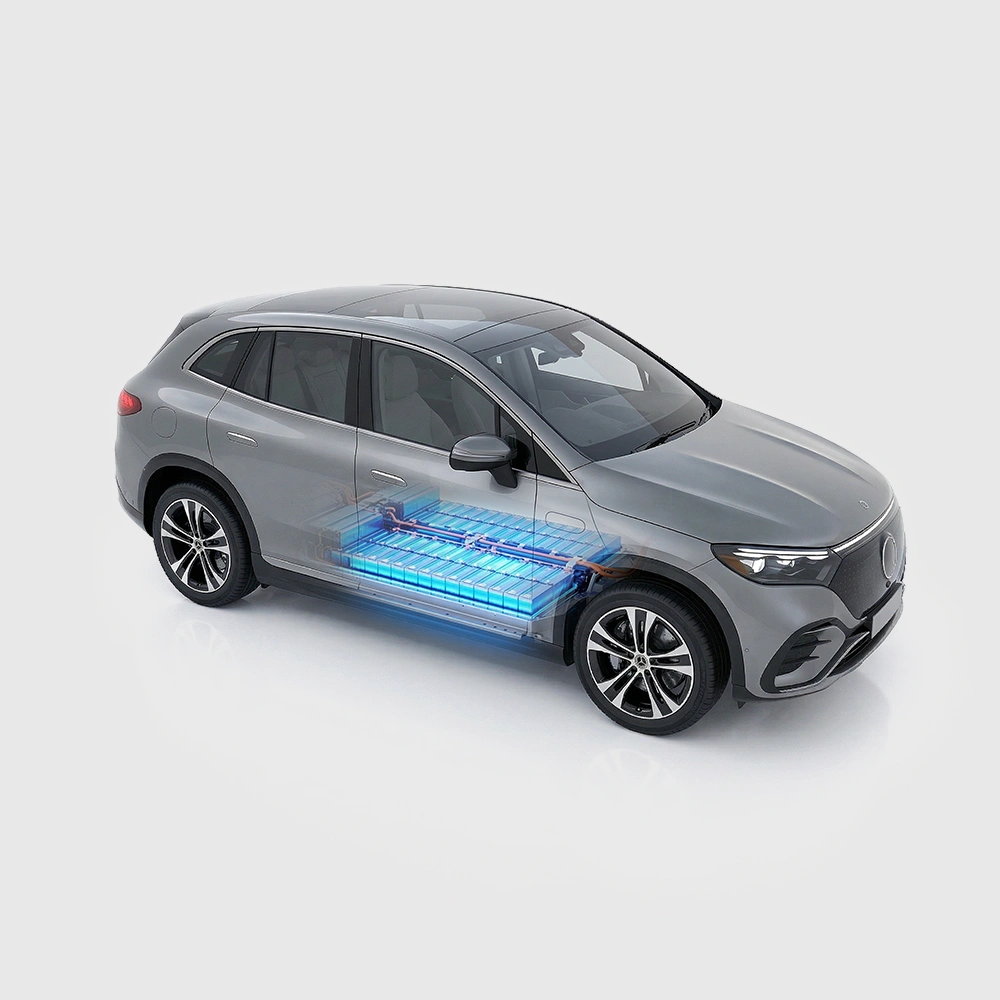
Amid the global automotive industry's transition towards electrification, the power battery is not only the "heart" of an electric vehicle but also a core component determining the overall vehicle's performance, safety, and cost. As market demands for driving range, safety, and affordability continue to rise, relying solely on advancements in cell chemistry is increasingly insufficient. Consequently, a technological revolution focused on optimizing the physical structure to unlock the battery system's full potential has quietly emerged—battery pack integration technology is rapidly evolving from the traditional "building-block" approach towards a highly integrated and intelligent direction.
This article aims to systematically trace the technological development from CTM and CTP to CTC/CTB, analyze their strengths, weaknesses, and applications, and explore their impact on the future industry landscape and the testing field.
CTM: The cornerstone of the modular era
CTM (Cell to Module) is a traditional and well-established battery integration solution. Its technical pathway follows three clear steps: first, individual cells are assembled into standardized modules; then, multiple modules are integrated into a battery pack; finally, the entire pack is installed onto the vehicle's chassis. This model establishes a standardized, modular framework for the battery system. Early and many current mainstream electric vehicle models adopt this scheme. For example, in early Volkswagen ID series models, cells were supplied by CATL, while Volkswagen handled the integration of modules and the battery pack (Figure 1).
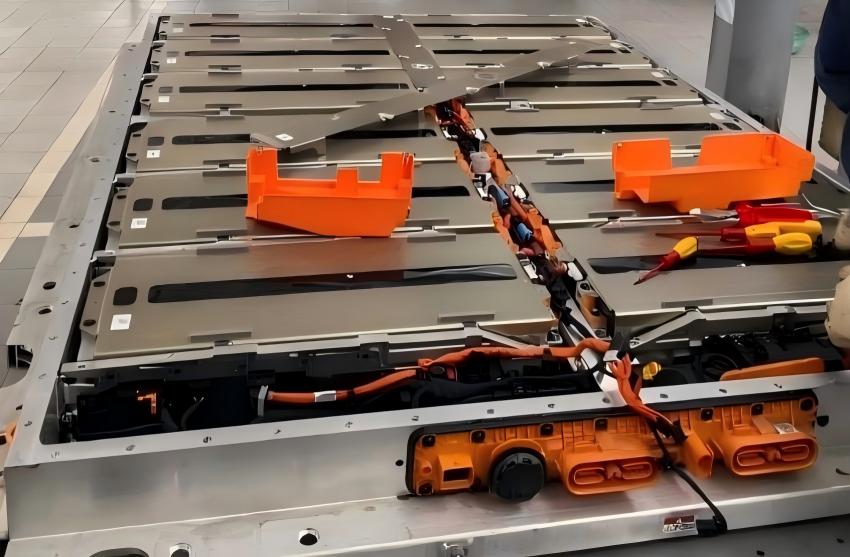
Figure 1 Volkswagen ID.4 battery pack
The greatest advantage of CTM lies in its standardization and flexibility. Standardized modules facilitate automated production, quality control, and supply chain management. For automakers, this model offers a clear division of labor, with well-defined responsibility boundaries between the vehicle manufacturer and the battery supplier. It also simplifies later maintenance and the replacement of individual modules.
However, its drawbacks are becoming increasingly apparent. The multi-layered structure leads to significant space wastage. The module frames, casings, and the gaps between modules occupy a substantial volume, resulting in a space utilization rate for CTM battery packs of only about 40%. This not only limits the increase in battery capacity but also adds unnecessary weight and a high number of components (up to nearly 600 parts), driving up costs and constraining further breakthroughs in driving range.
CTP: The mainstream choice for efficiency through module elimination
To overcome the limitations of CTM, CTP (Cell to Pack) technology emerged. Its core lies in "module elimination," skipping the standardized module step and directly integrating cells into the battery pack. This significantly shortens the integration path from cell to pack. The "Blade Battery" launched by BYD in 2020 is a prime example of CTP technology, where the elongated cells themselves act as structural components, arranged directly within the battery pack (Figure 2).
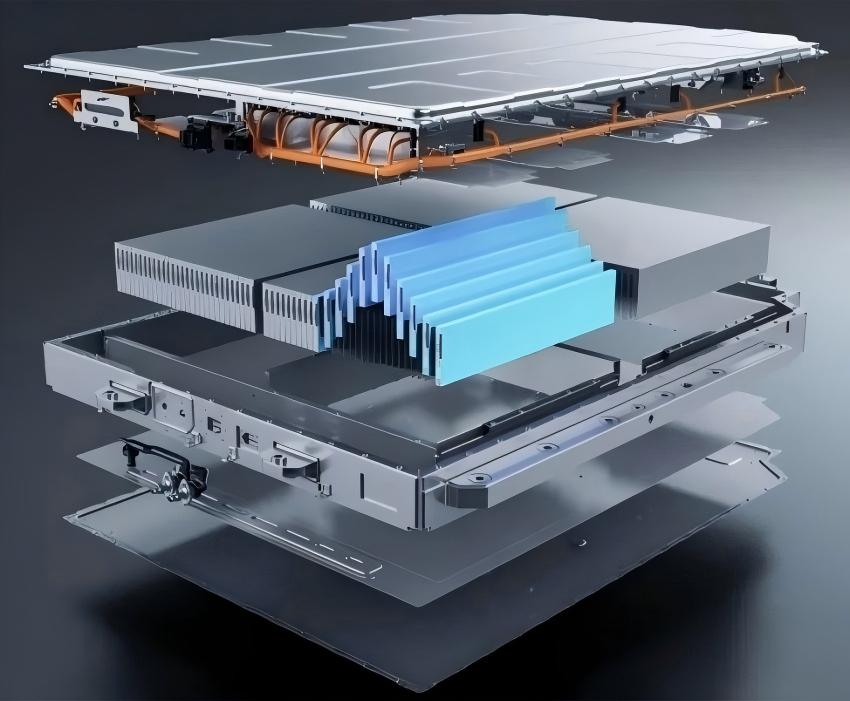
Figure 2 BYD blade battery (CTP)
Furthermore, CATL's CTP technology (such as the QILIN Battery) has also been widely adopted in earlier models like the Tesla Model 3 and the Xpeng P7, among many others. Market data confirms the success of CTP. From January to October 2024, modular integration solutions accounted for 65% of the new energy passenger vehicle market, with CTP technology dominating at a 61% share. Its adoption is particularly high in Plug-in Hybrid Electric Vehicles (PHEV) and Extended-Range Electric Vehicles (EREV).
CTP technology delivers immediate benefits. Firstly, it significantly improves volume utilization and energy density. Compared to CTM, CTP battery packs can achieve a 15-20% increase in volume utilization, a reduction of approximately 40% in part count, a 50% improvement in production efficiency, and a system energy density exceeding 200 Wh/kg. This allows for more cells to be packed into a vehicle of the same size, effectively increasing driving range. Secondly, it simplifies production steps and reduces manufacturing costs.
However, CTP introduces new challenges.
First is the increased complexity in safety and thermal management. With the elimination of modules, the design for cell fixation, protection, and thermal runaway isolation becomes more critical.
Second is reduced maintenance convenience. Since cells are directly integrated into the pack, a fault in a single cell may necessitate the replacement of the entire battery pack or a large module, increasing repair costs and complexity.
CTC and CTB: Ushering in a new era of body integration
As integration moves from inside the battery pack to the entire vehicle chassis, more radical technologies—CTC (Cell to Chassis) and CTB (Cell to Body)—have taken the stage. Both share the same goal: to break down the boundary between the battery pack and the vehicle chassis/body for deeper integration, but they differ in their specific implementation paths.
CTC technology: Represented by Tesla and Leapmotor. Tesla's approach involves bonding the battery pack upper cover to the cells and integrating it with structural components like seat crossmembers to form the passenger cabin floor, effectively eliminating the traditional battery pack upper cover (Figure 3).
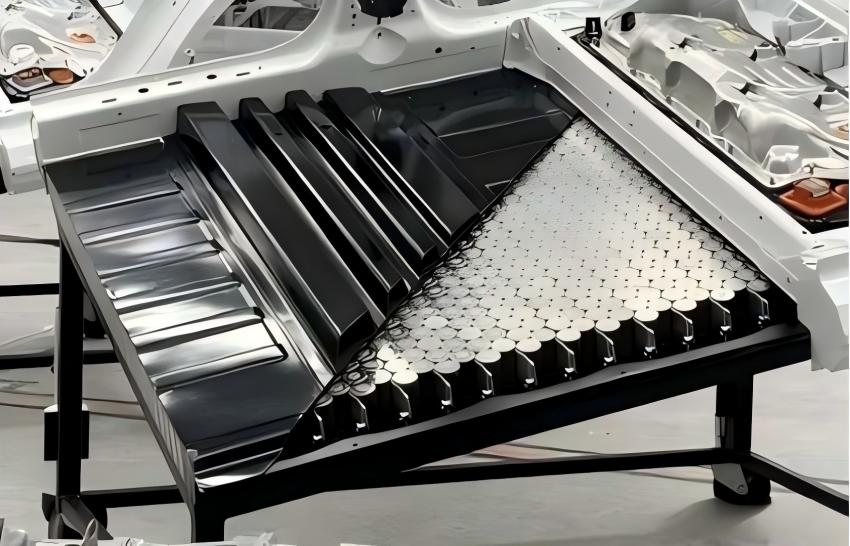
Figure 3 Tesla's CTC battery pack
The CTC solution employed by the Leapmotor C01 is even more radical. It eliminates both the battery pack enclosure and upper cover, directly integrating the modules onto a tray that is coupled to the vehicle's chassis. This approach fuses the battery skeleton with the vehicle's lower body into a single unit (Figure 4).
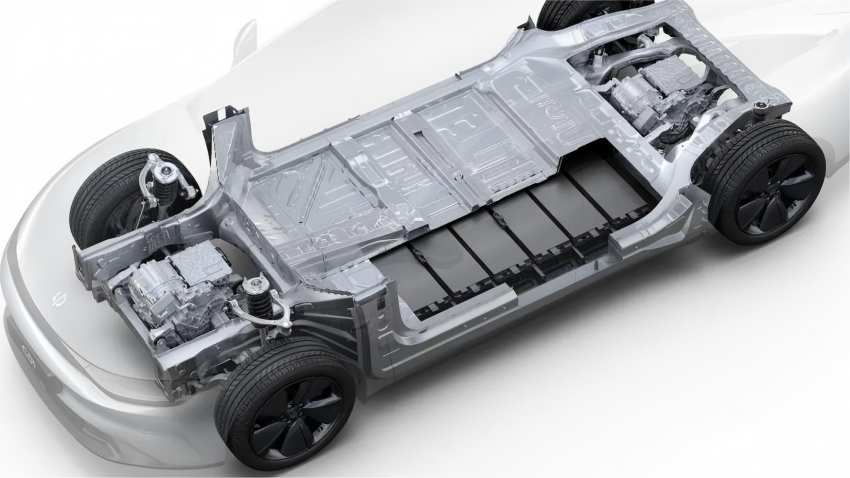
Figure 4 Simulated diagram of the Leapmotor C01 battery pack
CTB technology: Represented primarily by BYD. This technology can be viewed as a further extension of CTP. The CTB technology used in the BYD Seal involves integrating the battery pack's upper cover with the vehicle's floor pan, creating a vehicle-level sandwich structure of "body floor-integrated battery upper cover - cells - tray" (Figure 5). Its defining characteristic is that it retains a complete battery pack structure, which is then integrated with the vehicle body as a whole unit. This approach makes it technically easier to achieve sealing and risk containment.
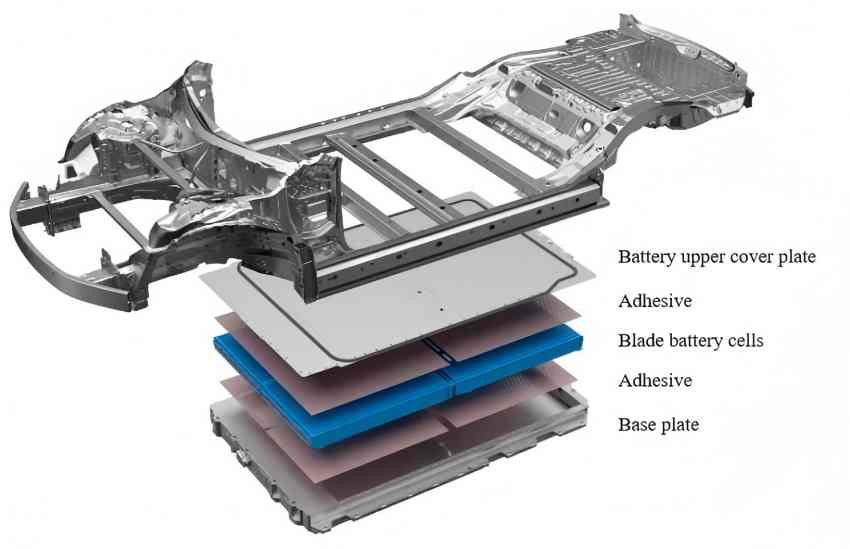
Figure 5 Schematic diagram of the BYD CTB battery pack
Despite differing implementation paths, these integration technologies all deliver revolutionary improvements. For instance, the BYD Seal achieves a torsional stiffness exceeding 40,000 N·m/deg, rivaling that of luxury internal combustion engine vehicles. Tesla's CTC solution reportedly reduces part count by 370, lowers vehicle weight by 10%, and increases driving range by 14%. Leapmotor claims its CTC technology adds 10mm of vertical interior space, reduces component count by 20%, and increases overall vehicle stiffness by 25%.
The advantages of CTC/CTB extend beyond the battery itself, enabling system-level optimization for the entire vehicle: extremely high space utilization (Tesla claims a 35% reduction in occupied space), exceptional body stiffness and safety, a lower center of gravity for better handling, and cost and weight benefits from the significant reduction in parts.
However, its challenges are more fundamental.
First is repair economics and serviceability. High integration means damage might necessitate extremely costly assembly replacements, and the repair process is complex.
Second is the restructuring of technological and industrial responsibilities. Integrated design requires battery companies to deeply participate in or even lead chassis development, blurring traditional boundaries between vehicle manufacturers and suppliers and sparking industry power struggles.
Third is the inherent conflict with battery-swapping models. The permanent bonding of the battery to the body makes the "battery-as-a-service" swapping model difficult to implement, forcing automakers to make a strategic choice between ultra-fast charging and battery-swapping routes.
Battery testing equipment: The inspector for battery integration technology
Whether it's the battery modules for CTM technology or the cells and packs for CTP, CTC, and CTB technologies, all require efficient and precise battery testing equipment. Such equipment must accurately identify various battery parameters to screen out problematic or risky batteries. These faulty batteries might later develop issues like short circuits, overcharging/over-discharging, or severe capacity degradation, potentially even leading to thermal runaway. Therefore, high-performance battery testers are crucial. NEWARE currently offers battery testers covering a wide range of current and voltage measurements, along with equipment for various electrochemical performance tests like CV, DCIR, GITT, HPPC, and self-discharge testing.
Conclusion
Battery pack integration technology is currently a major focus for many electric vehicle manufacturers, directly impacting how much battery capacity a vehicle can accommodate and its resulting driving range. Currently, CTP remains the market mainstream due to its cost advantages. Furthermore, given the intense price competition in the EV market, manufacturers increasingly demand more economical battery integration solutions, meaning R&D into CTP will continue. CTC/CTB technologies represent more advanced integration approaches with higher integration levels, allowing EVs to accommodate larger battery capacities. They will be a key focus for future development. Consequently, battery testing equipment capable of matching various battery pack technologies will also be a major R&D focus for testing equipment manufacturers in the future.