Introduction
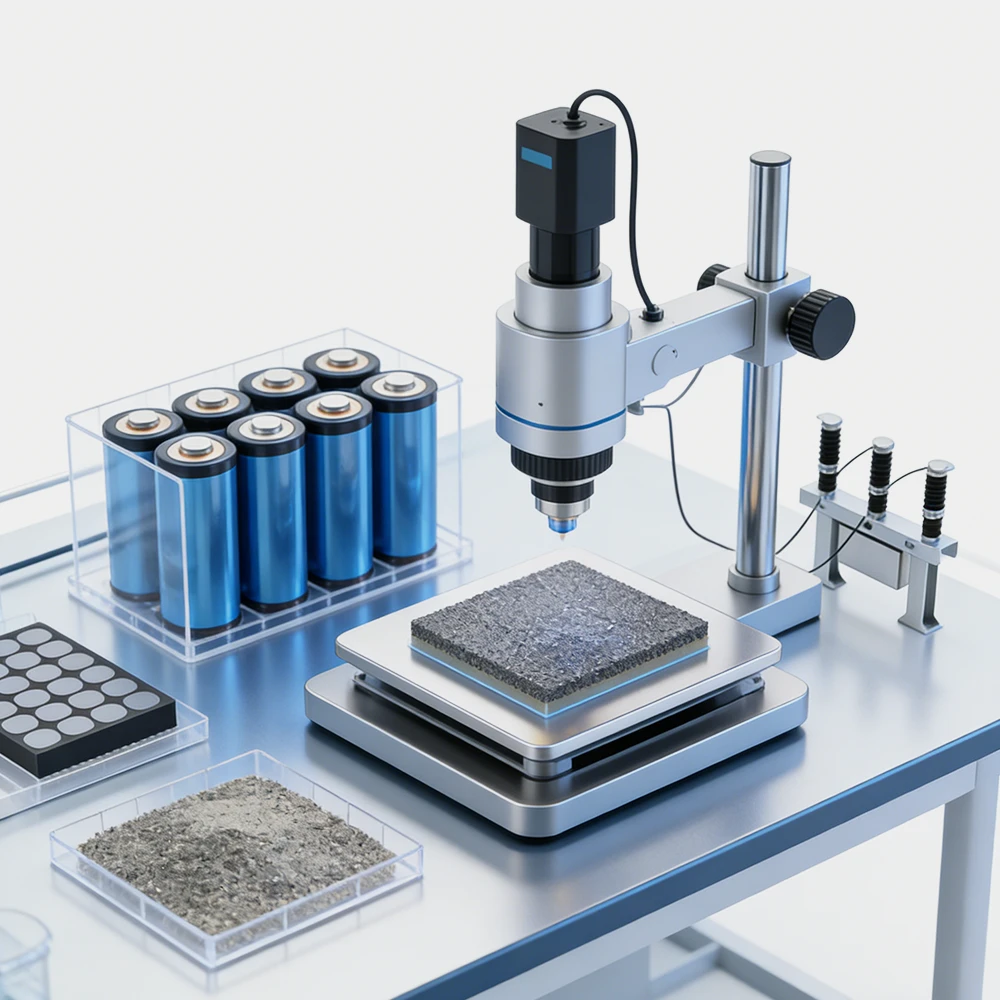
Battery technology is advancing rapidly, leading to continuously increasing battery power. Traditional air cooling methods suffer from large physical size, low heat dissipation efficiency, significant noise generation, and poor cooling effectiveness, making them increasingly inadequate for meeting the thermal management requirements of both consumer-grade and high-power batteries. If the heat generated by batteries during operation cannot be effectively dissipated, it will continuously accumulate, potentially leading to thermal runaway. In contrast, liquid cooling technology offers higher heat dissipation efficiency within a more compact footprint, produces minimal noise near the battery, and provides uniform cooling for the battery system.
Battery application areas: liquid cooling for mobile phone batteries, power batteries, and energy storage batteries
Mobile phone batteries
In mobile phones, the component generating the highest heat is not the phone battery but the phone's chip. However, due to the limited internal space, to dissipate heat for the chip, major manufacturers, including Apple, currently employ large-area, flat VC vapor chambers (Figure 1). These not only cover the chip area with the highest heat generation but also cover parts of the battery where heat generation is significant. This is what many manufacturers advertise as VC liquid cooling technology.
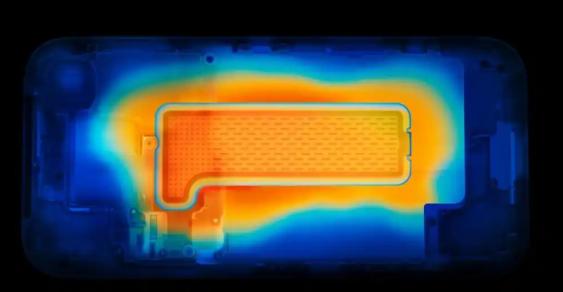
Figure 1 Infrared thermal image showing the cooling effect of an Apple VC vapor chamber
The VC vapor chamber is an enhanced version of the heat pipe, evolving from one-dimensional rapid heat conduction to two-dimensional uniform heat conduction. The liquid cooling used in mobile phones differs from that in PCs. PC liquid cooling consists of a circulating water-cooling system comprising a cold plate, a water pump, a radiator, and fans (Figure 2). In contrast, the VC liquid cooling in phones is more akin to air cooling in PCs; it transfers heat by allowing the coolant inside a sealed chamber to continuously evaporate (absorbing heat) and condense (releasing heat).
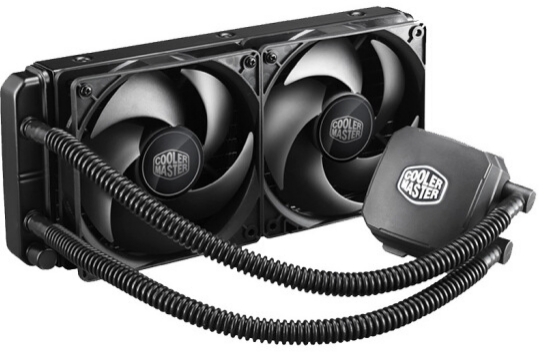
Figure 2 Cooler Master 240 water cooling
Water cooling loop
In 2025, Nubia's newly released Redmagic 11 Pro+ features an additional water cooling loop board specifically for the battery section (Figure 3). This system, known as the AquaCore Cooling System, utilizes a specialized flowing fluorinated liquid to remove heat. The coolant is circulated by a miniaturized piezoelectric ceramic pump through precisely engineered microchannels, forming an active cooling loop integrated into the phone's design.
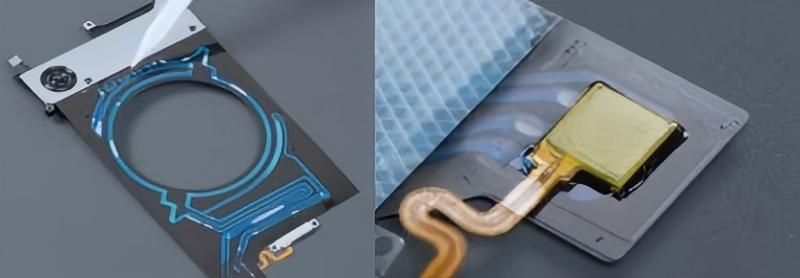
Figure 3 Disassembled view of the Redmagic 11 Pro+ water cooling module
Although this water-cooling loop board is not actually connected to the air-cooling system, making its practical effect similar to that of a larger VC vapor chamber, it represents the first pumped liquid cooling system seen in a mass-produced mobile phone. However, the internal space of a phone is extremely limited, making it very difficult to achieve "PC-level" liquid cooling performance while maintaining a slim and lightweight form factor.
Power batteries
Two liquid cooling methods: the cold plate type and the immersion type. The fundamental difference between these two methods lies in the heat transfer path.
The cold plate type involves transferring the heat from the battery cells first to the cold plate casing, then through the casing to the cooling liquid inside the cold plate. The cooling liquid flows within channels, evenly distributing the heat, and finally carries the heat out of the system, thereby achieving the goal of dissipating the heat generated by the cells.
The immersion type, on the other hand, eliminates the cold plate heat exchange step. Instead, it directly submerges the battery cells in the cooling liquid. The coolant makes direct contact with the cell casing for heat exchange, resulting in extremely high cooling efficiency.
The cold plate type is analogous to conventional liquid cooling in a PC, while the immersion type is equivalent to placing all the components of a PC directly into an insulating coolant. This offers exceptionally high heat dissipation efficiency, with a very uniform temperature distribution during the cooling process.
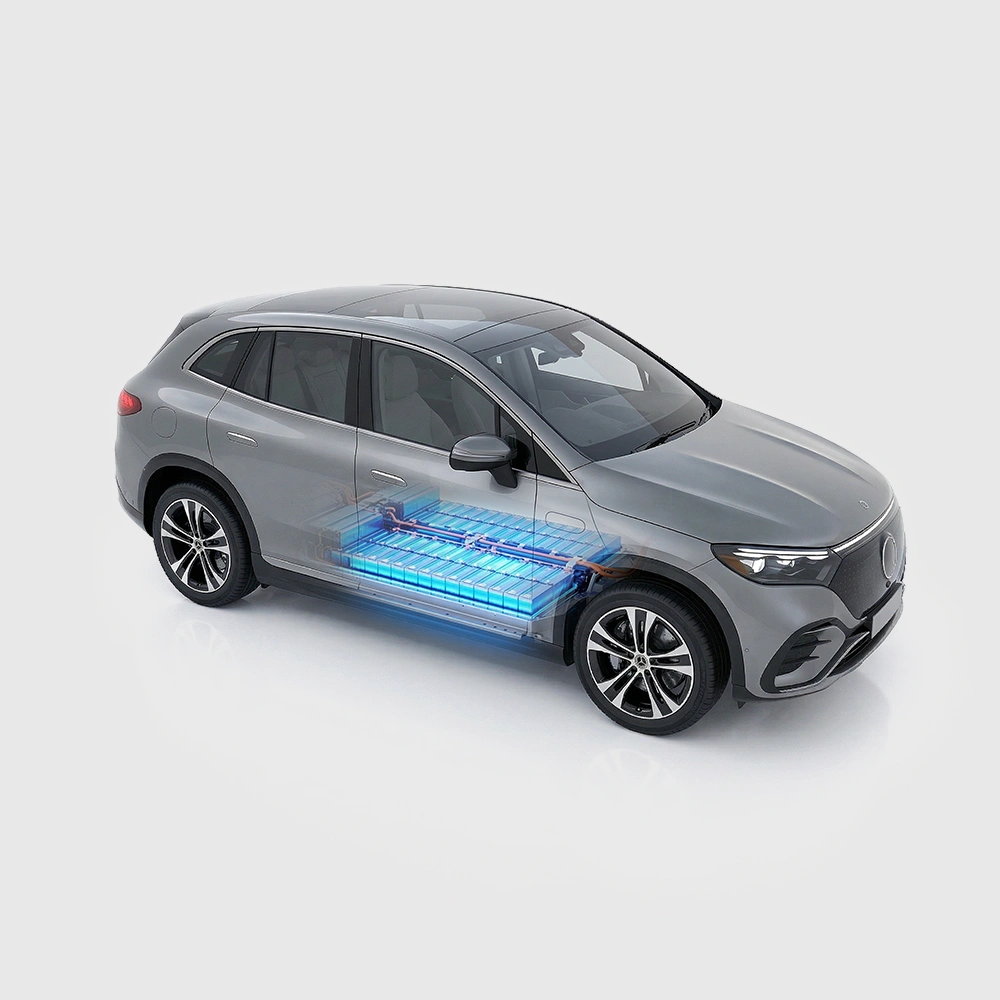
However, in practical applications, most electric vehicles still employ the cold plate type liquid cooling system. For example, Tesla (Figure 4) utilizes a serial flow channel design, where the cold plates need to be installed in the gaps between the battery cells.
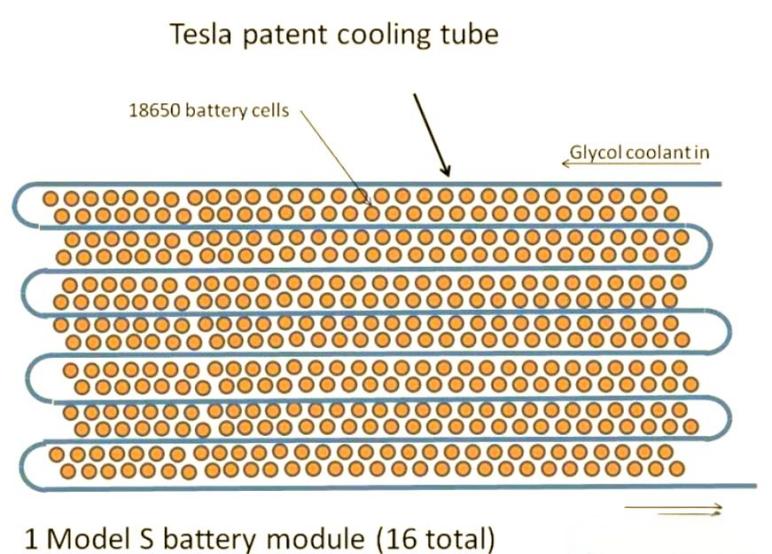
Figure 4 Layout diagram of Tesla's liquid cooling channels
The immersion type had some design proposals from companies in its early stages, such as Faraday Future (FF) (Figure 5). However, the cost challenges posed by the immersion type are simply too substantial. As of now, this liquid cooling technology has not been found in mass-produced passenger vehicles. Proposals for immersion-type liquid cooling solutions have only been put forward within the commercial vehicle sector.
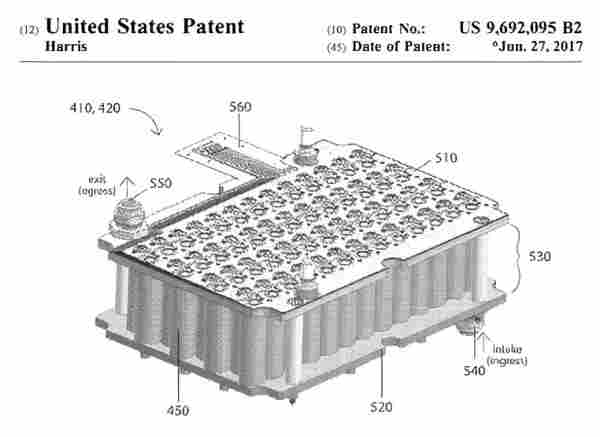
Figure 5 Early immersion-type liquid cooling design proposal by Faraday Future
Energy storage batteries
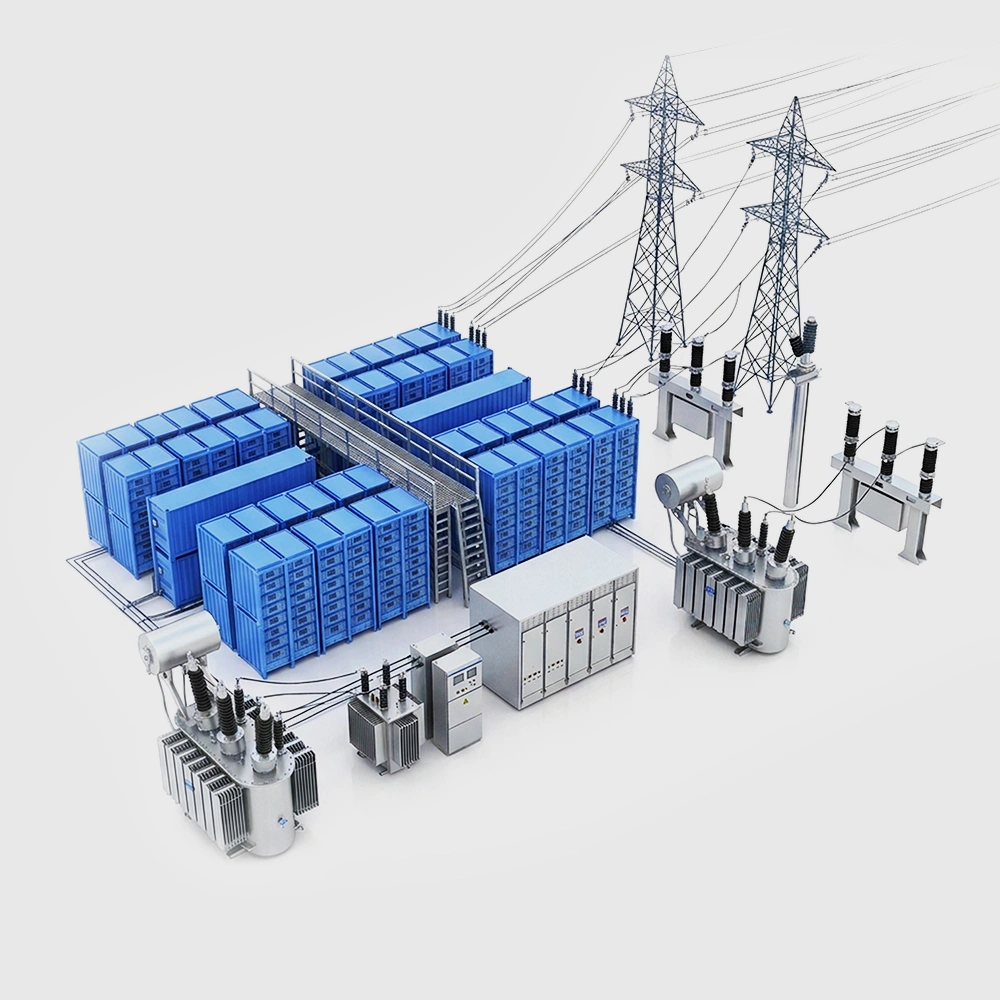
New energy power stations typically require energy storage stations to store electricity. The energy storage batteries used in these facilities are usually arranged in fixed positions within cabinets, with minimal need for frequent movement. A single large battery cabinet can house batteries with a total capacity ranging from hundreds of kilowatt-hours to several megawatt-hours. When ambient temperatures rise, dissipating heat from such a large-scale energy storage battery system becomes a significant challenge. Traditional air-cooling methods often struggle to guarantee low noise, high efficiency, and highly uniform heat dissipation. Customized liquid cooling solutions can effectively address this issue. On average, lowering the battery temperature by 1℃ can increase the cycle life of an energy storage battery by 8%.
Battery charging field: liquid-cooled supercharging piles
When a charging pile supplies power to an electric vehicle, a substantial amount of electrical energy is transferred. During this process, heat is generated as current passes through resistances. The power (P) of a charging pile is given by P=UI . The voltage (U) is typically related to the vehicle's voltage platform, generally ranging from 200V to 800V. To achieve higher charging power, increasing the charging current (I) is unavoidable. Since the heat generated (Q) follows Q=I2RT , higher currents produce significantly more heat. Therefore, supercharging piles generally require high-performance heat dissipation to maintain high-power charging. Traditional air cooling struggles to meet the increasingly demanding heat dissipation requirements of modern high-power charging. Consequently, liquid-cooled supercharging piles (Figure 6) have become mainstream in the industry. Combined with liquid cooling technology in electric vehicles, they can enable charging speeds reaching hundreds of kilowatts or even megawatt levels.
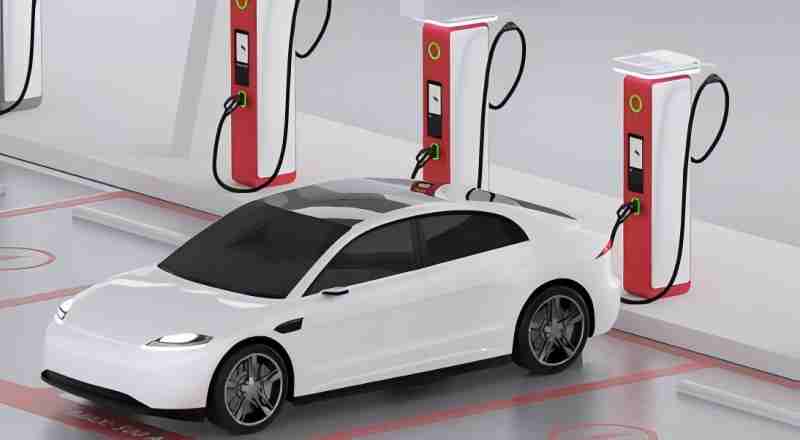
Figure 6 Charging model of a Huawei liquid-cooled supercharging pile
Field of battery testing equipment: liquid-cooled battery test cabinets
Liquid cooling technology offers the following advantages when applied to battery testers
Ensures Testing Precision and Accuracy: Precision measurement components within the tester (such as reference sources, ADC/DAC chips) are highly sensitive to temperature. Liquid cooling efficiently removes heat from these components, ensuring they operate at a stable, constant temperature, thereby significantly reducing measurement errors caused by thermal drift.
Improves Power Density and Reliability: During high-power charge-discharge testing, the power devices inside the tester generate substantial heat. Air cooling may be insufficient for timely heat dissipation, potentially causing the equipment to derate performance or trigger overheat protection. The heat dissipation efficiency of liquid cooling is far superior to air cooling. It allows testers to achieve higher power output within a smaller form factor (high power density) and ensures stable, long-term operation under full load.
Creates an Ideal Testing Environment: Some high-end testers integrate a liquid cooling temperature control system directly into the equipment, creating a highly uniform and controllable "climate chamber" for the battery under test. This is crucial for battery performance and lifespan tests requiring strict temperature control.
Currently, for most testers where converting from air cooling to liquid cooling is desired, it can be achieved by integrating internal cooling tubes and radiators connected to an external water chiller (Figure 7). Particularly high-power equipment, such as the NEWARE CE-6000 series, can be integrated with peripheral water chillers and temperature chambers for testing.
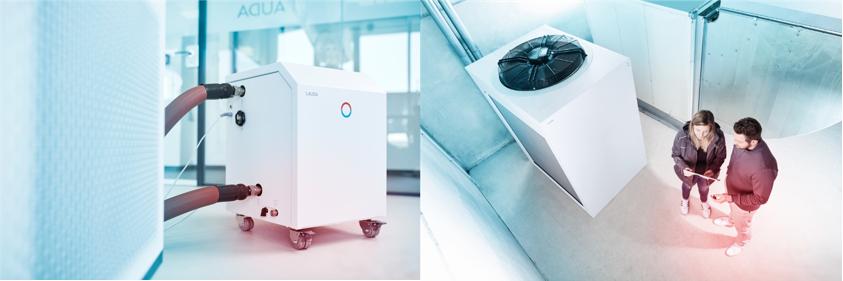
Figure 7: External water chiller
Conclusion
Liquid cooling technology finds broad application in the battery field. Whether during battery usage, charging, or testing, the substantial heat generated can be efficiently dissipated through liquid cooling technology. This prevents system overheating and maintains battery temperature within the normal operational range. Currently, liquid cooling technology is already widely adopted in the electric vehicle sector. However, in the field of battery testing, high-power, large-scale battery pack testing equipment has not yet seen the universal adoption of this technology.
Supplement: Some of the above materials are from the Internet. We are very sorry if there is any infringement! You can contact us for deletion!