1500V+ BESS architectures reduce BOS costs by 35%+ and enable utility-scale renewable energy deployment with higher energy density per rack.
Ultra-high-voltage testing must comply with IEC 62619, UL 1973, and IEC 63056 — verifying insulation, arc protection, and thermal runaway containment.
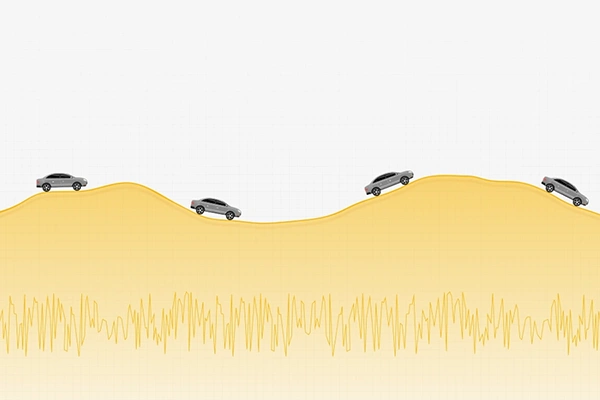
Battery testers must emulate Power Conversion System behavior — simulating grid-tied charge/discharge, frequency regulation, and real-world driving cycles at extreme voltage.
Understanding the core electro-mechanical architecture, multi-mode control strategies, and parallel scaling that enable safe, accurate testing at 1500V–3000V.
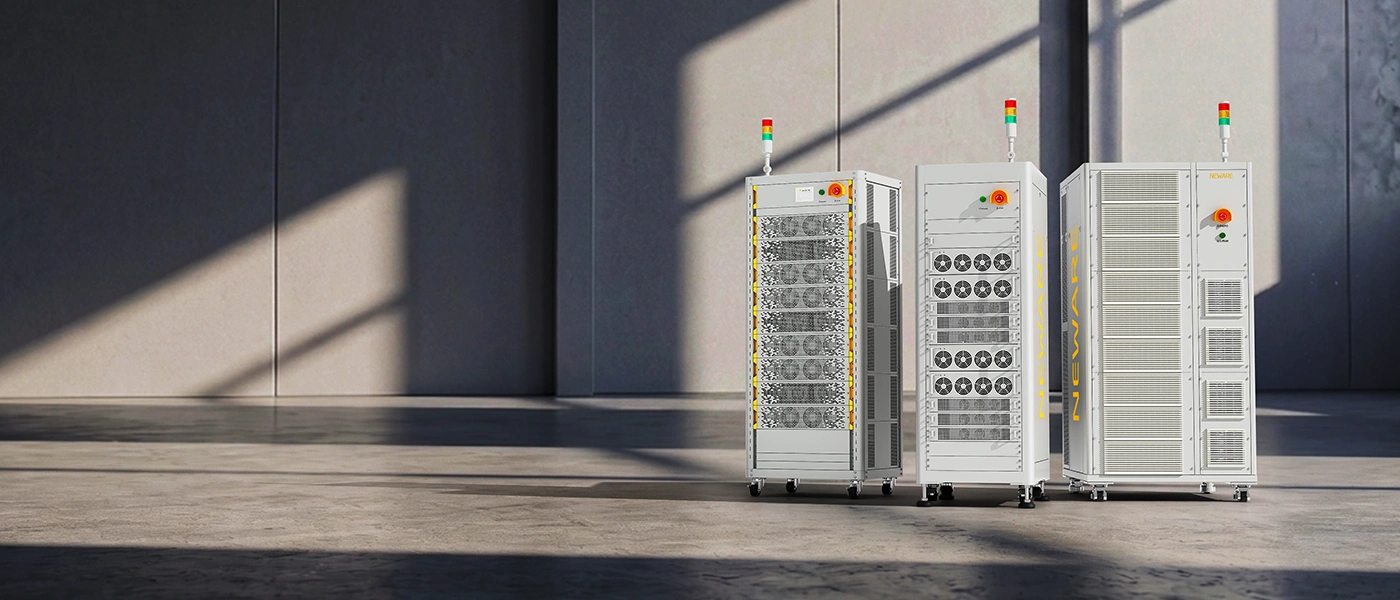
From utility-scale BESS to next-generation EV platforms, ultra-high-voltage testing is essential — but comes with significant engineering challenges.
Full charge/discharge cycle testing of 1500V+ BESS packs, verifying capacity, energy efficiency, and thermal behavior under sustained high-power operation.
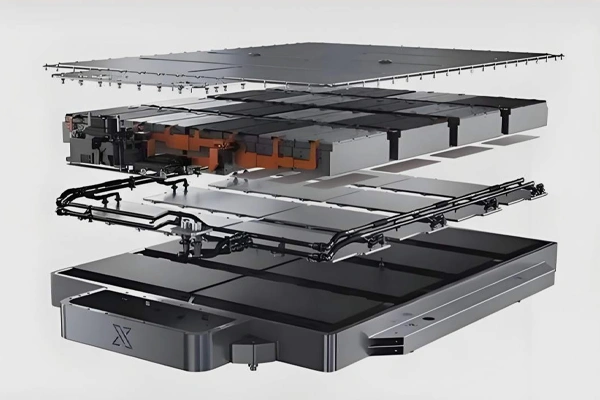
Testing ultra-high-voltage battery clusters at system level — validating cell consistency, BMS communication, and insulation integrity across hundreds of series-connected cells.
Emulating power conversion system behavior — simulating grid-tied charge/discharge, AFC frequency regulation, and DC source characteristics for PCS validation.
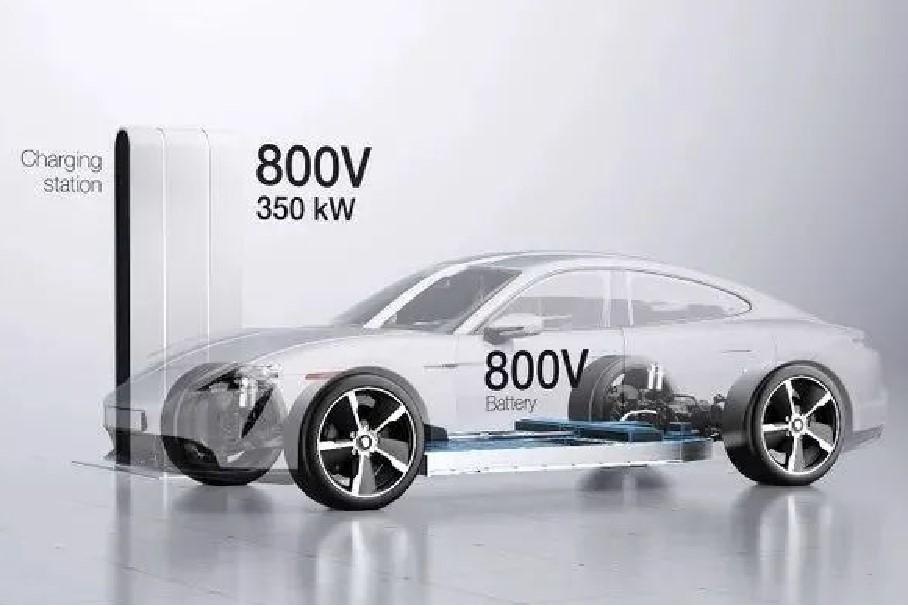
Validating 800V+ EV battery platforms and ultra-fast charging protocols — testing charge acceptance, thermal limits, and BMS protection under extreme charging rates.
Thousands of charge/discharge cycles at high voltage to quantify capacity fade, energy efficiency decay, and predict battery lifespan over 20+ years of grid service.
Testing BESS response to grid frequency deviations — validating millisecond-level power injection/absorption for primary frequency response and arbitrage optimization.
High-voltage systems face risks of insufficient electrical clearance, dielectric breakdown, arcing, and electric shock. Testing equipment must ensure safety interlocks and insulation monitoring throughout operation.
600kW+ power dissipation generates extreme heat. Without proper thermal management — including liquid cooling integration — cell temperature gradients compromise test accuracy and safety.
With hundreds of cells in series, even minor capacity or impedance variations cause voltage imbalance, accelerating degradation and creating safety risks during high-voltage operation.
EV driving cycles and grid frequency regulation require instantaneous current changes. Sluggish response yields simulation data that cannot predict real-world cycle life or grid behavior.
Operating battery testers, thermal chambers, and liquid chillers independently creates data synchronization issues and increases safety risks during thermal runaway or environmental testing.
Millions of data points per test across multiple channels require centralized management, real-time analysis, and full traceability for compliance reporting and R&D decisions.
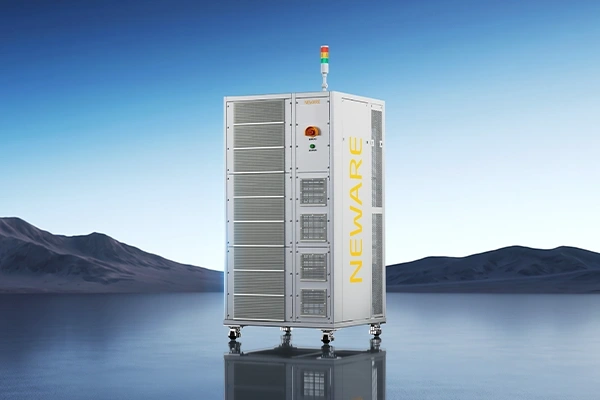
Two platforms covering 1500V and 3000V — from battery cluster testing to full PCS simulation, with integrated safety, precision, and scalability.
At 3000V, insufficient clearance or dielectric weakness can cause catastrophic arc faults, endangering operators and destroying test samples.
AC/DC + DC/DC dual-stage design with galvanic isolation between grid and battery, plus built-in safety interlocks and insulation monitoring.
1500V high voltage imposes strict insulation, thermal and safety requirements, calling for full-link reliable design and multi-level redundant protection.
1500V-class reinforced insulation design, integrated with HVIL, mandatory insulation test, over-current/over-temperature protection and fault self-diagnosis, with sufficient safety redundancy for personnel and equipment.
EV driving cycles and grid frequency regulation demand sub-10ms transient response. Legacy equipment produces misleading simulation data.
Fast current response with 100ms minimum pulse width accurately replicates real-world transient loads for reliable cycle life prediction.
Running battery testers, thermal chambers, and chillers independently creates synchronization gaps and safety risks during thermal runaway tests.
TCP/IP, CAN FD/CAN/RS485 interfaces enable unified control of testers, chambers, chillers, and BMS in a synchronized ecosystem.
At 3000V / 200A (600kW), maintaining accuracy across wide voltage/current ranges is extremely difficult — errors compound over thousands of cycles.
Independent range design with 24-bit ADC ensures ±0.02% F.S. accuracy across the full output range, with CV cut-off as low as 0.05% F.S.
Ultra-high-voltage tests generate millions of data points. Without centralized management, traceability for compliance is impossible.
24-bit sampling at 10ms intervals, MySQL for full traceability, and built-in DCIR with Excel/TXT export for rapid analysis.
Two voltage classes. One unified testing ecosystem.
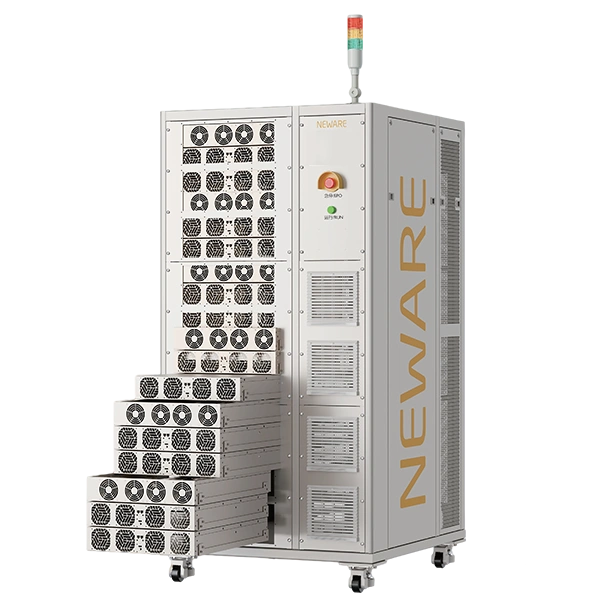
3000V ultra-high voltage for next-gen BESS and PCS DC source simulation.
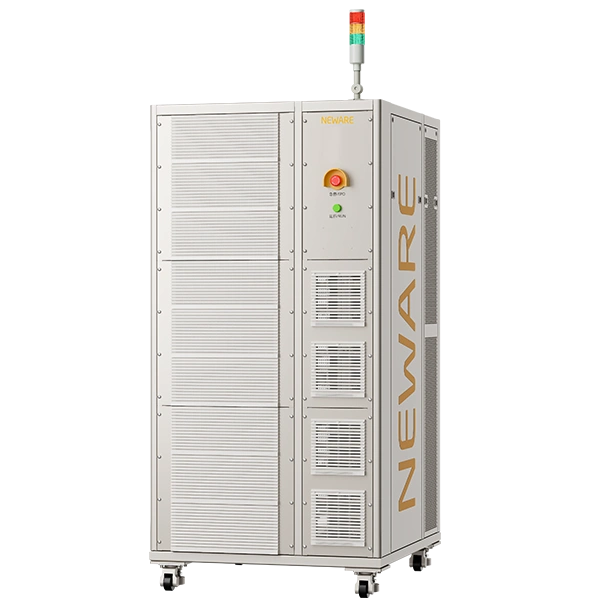
1500V battery cluster solution for energy storage pack and HV DC simulation.
| CE-6001N-3000V200A | CE-6002-1500V200A | |
|---|---|---|
| Output Voltage | 0 – 3000V | 0 – 1500V |
| Min Discharge Voltage | 100V | 100V |
| Output Current | 1A – 200A | 1A – 200A |
| Parallel Expansion | Up to 1500A | Up to 1500A |
| Single Channel Power | 300kW | 300kW |
| Total Output Power | 600kW | 600kW |
| Voltage & Current Accuracy | ±0.02% F.S. | ±0.02% F.S. |
| Resolution | 24-bit | 24-bit |
| CV Cut-off Current | 0.05% F.S. | 0.05% F.S. |
| Current Response | ≤10ms | ≤10ms |
| Current Switching | ≤20ms | ≤20ms |
| Min Pulse Width | 100ms | 100ms |
| Min Recording Interval | 10ms | 10ms |
| Architecture | AC/DC + DC/DC Dual-Stage | AC/DC + DC/DC Dual-Stage |
| Communication | TCP/IP, CAN FD, RS485 | TCP/IP, CAN FD, RS485 |
| Built-in DCIR |
Configure the CE-6000 series for your specific EOL or R&D requirements — from 1500V battery clusters to 3000V PCS simulation.