Self-discharge testing: a key to early identification of lithium-ion battery manufacturing defects amid safety risks
Against the backdrop of the global energy transition, lithium-ion batteries have become the core power source for electric vehicles and energy storage systems. As market demands for higher battery energy density and faster charging capabilities continuously increase, battery safety issues have become increasingly prominent. In recent years, frequent safety incidents involving electric vehicle fires and energy storage power stations caused by internal battery defects have sounded an alarm for the industry. These potential safety hazards mostly originate from defects that are difficult to avoid during battery manufacturing, such as internal micro-shorts and material contamination. Self-discharge testing technology is an effective means to accurately identify these potential defects at an early stage.
Significance of self-discharge testing
Self-discharge[1,2] is the phenomenon where an energized energy storage device naturally loses its electrical charge over time without being connected to any load. The self-discharge mechanism drives the energy storage device from a high free energy state to a lower free energy state (Figure 1).
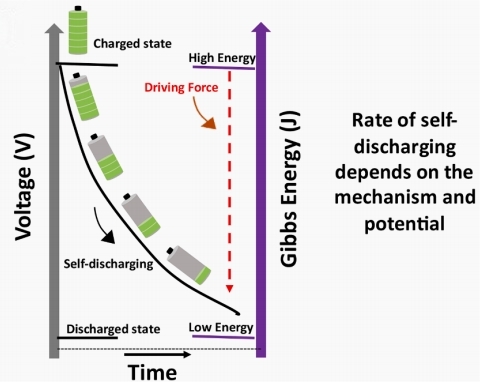
Figure 1 schematic diagram of gibbs free energy change during self-discharge [1]
All lithium-ion batteries exhibit a certain degree of self-discharge, typically losing about 1% to 5% of their capacity per month, which is unavoidable. However, when a battery has internal micro-short circuits, impurities, or structural defects, its self-discharge rate increases significantly. Batteries of this type have a much higher probability of failure during later use compared to batteries with a normal self-discharge rate. Therefore, by accurately measuring the self-discharge rate, potentially faulty individual cells can be effectively identified before battery assembly, preventing these problematic batteries from entering the application stage. In short, the fundamental significance of self-discharge testing lies in its role as a key guarantee for battery consistency and reliability.
Self-discharge testing methods
Open-circuit voltage method
The Open-Circuit Voltage (OCV) method is a relatively traditional testing method. It measures the change in the open-circuit voltage of the battery during storage and evaluates the self-discharge characteristics based on the rate of voltage drop. If a battery is compared to a cup filled with water, measuring the change in water level can determine the amount of water loss. Similarly, by observing the change in open-circuit voltage, the self-discharge characteristics of the battery can be obtained (Figure 2).

Figure 2 schematic diagram of the open-circuit voltage method (water cup model)
This method is simple to operate and has low equipment costs, but it requires a very long time. The high battery storage costs incurred during prolonged testing are significant. Even though the temperature of the battery's storage environment can be appropriately increased to accelerate the self-discharge process of defective batteries, the test often requires several weeks or even months to obtain reliable results.
Potentiostatic method
The Potentiostatic method is a more advanced testing method. The principle involves using a potentiostat to precisely match a DC power source to the battery's open-circuit voltage, and then measuring the battery's self-discharge current. This method can reduce the testing time to several days or even hours. The specific test method involves precisely controlling the voltage source to match the battery's OCV. The current flowing from the voltage source to the battery at this point is the battery's self-discharge current. The self-discharge characteristics of the battery can be analyzed based on the test curve of this current. Simply put, we can compare the battery to a cup 1 filled with water, but with a small hole at the bottom that constantly leaks water. The leaked water is equivalent to the self-discharge current. The Potentiostatic method is like using a cup 2, which always contains the same amount of water as cup 1, to pour water into cup 1, keeping cup 1 always full. By precisely measuring the amount of water poured from cup 2 into cup 1, we can know the amount of water leaked from cup 1, i.e., the battery's self-discharge current. The principle can be found in Figure 3.
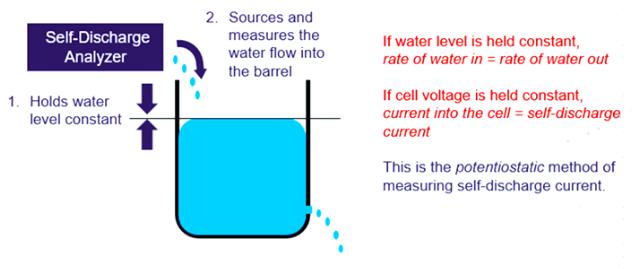
Figure 3 schematic diagram of the potentiostatic method (water cup model)
Explaining it this way might make the method sound simple, but in actual operation, it is extremely complicated because the battery voltage constantly fluctuates. Minute temperature changes or slight vibrations in the test environment can cause tiny voltage variations. The Potentiostatic method requires real-time detection of the battery voltage to adjust the current, necessitating a potentiostat with very high precision and high sampling rate, as well as a power source capable of precisely adjusting the current magnitude. The accuracy often needs to be around 7 digits to obtain relatively precise battery self-discharge characteristics. This means that the Potentiostatic method requires additional equipment for accurate testing. Of course, such equipment is usually quite expensive; for example, Keysight's self-discharge testers cost tens of thousands dollars. But compared to the reducible battery storage costs, the price of the equipment often seems insignificant. The NEWARE self-discharge tester, which also utilizes the potentiostatic method, offers superior performance at a lower price. Its development has been finalized and will soon enter mass production.
Galvanostatic method
Since the previous section mentioned that the Potentiostatic method controls the potential and measures the current to rapidly determine the self-discharge current, it is also possible to control the current and measure the voltage change to obtain the battery's self-discharge characteristics. ARBIN's Galvanostatic method uses this technique, proposing a special formula to avoid factors that disturb the electrochemical equilibrium. However, the actual operation similarly requires precise control analogous to the Potentiostatic method.
What benefits can self-discharge testing bring
This is what battery manufacturers truly care about. Let's state the conclusion first: the benefits far exceed the value of the equipment itself. Imagine if a company could reduce the probability of accidents involving its batteries during subsequent use by over 90%, what enormous economic benefits would that bring? Consumers would also prefer such batteries. The number of fatalities due to electric vehicle battery fires has been increasing in recent years, and compared to the early days, consumer enthusiasm for pure electric vehicles has somewhat waned. Those who have witnessed accident (Figure 4) scenes may have increased concerns about battery safety. Certainly, most battery fire accidents are caused by unexpected collisions, which can be mitigated by adding anti-collision protection measures to delay ignition. But if the battery itself has problems, even without a collision, a fire could suddenly occur while the driver is operating normally. If it's inconvenient to stop at that moment (e.g., while driving on a highway), the consequences could be severe. If such faulty batteries can be prevented from being used early on, batteries can gain higher acceptance, thereby generating more benefits.

Figure 4 scene of an electric vehicle fire incident.
Furthermore, self-discharge testing can be applied in scenarios other than the period between battery production and assembly. During battery transportation, regular self-discharge tests can detect faulty batteries caused by minor bumps during transit. During the subsequent use of the battery pack, self-discharge monitoring can detect battery status, provide early warnings, and prevent the continued use of abnormal batteries.
Conclusion
Self-discharge testing is an indispensable step in ensuring battery safety and quality. The Potentiostatic method represents significant progress compared to the traditional Open-Circuit Voltage method, not only shortening test time and reducing storage costs but also enabling a transition from sampling inspection to full inspection for self-discharge testing, making the results more reliable. With the development of artificial intelligence, it is also promising to correlate self-discharge test data with the battery's full lifecycle performance, building more accurate predictive models for battery health status.
References
[1] Babu B. Self-discharge in rechargeable electrochemical energy storage devices[J]. Energy Storage Materials, 2024, 67: 103261.
[2] Liao H, Huang B, Cui Y, et al. Research on a fast detection method of self-discharge of lithium battery[J]. Journal of Energy Storage, 2022, 55: 105431.
Supplement: Some of the information presented above was obtained from the Internet. We are very sorry if there is any infringement! You can contact us for deletion!