What is an ncm battery?
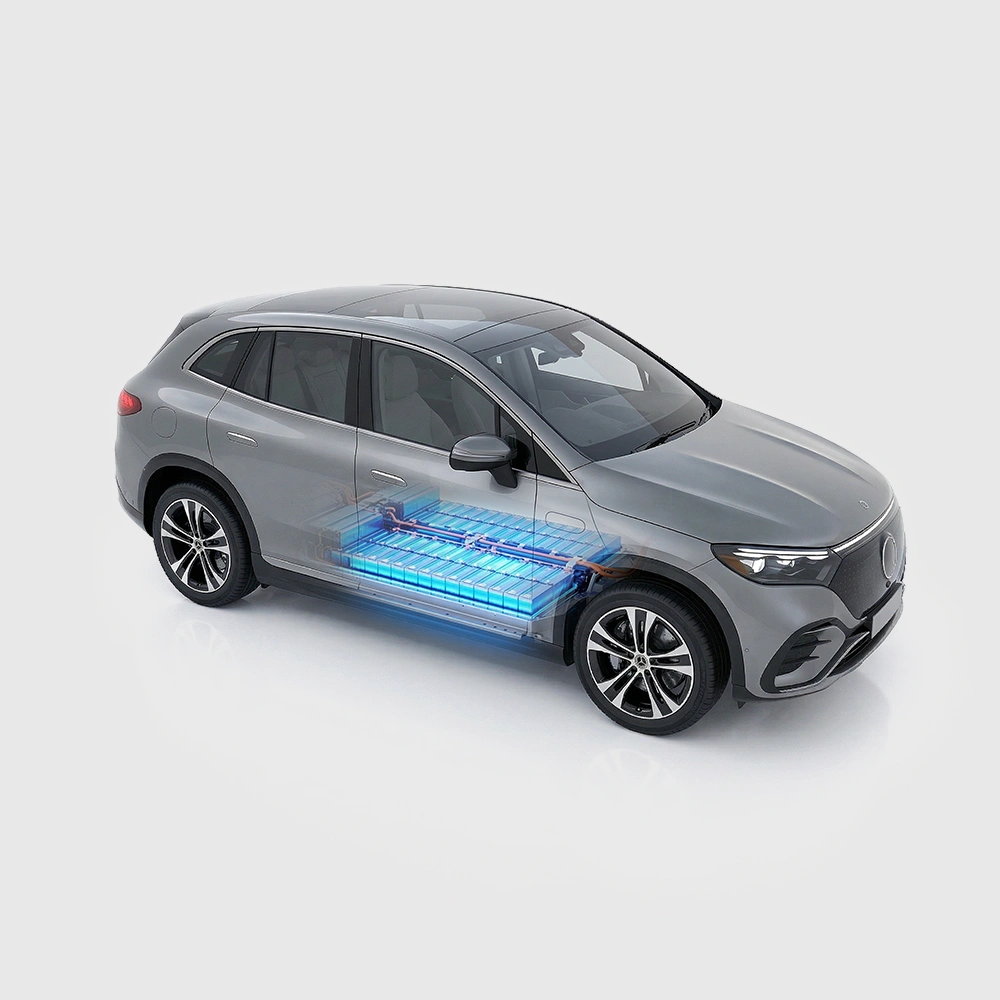
NCM batteries, short for Nickel Cobalt Manganese Lithium-ion batteries, are a leading technology in the power battery sector. These batteries utilize nickel (Ni), cobalt (Co), and manganese (Mn) as the primary active elements in the cathode. By combining these metals in varying ratios, along with an anode, electrolyte, and separator, they form a complete battery system. Since their commercial launch in 2010, NCM batteries have become the top choice for popular electric vehicles like the Tesla Model 3 and BYD Han, thanks to their consistently improving energy density and cycle life. According to SNE Research, NCM batteries held a dominant 42% share of the global market in 2023[1].
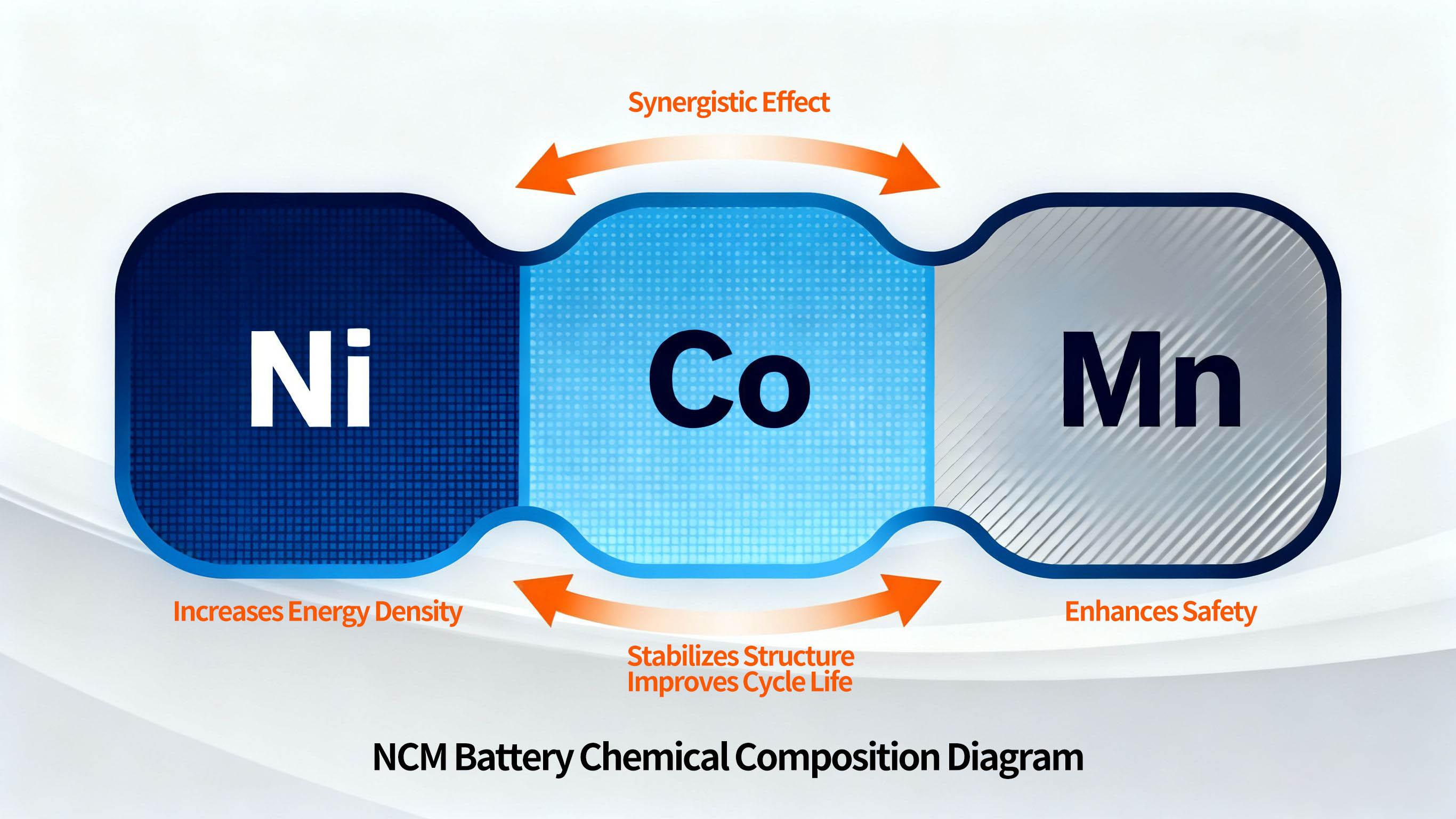
Chemical composition: the synergy of three metals
The performance of NCM batteries hinges on the specific ratio of metals in the cathode. Each element plays a distinct role:
Nickel is key for high energy density, allowing the battery to store more power. Some advanced versions now contain nearly 90% nickel.
Cobalt helps stabilize the battery's structure during charging and discharging but is expensive and scarce, impacting overall cost.
Manganese enhances safety and thermal stability while helping to reduce costs.
This synergistic combination balances the weaknesses of individual metals and allows the battery's formula to be tailored for different applications.
Technology evolution: the race for higher density from ncm 111 to ncma
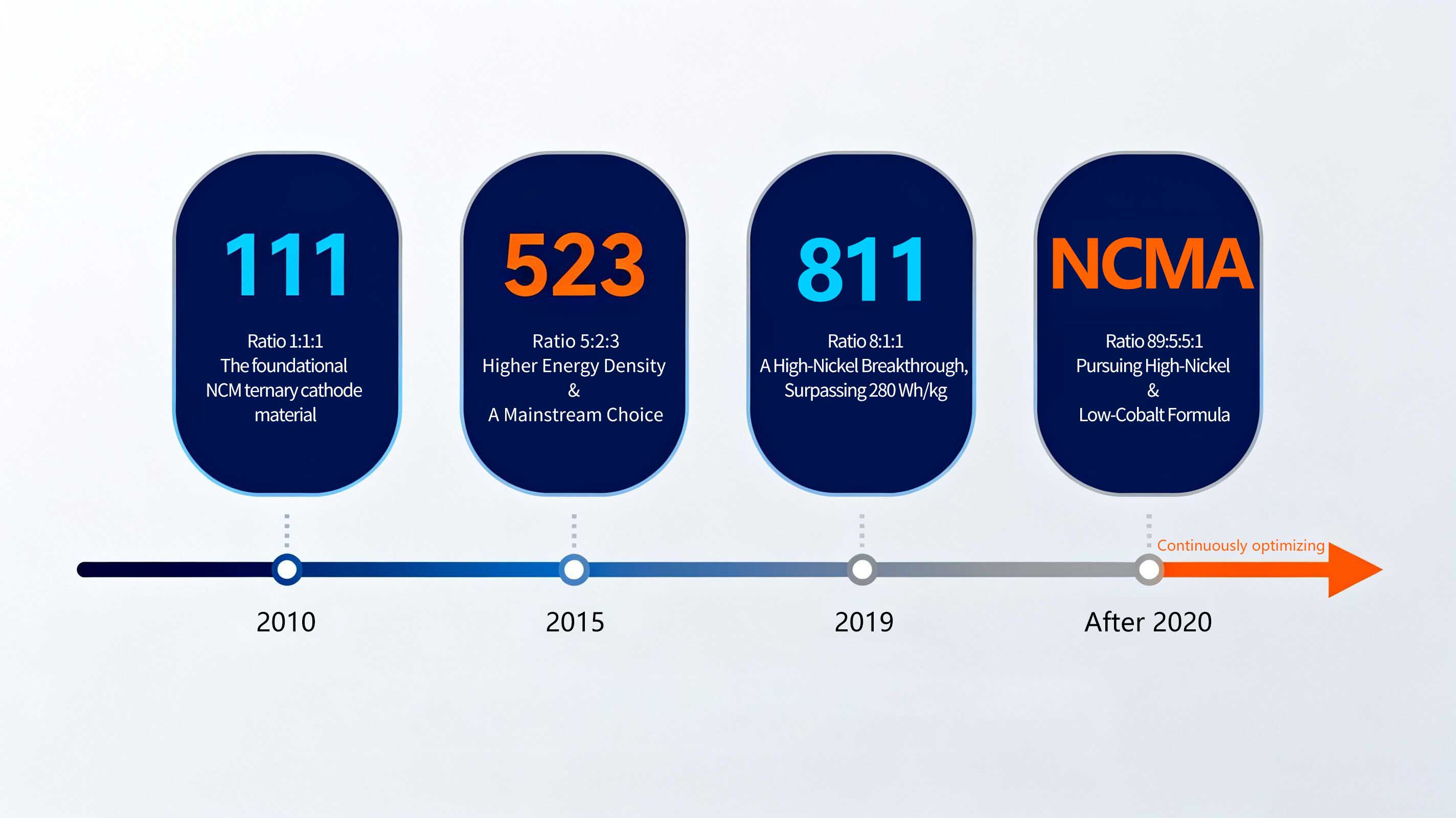
The evolution of NCM batteries is a story of optimizing these metal ratios:
NCM 111 (1:1:1 Ratio): The standard before 2015, with an energy density of 150-180 Wh/kg, suitable for vehicles with ranges under 300 km.
NCM 523 (5:2:3 Ratio): Emerged around 2016, boosting energy density to 200-220 Wh/kg and enabling ranges over 400 km.
NCM 811 (8:1:1 Ratio): Launched in 2019, it achieved 250-280 Wh/kg, powering vehicles like the Tesla Model 3 to ranges exceeding 600 km.
NCMA (Nickel Cobalt Manganese Aluminum): Recent developments in ultra-high-nickel cathodes like NCMA have pushed energy density beyond 300 Wh/kg in labs, paving the way for next-generation long-range EVs[2].
Critically, each new generation has delivered a 15%-20% increase in energy density while reducing costs by 8%-12%. This powerful combination of higher performance at lower cost is the key to NCM's market dominance.
Market advantages: leading market share driven by high performance and value
NCM batteries hold a strong competitive position in the power battery market due to several key advantages:
Superior Energy Density: Compared to Lithium Iron Phosphate (LFP) batteries, which typically offer 180-200 Wh/kg, NCM systems (like CATL's Qilin Battery) can reach 220-255 Wh/kg, making them the preferred choice for long-range vehicles.
Better Low-Temperature Performance: At -20°C, NCM batteries retain 15%-20% more capacity than LFP batteries, making them more suitable for cold climates.
Continuously Optimizing Costs: Despite cobalt price volatility, reducing cobalt content (through higher nickel ratios) and economies of scale have driven costs down. By 2024, the cost per Wh for NCM batteries had fallen to approximately ¥0.75, a drop of over 30% since 2020[3].
These advantages translate directly into market success: in 2023, NCM batteries accounted for about 42% of global EV battery installations, with high-nickel types (like NCM 811) making up over 70% of that share[1].
Future challenges: finding the balance between safety and density
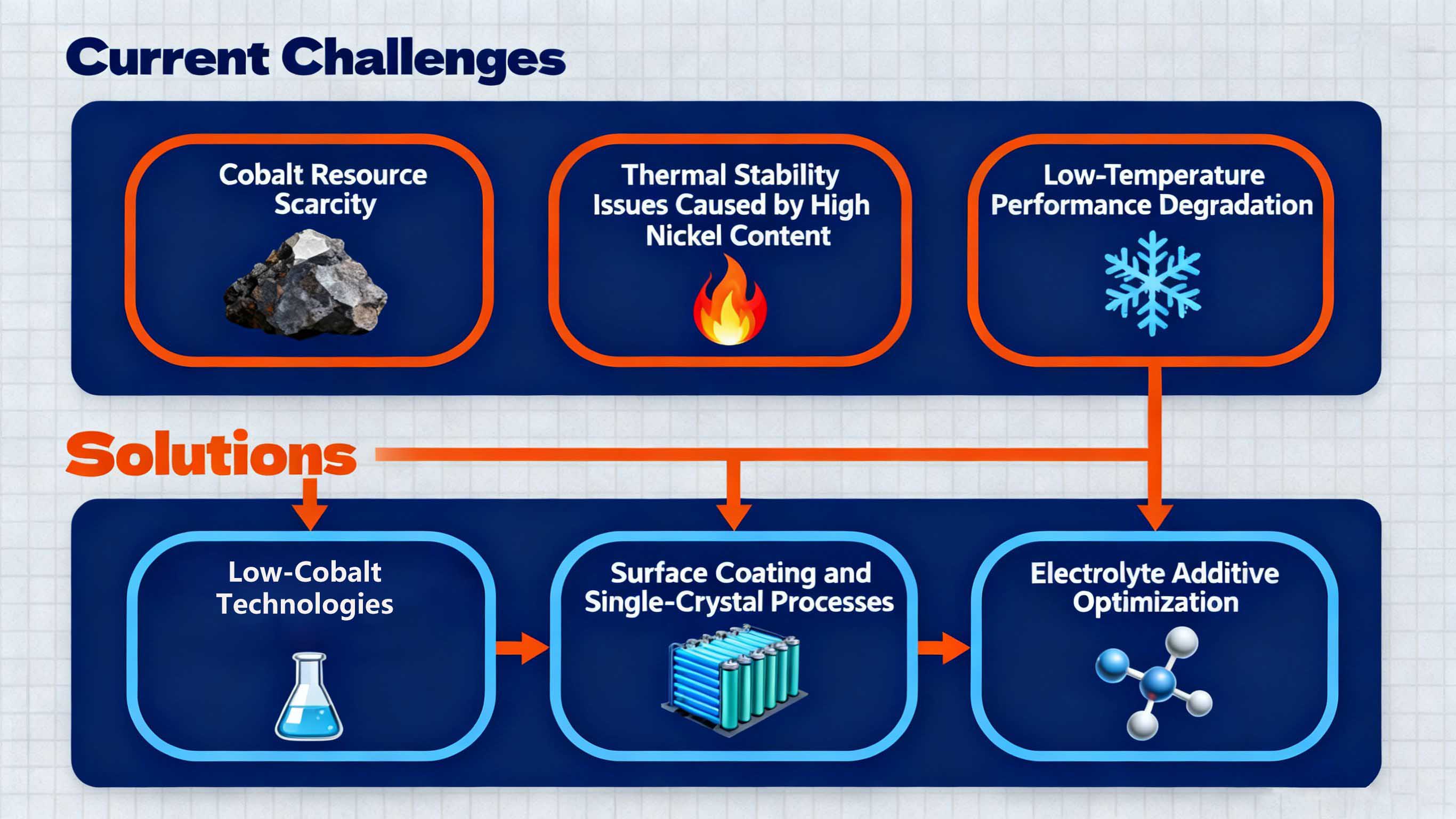
Despite their market leadership, NCM batteries face two major challenges:
Safety Concerns: Higher nickel content can reduce thermal stability, demanding more sophisticated Battery Management Systems (BMS).
Cobalt Dependency: Approximately 70% of the world's cobalt comes from the Democratic Republic of Congo, creating potential supply chain risks due to geopolitical instability[4].
The industry is addressing these issues through material innovations like doping with aluminum or magnesium, using advanced coating techniques, and developing single-crystal cathode structures. Notably, CATL's 2024 "Qilin Battery" integrates cooling plates to significantly reduce thermal runaway risk while achieving system-level energy densities over 255 Wh/kg, pointing the way forward for the industry.
From laboratory formulations to powering millions of vehicles on the road, the evolution of NCM batteries vividly illustrates the industry's driving principle: energy density is king. As ultra-high-nickel versions become more common and solid-state battery technology advances, NCM batteries continue to play a pivotal role in transforming electric vehicles from niche alternatives into the mainstream choice, profoundly impacting global energy and transportation landscapes.
References:
[1] SNE Research. (2024). Global EV & Battery Monthly Tracker.
[2] Liu, Y., et al. (2023). High-Nickel Cathodes for Lithium-Ion Batteries: Progress and Perspectives. Energy Storage Materials.
[3] BloombergNEF. (2024). Battery Price Survey.
[4] U.S. Geological Survey. (2024). Mineral Commodity Summaries: Cobalt.