AI and lithium-lon battery lifespan testing
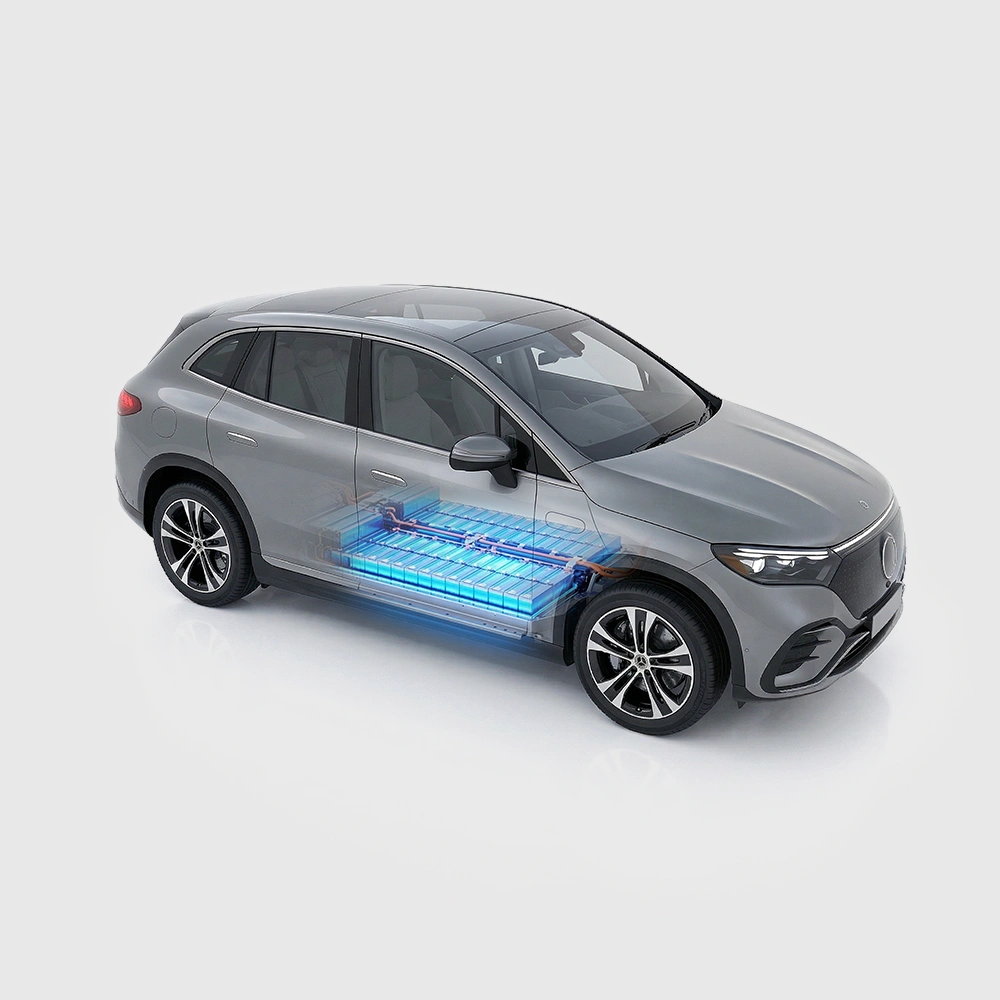
Ever grabbed your phone first thing in the morning only to see it's already down to 20%—even after charging it overnight? That's your lithium-ion battery (LIB) warning you: it's starting to show its age. Beyond our smartphones, these batteries are the workhorses powering electric vehicles (EVs), grid-scale energy storage, and just about every gadget that keeps our carbon-conscious world running. But here's the catch: like a runner hitting the wall mid-marathon, all batteries degrade over time. A brand-new EV battery might log 300 miles on a single charge, but after 500 to 1,000 charge cycles, that range can drop by 20% or more.
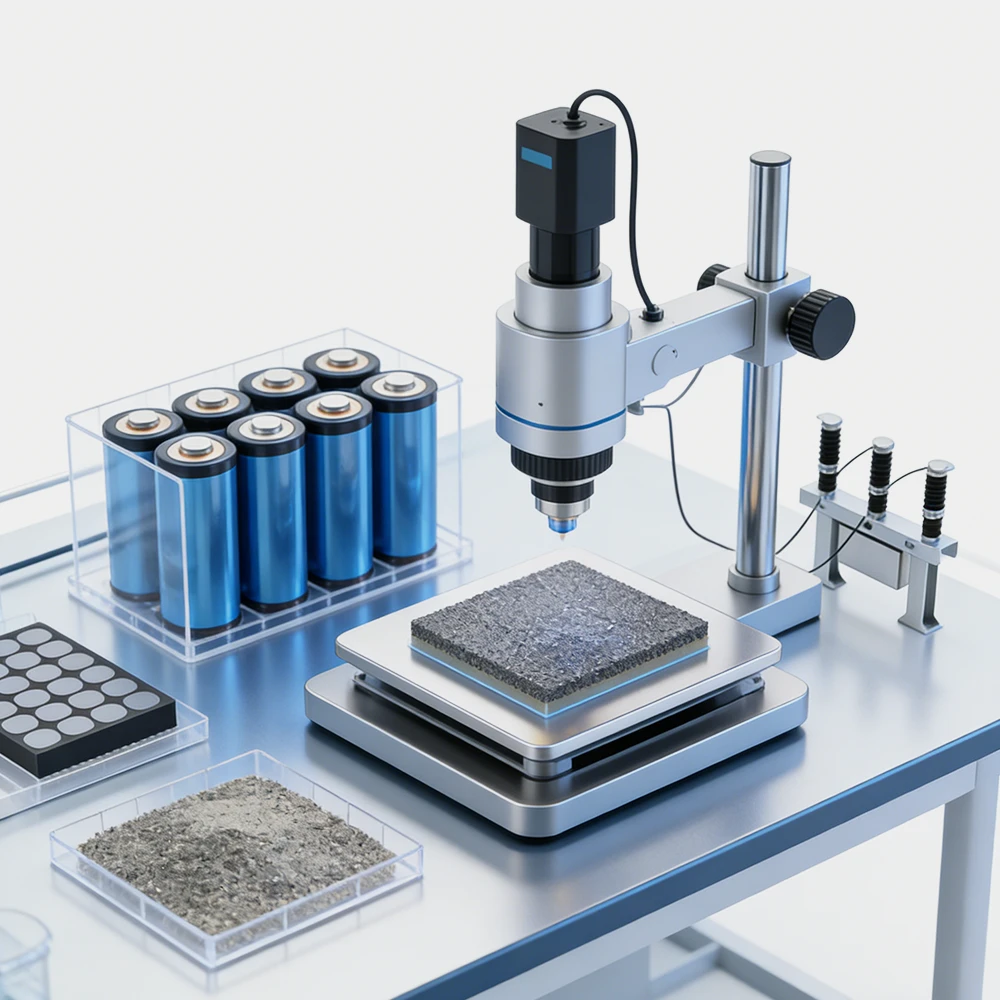
For decades, figuring out when a battery will hit that performance ceiling has stumped scientists and engineers alike. Traditional methods relied on grueling lab tests—subjecting batteries to extreme heat (45°C) or rapid charging for months on end—to guess at their real-world lifespan. But these tests were slow, costly, and often unreliable: a battery that shines in the lab might conk out early when faced with a freezing winter commute or a sweltering summer day.
Then artificial intelligence (AI) stepped in to flip the script. A team of researchers specializing in battery science and machine learning recently unveiled a breakthrough deep learning model—detailed in IEEE Transactions on Transportation Electrification—that changes the game entirely. This model can predict a battery's current and remaining lifespan using just 15 charge cycles—just 1% to 3% of a typical battery's total service life. This isn't some obscure lab experiment; it's a game-changer for EV manufacturers, energy storage firms, and anyone who's ever panicked when their device died halfway through the day.
Why predicting battery life used to be such a nightmare
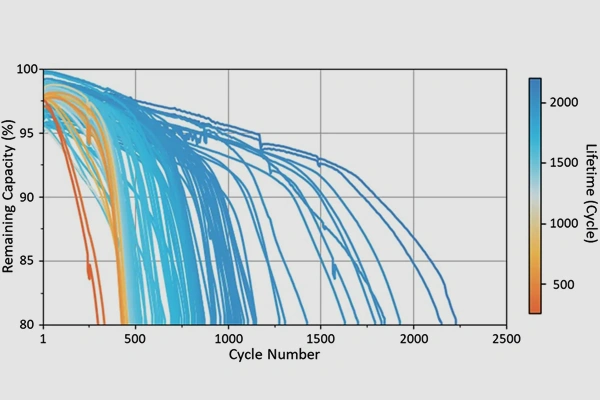
First, let's break down what "battery life" really means. The industry standard marks a battery's end-of-life when its capacity drops to 80% of its original value. For a smartphone with a 4,000 mAh battery, that boils down to a max charge of just 3,200 mAh once it's worn out.
But hitting that 80% threshold is anything but predictable. Battery degradation is a messy, nonlinear process shaped by dozens of overlapping factors. For starters, there's charge cycles: a full drain and recharge counts as one cycle, but even partial top-ups—like going from 50% to 100%—wear down the lifespan over time. Temperature is another killer: batteries hate extremes, and one in a hot desert climate will degrade three times faster than one in a temperate region, since constant heat revs up harmful chemical side reactions.
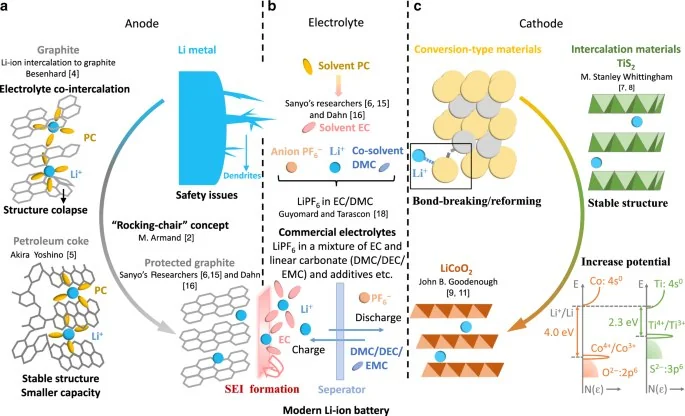
Fast charging takes a toll too. Chargers rated 3C or higher save time but force lithium ions to rush into the battery's anode, causing buildup and long-term damage. Then there's internal aging: tiny changes like the growth of a thick, inefficient "inactive layer" (called the SEI film) on electrodes, or the gradual loss of active lithium, slowly eat away at performance.
Traditional prediction methods couldn't keep up with this complexity. They either relied on oversimplified math models that ignored real-world variables, or required terabytes of test data that took months to collect. As the study's lead researchers put it: "We were trying to solve a 100-piece puzzle with only 10 pieces."
How AI turned the tide: the DS-ViT-ESA Model
The team's fix? A deep learning model called DS-ViT-ESA (Dual-Stream Vision Transformer with Efficient Self-Attention). Let's break down what makes this model stand out—without getting bogged down in tech jargon.
It learns like a human, but way faster. Think about how you recognize a cat: you don't fixate on just its tail or ears—you piece together all its features (fur, eyes, shape) to make a call. The DS-ViT-ESA does the same with battery data. Every battery leaves a unique "fingerprint" while charging: a voltage rise pattern as distinct as a heartbeat. The model uses a Vision Transformer (ViT)—an AI tool originally built for images—to split this charging curve into small "patches", like chopping a photo into pixels. It then analyzes each patch and how they connect, picking up on both tiny details (a faint voltage dip that signals early aging) and big-picture trends (how the curve shifts across 15 cycles).
What's clever is its dual-stream framework—think of two AI assistants working side by side. One stream tracks how the charging curve changes over cycles: Is the voltage taking longer to hit 100% each time? The other compares differences between individual cycles: Why did the 7th cycle's curve look off compared to the 8th? By combining these two angles, the model spots subtle aging signs human engineers might miss—like a 0.01V voltage shift that predicts six months of lost lifespan.
Most impressively, it barely needs any data. Just 15 charge cycles are enough for a solid prediction. In tests, its accuracy was spot-on: the error for Current Cycle Life (CCL) stayed under 4.64% (for instance, if a battery has 400 cycles left, the model's guess falls between 381 and 419), and Remaining Useful Life (RUL) error was below 5.40% (a 200-cycle remaining life would be estimated between 189 and 211).
It also has zero-shot generalization: train it on batteries charged at 1C speed, and it can still predict lifespan for 2C or 3C fast-charged batteries—no extra training needed. That's a huge win for EV makers, who use dozens of charging protocols across their lineups.
Beyond prediction: AI's expanding role in battery science
The DS-ViT-ESA model is just one example of how AI is revolutionizing battery research. Other teams are pushing the envelope even further.
Take battery manufacturing: Researchers at MIT developed an AI framework that predicts lifespan during production—specifically in the "formation" stage, where batteries are first charged to build the critical SEI film. Traditional formation testing takes 100 days to assess lifespan; the MIT model uses just two simple charging data points to get an average error of 9.87%. This slashes manufacturing time and costs while ensuring only top-tier batteries make it to market.
Another team made headlines by using AI as a "battery doctor". Lithium-ion batteries die not just from worn electrodes, but from lost lithium ions—sapped by side reactions over time. The researchers used unsupervised machine learning to sift through thousands of potential molecules, landing on trifluoromethanesulfinate lithium: a white powder that dissolves in electrolytes, releases fresh lithium ions during charging, and leaves no harmful residue. Tests showed batteries using this molecule could cycle 12,000 to 60,000 times (up from 500 to 2,000 for traditional batteries) while holding onto 96% of their original capacity.
From lab to real world: practical impacts
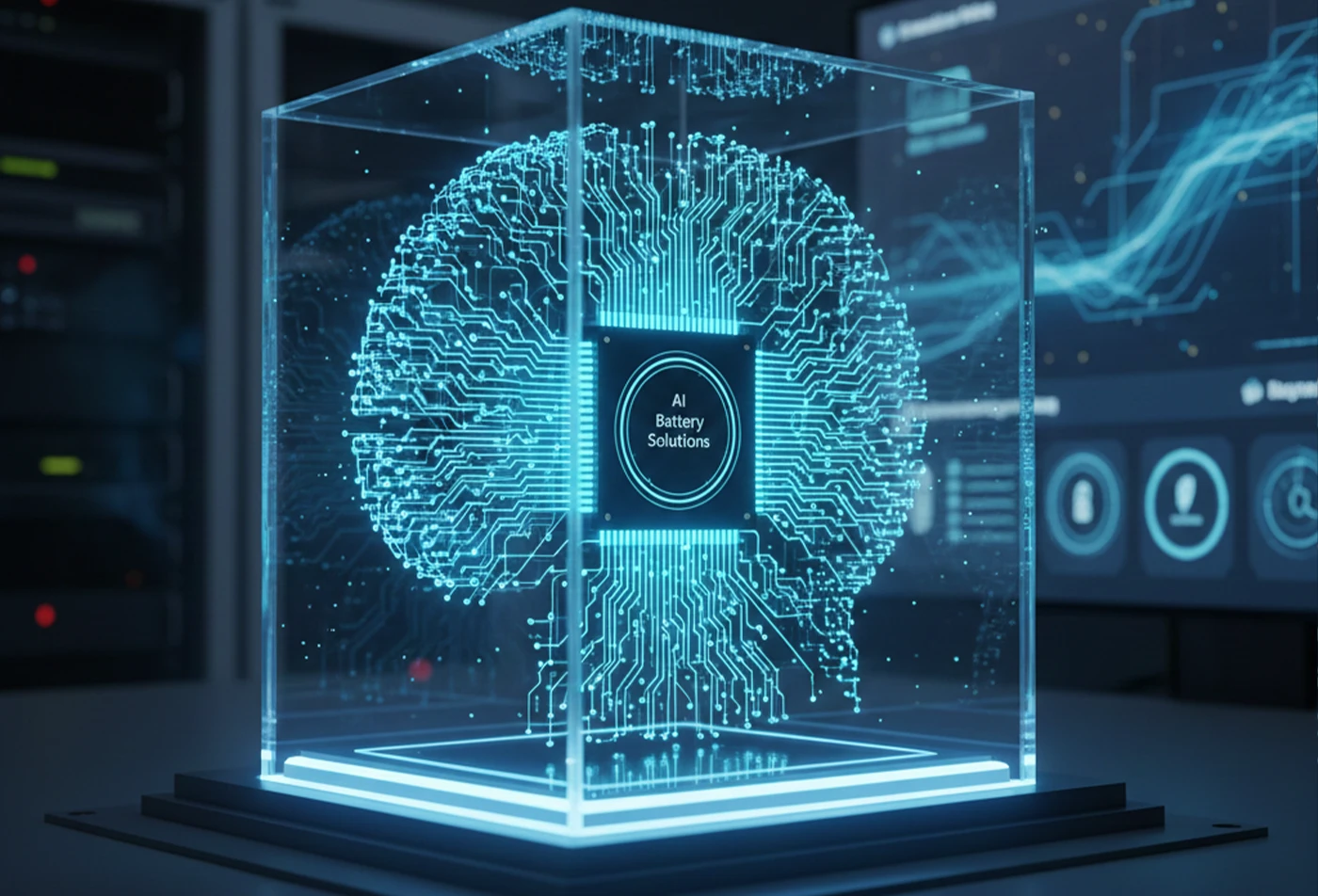
This isn't just lab fluff—the DS-ViT-ESA model is the core of the first "battery digital brain", a system built to manage batteries in real time. It's already being tested in two key spaces.

For EV owners, battery health anxiety often trumps range anxiety. Imagine knowing exactly when your EV battery will drop to 80% capacity—say, "It'll last 3 more years if you charge at home 80% of the time". The digital brain delivers that clarity: it's installed in both cloud servers (for fleet managers) and car dashboards (for drivers), updating battery health in real time. Companies like Tesla are already exploring similar AI tools to optimize charging and stretch battery life.

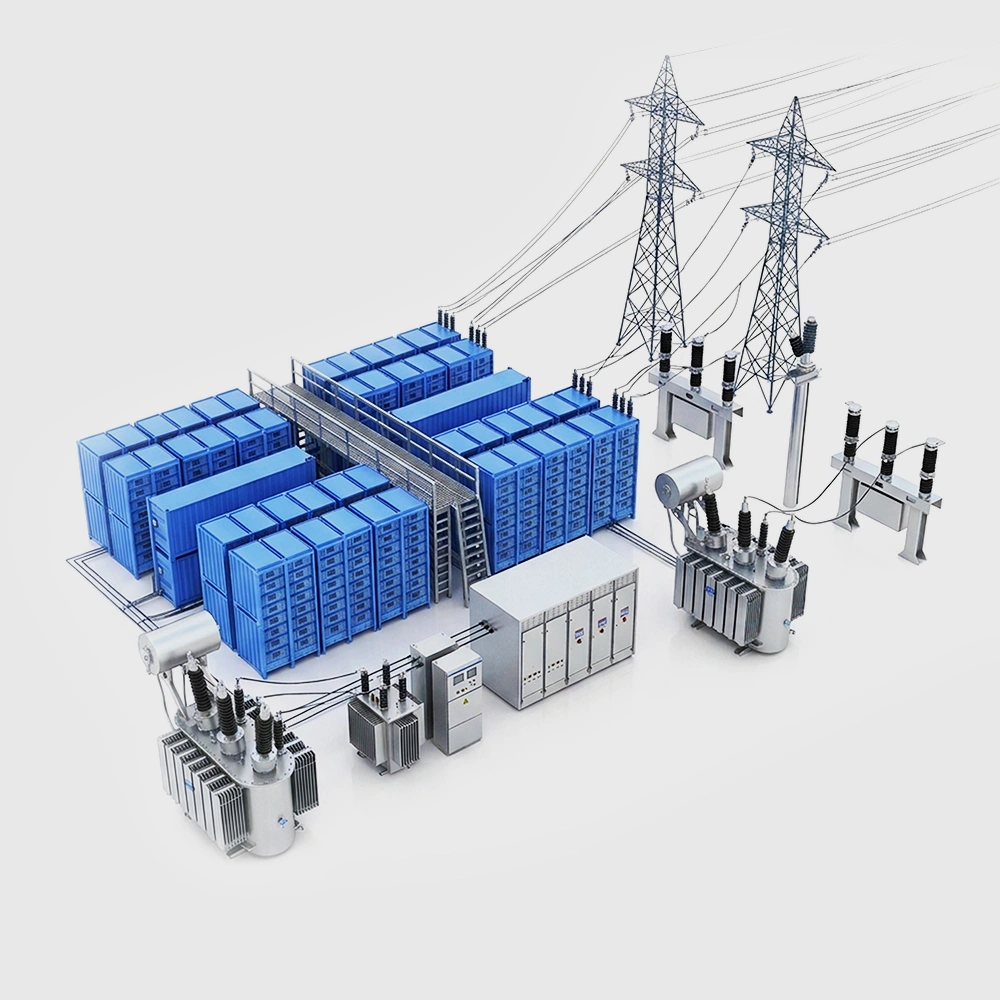
Grid-scale energy storage is another big beneficiary. Solar and wind power are intermittent—they only generate when the sun's out or the wind's blowing—and batteries store that energy for calm, cloudy days. Their lifespan is make-or-break for cost-effectiveness. The digital brain helps grid operators tweak charging and discharging schedules: cDon't charge above 90% today—it'll add 6 months to the battery's life." This cuts costs and makes renewable energy more dependable.
What's next for AI and batteries?
The DS-ViT-ESA model is a breakthrough, but it's just the beginning. Researchers have three big goals on the horizon. First, shrink the model so it fits in small devices—like smartwatches—without draining power. Second, adapt it for next-gen batteries, like solid-state batteries (which last longer but are harder to predict). Third, build a global battery database by partnering with EV makers and energy firms: more data means sharper accuracy, turning local innovations into global solutions.
AI & battery lifespan: unlocking a sustainable clean energy future
Batteries are the lifeblood of our clean energy future—but their lifespan has long been a mystery. AI is changing that. The DS-ViT-ESA model turns 15 charge cycles into a window into a battery's future, giving us the power to predict, protect, and extend its life.
For consumers, that means longer-lasting phones and EVs. For companies, it means cheaper, more reliable energy storage. For the planet, it means fewer dead batteries in landfills and more sustainable energy use.
As we stand on the cusp of a battery-powered world, one thing is clear: AI isn't just making batteries smarter—it's paving the way for a brighter, more sustainable future.