Battery manufacturing process and the rise of dry electrode technology
Amid the global wave of energy transition, the power battery industry is undergoing a profound transformation from "material innovation" to "manufacturing innovation." In 2025, China's sodium-ion battery production increased by 96% year-on-year, and solid-state battery research and development has entered the fast lane—the country's first large-capacity all-solid-state battery production line has been completed and has entered the small-batch testing phase. However, breakthroughs in battery performance depend not only on new material systems but also on innovations in manufacturing processes.
Traditional lithium battery electrode preparation employs the wet process, which involves: mixing active materials, conductive agents, and binders with organic solvents (such as NMP) to form a slurry, followed by coating, drying, solvent recovery, and finally calendering and cutting to obtain electrode sheets.
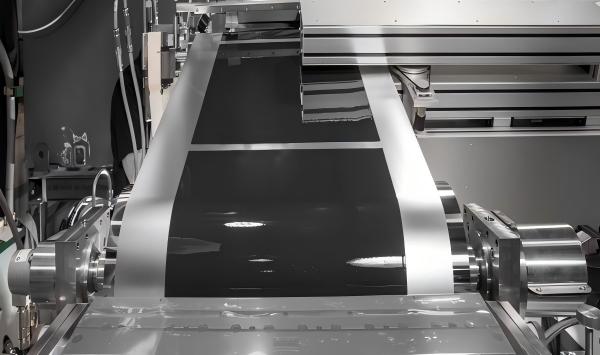
Figure 1 battery electrode coating equipment
This process has three major pain points: equipment length reaching hundreds of meters, enormous energy consumption, and the use of toxic solvents requiring expensive recovery systems. As cost reduction pressures on batteries intensify and solid-state batteries demand water-free environments, a novel manufacturing technology—the dry electrode method—is being vigorously promoted.
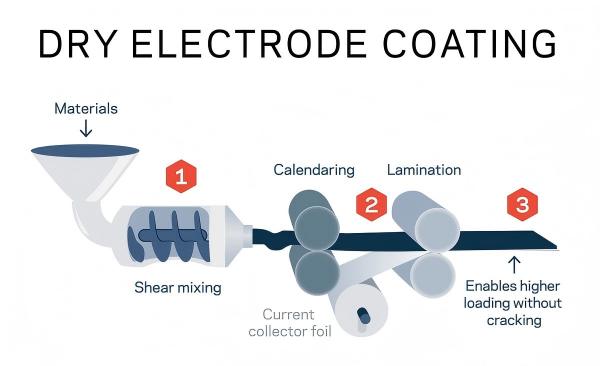
Figure 2 schematic diagram of the dry electrode method
In-Depth analysis of the dry electrode method
At present, the developed battery electrode manufacturing processes primarily fall into two categories.
What are the dry electrode method and wet electrode method
The wet electrode method is currently the mainstream electrode manufacturing technology in the industry, with its core being "liquid-phase dispersion": powder materials are dissolved or dispersed in a solvent to form a slurry, which is then uniformly coated onto a current collector through a coating die, followed by high-temperature drying to remove the solvent, and finally formed through roller pressing.
The dry electrode method completely eliminates solvents, adopting a "dry-state forming" approach: active materials, conductive agents, and dry powder binders are directly mixed, and through high shear forces, the binder is fibrillized to form a three-dimensional network. This mixture is then compacted through multiple rollers to directly create a self-supporting electrode film, which is finally laminated onto the current collector. This process was first scaled for mass production in Tesla's 4680 batteries after the company acquired Maxwell Technologies (Maxwell's dry electrode method), and was hailed by Elon Musk as "a major breakthrough in lithium battery production technology."
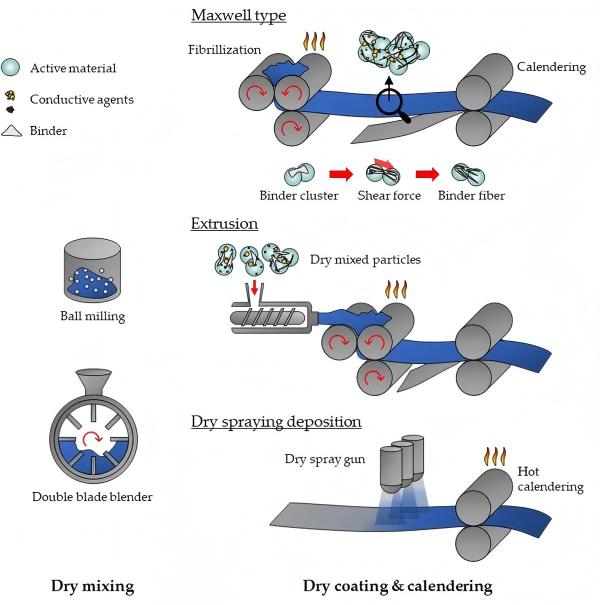
Figure 3 Maxwell dry electrode manufacturing process diagram
Differences, advantages, and disadvantages between dry electrode method and wet electrode method
The wet electrode method is currently the mainstream manufacturing process for lithium batteries, which can be summarized as "liquid-phase dispersion + coating and drying." First, active materials, conductive agents, and binders are dissolved or dispersed in organic solvents (such as NMP) to form a slurry. This slurry is then uniformly coated onto the current collector through a coating die, followed by passing through drying tunnels up to hundreds of meters long to remove the solvent, and finally undergoes roller pressing and cutting. The advantage of this process lies in its technological maturity and high yield rate, having accumulated decades of mass production experience in consumer electronics and power battery sectors. However, its drawbacks are equally significant: the drying stage consumes enormous amounts of energy, solvent recovery systems require substantial investment, and the use of toxic solvents like NMP creates environmental pressure. Additionally, residual solvents may affect electrode consistency, and binders tend to migrate and concentrate during the drying process, leading to non-uniform electrode structures.
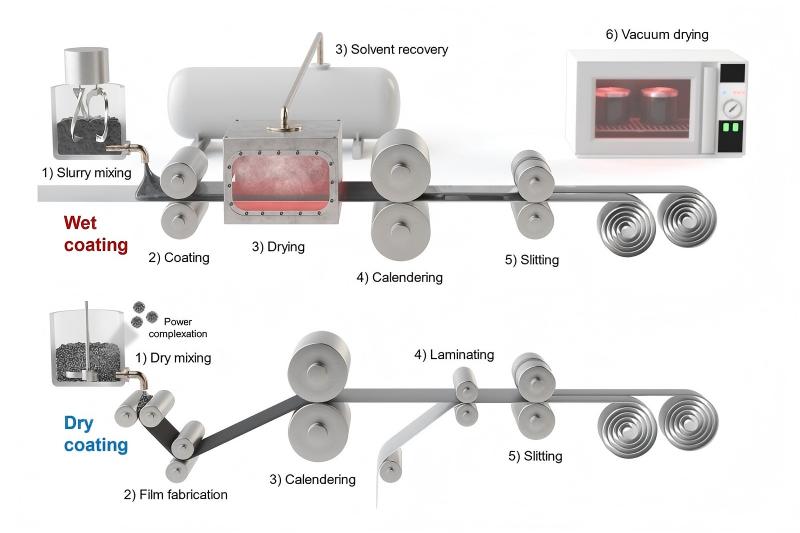
Figure 4 process flow comparison between dry electrode method and wet electrode method
The dry electrode method completely eliminates solvents, adopting a "dry-state forming" approach: active materials, conductive agents, and dry powder binders (such as PTFE) are directly mixed. Through high shear forces, the binder is fibrillized to form a three-dimensional network framework, which is then compacted through multiple rollers to directly create a self-supporting electrode film, and finally laminated onto the current collector. Compared to the wet method, the dry electrode method reduces equipment length by over 40%, decreases energy consumption by 40%, achieves zero solvent emissions, and significantly improves environmental friendliness. More importantly, the dry method is naturally compatible with sulfide-based all-solid-state batteries—it avoids solvent corrosion of the solid electrolyte, while the conductive network constructed by the fibrillized binder can enhance electrode rate capability. However, the technical challenges of the dry method are also more concentrated: controlling the uniformity of binder fibrillation, maintaining film thickness consistency (required to be within ±1μm), and processes such as ultra-thin current collector lamination impose extremely high demands on equipment precision and process windows.
The role of the dry electrode method in battery materials and performance
The dry electrode method not only changes the manufacturing process but also profoundly influences the battery's material system and ultimate performance.
The role of the dry electrode method on electrode materials:
Innovation in the binder system: Traditional wet processes require the use of soluble PVDF (Polyvinylidene Fluoride), whereas the dry method can utilize fibrillizable binders such as PTFE (Polytetrafluoroethylene). The binder content can be reduced to below 2%, with the industry target currently set at reducing it to 1%, thereby increasing the proportion of active material.
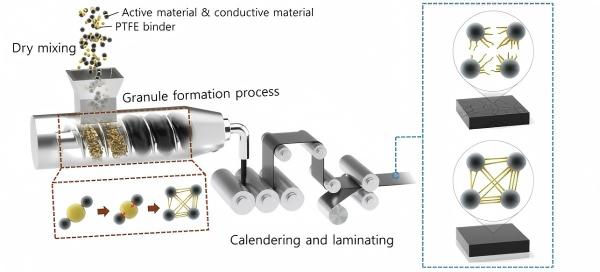
Figure 5 the role of PTFE binder in the dry electrode manufacturing process
Enhanced material compatibility: The dry method avoids side reactions between solvents and sulfide electrolytes, enabling sulfide systems with high ionic conductivity to truly achieve mass production feasibility.
Composite electrode design: The dry method allows precise control of multilayer structures, such as directly co-extruding active layers and solid electrolyte layers to achieve integrated forming.
The impact of the dry electrode method on battery performance:
Increased energy density: The binder distribution in the electrode film is more uniform, enabling higher active material loading while achieving thinner and more uniform electrodes, thereby enhancing volumetric energy density.
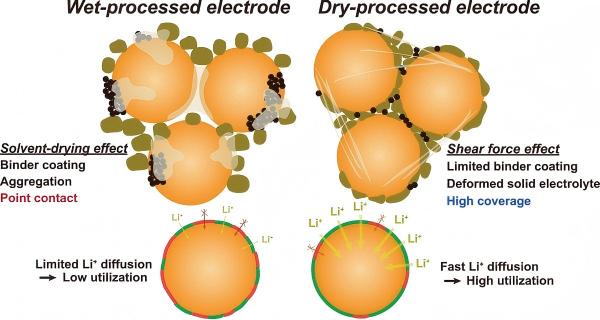
Figure 6 dry electrode method batteries have higher electrochemical performance
Improved rate capability: Under the three-dimensional network formed by fibrillized binders, the more uniform distribution of active materials and conductive agents constructs more efficient conductive pathways, reducing electrode polarization.
Enhanced cycle stability: The dry electrode film has uniform density, avoiding the binder migration and enrichment caused by solvent evaporation during the wet drying process, thereby suppressing electrode structure degradation during cycling.
Practical application cases of the dry electrode method
With the development of the dry electrode method and the increasing requirements for battery manufacturing processes, many applications of the dry electrode method have been seen in actual cases of conventional cylindrical batteries and solid-state batteries.
Case 1: Tesla's 4680 dry battery mass production
In February 2026, Tesla officially announced that both the cathodes and anodes of its 4680 batteries are now manufactured using the dry method, and these batteries are being used in some Model Y battery packs. This breakthrough, achieved after nearly five years, overcame engineering challenges such as dry cathode film formation and high-speed continuous production. Elon Musk stated that it "significantly reduces costs, energy consumption, and factory complexity," signifying a paradigm shift in power battery manufacturing.
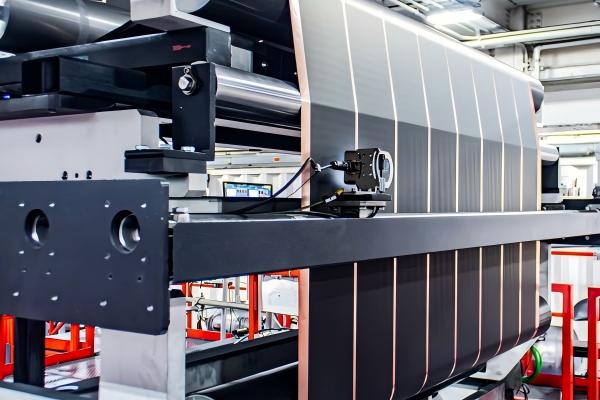
Figure 7 Tesla 4680 battery production line
Case 2: GAC all-solid-state battery production line
In November 2025, China's first large-capacity all-solid-state battery production line was completed and entered the small-batch testing phase. Tsingyan-Naknor, a Chinese equipment manufacturer, built this first domestic large-capacity all-solid-state battery production line for GAC Group. The core equipment is a high-speed, wide-format dry electrode film-forming laminator delivered in July 2025, which has achieved stable mass production of automotive-grade batteries exceeding 60Ah. The equipment has made breakthroughs in key technologies such as ultra-thin current collector lamination and multi-material system adaptation.
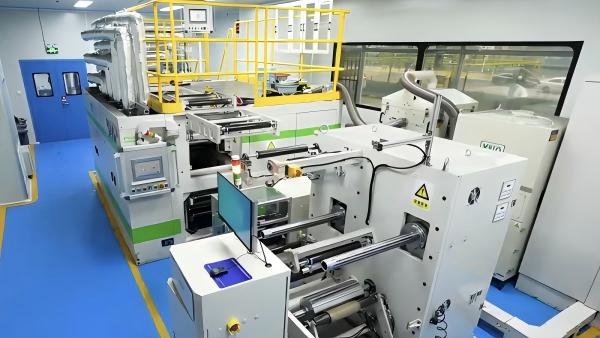
Figure 8 high-speed wide-format dry electrode film-forming equipment
Case 3: Samsung SDI's dry electrode strategy
Samsung SDI has initiated battery validation work based on the dry electrode method on its pilot production line "DryEV" being built at its Cheonan plant. The company is considering applying dry electrode technology to all-solid-state batteries as a key means of reducing manufacturing costs and increasing production speed.
Case 4: Dry electrode equipment going global
In February 2026, dry electrode equipment independently developed by Shenzhen Tsingyan-Naknor was officially shipped to a leading Japanese automotive company for an all-solid-state battery mass production project. This equipment reduces energy consumption by 40%, increases production efficiency by three times, achieves a width of 800 millimeters, operates at a speed of 50 meters per minute, and controls film thickness uniformity within ±1μm, reaching internationally leading standards.
The potential and significance of the dry electrode method
The dry electrode method does not exist in isolation but forms a technological matrix for next-generation battery manufacturing together with advanced processes such as isostatic pressing and stacking.
Isostatic pressing technology, by applying uniformly high pressure from all directions (hundreds of MPa), can effectively solve the solid-solid interface contact problem in all-solid-state batteries and improve the interfacial porosity between electrodes and electrolyte layers. Medium-temperature isostatic pressing (80-120℃) has already been applied in solid-state battery production lines, forming a complementary process with the dry electrode method.
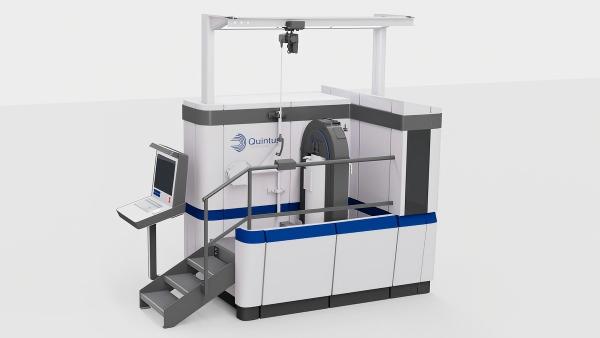
Figure 9 Quintus isostatic pressing equipment
The stacking process is the most suitable assembly method for all-solid-state pouch batteries, effectively addressing the insufficient flexibility of solid electrolytes and enabling the energy density advantages of multi-layer stacking.
Future trends indicate that the integration of dry electrodes and solid-state batteries will become the mainstream path: dry electrodes not only remove the solvent barrier for sulfide-based all-solid-state batteries but also enable integrated electrode-electrolyte composite films through multi-layer co-extrusion. It is projected that by 2030, global shipments of all-solid-state batteries will reach 180 GWh, and the dry electrode equipment market will exceed 32 billion RMB.
More importantly, the significance of the dry electrode method extends beyond a single technological pathway—it marks the battery industry's competition shifting from "material competition" to "manufacturing capability competition." The advancement of dry-scale manufacturing technology will determine whether companies can master the initiative in battery cost reduction; advanced dry processes will also facilitate the comprehensive implementation of solid-state batteries.
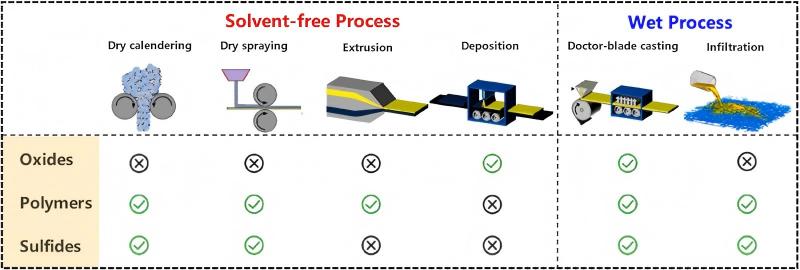
Figure 10 three types of solid-state battery manufacturing processes
From Tesla's 4680 batteries to domestic all-solid-state production lines, from equipment exports to strategic initiatives by international giants, the dry electrode method is emerging as a core competitive arena defining next-generation battery technology.