With configurable voltage ranges from 30 V to 200 V and current options from 20 A to 1200 A, the system supports module-level validation, cycle life testing, DCIR, pulse testing, and simulation-based operating profiles.
| Model | Voltage | 20A | 30A | 50A | 100A | 200A | 300A | 400A | 600A | 800A | 1000A | 1200A |
| CE-6000 | 30V / 60V | 30A ~ 1200A | ||||||||||
| 120V | 20A ~ 1200A | |||||||||||
| 150V / 200V | 20A ~ 1000A | |||||||||||
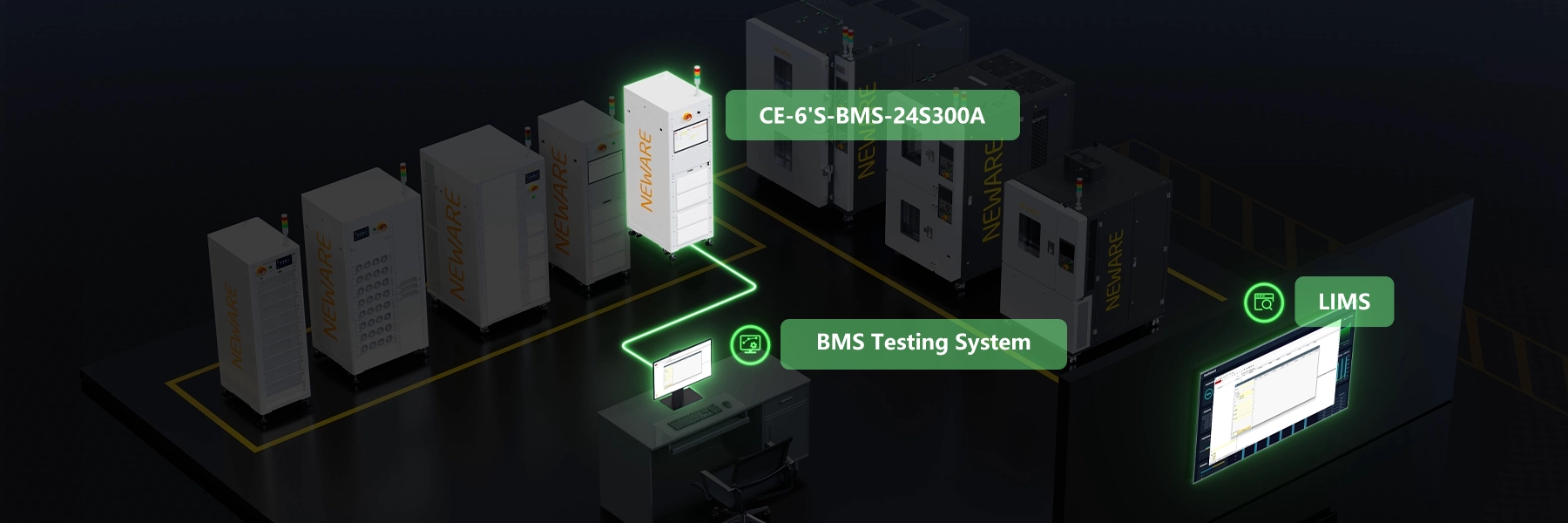
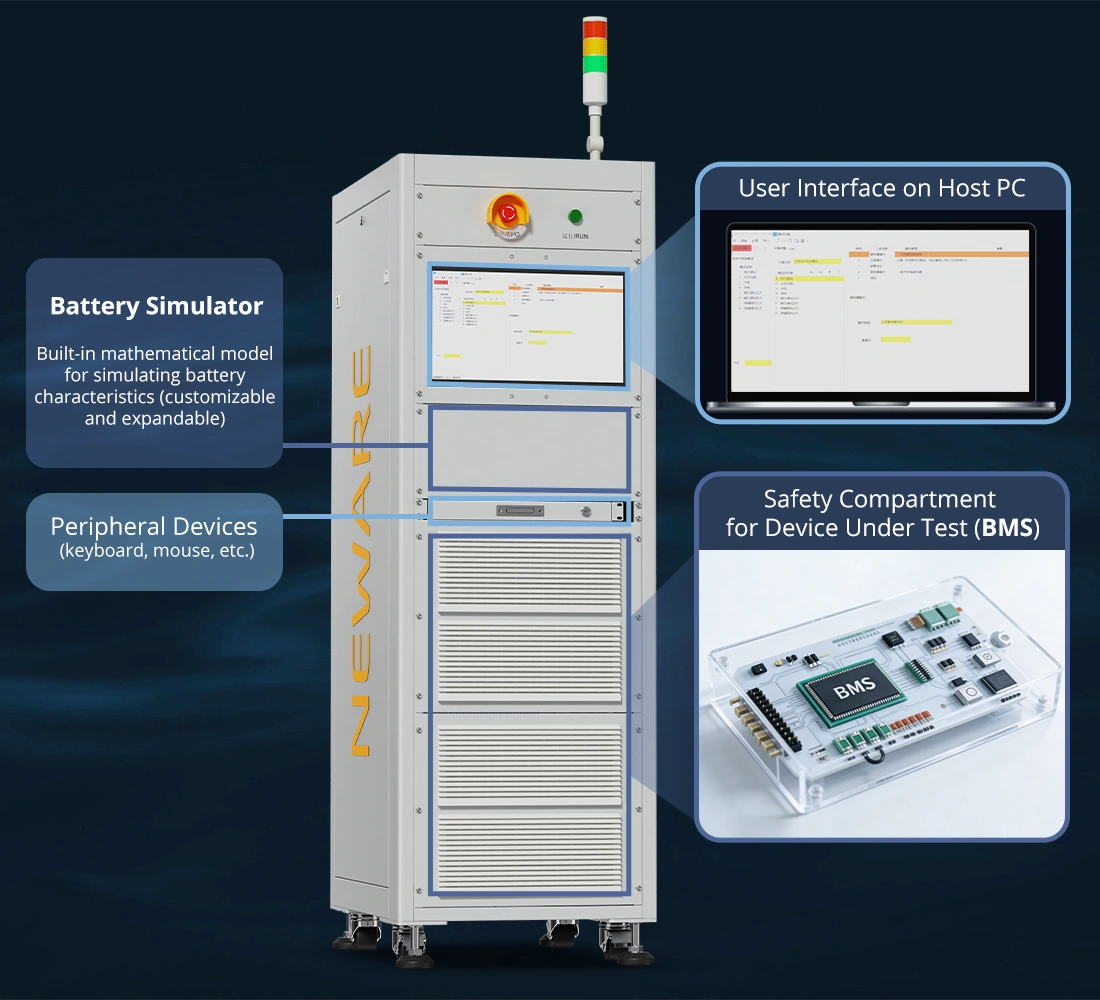
Verifying EV battery module quality with CE-6000 Module Testing System requires comprehensive testing for faulty internal connections, abnormal operational behavior, and early failure risks of module cells and battery management system (BMS), via the series' dedicated end-of-line (EOL) testing system and professional BMS testing system. The testing covers precise characterization of module performance responses to temperature variations and the reciprocal electrical-thermal impacts on cells, and leverages the series’ high-precision electrochemical measurement capabilities to conduct EIS, DCIR (±0.05% accuracy) and ACIR (3mΩ–300Ω range) tests, effectively verifying the quality, dynamic performance and long-term durability of EV battery modules.
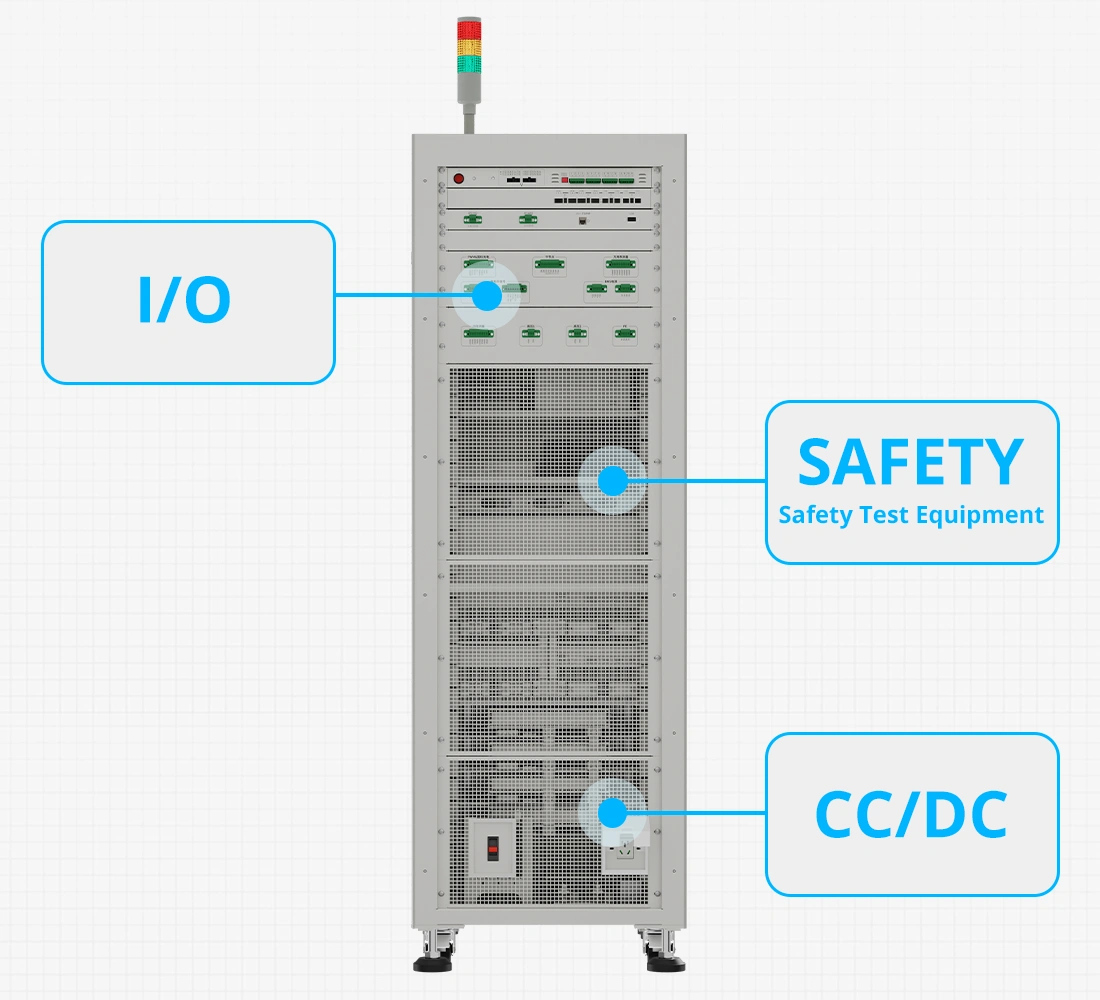
Supports customized test curves and standard-compliant test routine configuration, enabling performance characterization against real-world operating curves such as race track conditions and WLTP (Worldwide Harmonized Light Vehicles Test Procedure) to validate long-term module performance stability. For different device-under-test requirements, the test system can conduct full-module deep characterization, simulate extreme real-world working conditions (including overcharge, over-discharge, short-circuit and temperature difference), and realize high-precision measurement of individual cell voltage (0~6V, ±0.5mV accuracy), temperature (8CH NTC simulation, 2Ω-1MΩ adjustable resistance) and BMS communication interfaces (CAN, RS485, IIC, SMBus, Ethernet and IOs).

Current Accuracy: ±0.05% F.S.
Voltage Accuracy: ±0.02% F.S.
Recording Frequency: 100Hz
Current Conversion Time: ≤6ms
Current Response Time: ≤3ms
Minimum Pulse Width: 100ms
Feedback Efficiency (Max): 90%
Voltage Accuracy: ±0.02% F.S.
Current Accuracy: ±0.05% F.S.
Recording Frequency: 100Hz
Current Conversion Time: ≤6ms
Current Response Time: ≤3ms
Minimum Pulse Width: 100ms
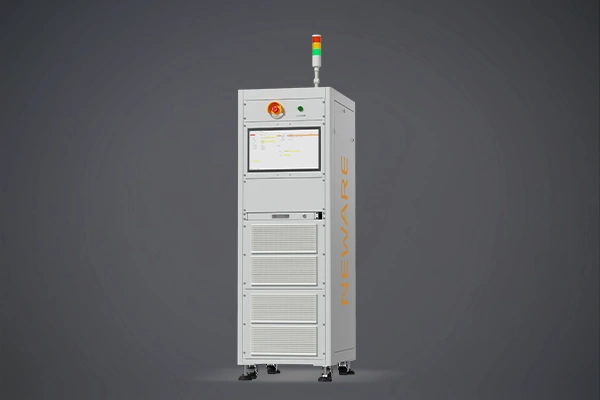
Current Accuracy: ±0.05% F.S.
Voltage Range: 0-1500V
Range of Adjustable: 2Ω-1MΩ
Number of Channels: 24CH
Communication Module: CAN, RS232, IIC, SMBUS, RS485
- Power supply customization: Default 3-phase 380 VAC, optional 208 VAC for North American markets.
- Channel configuration flexibility: Adjustable channel density & current range based on specific testing requirements.
- Software integration: Compatible with LIMS systems for seamless data traceability.
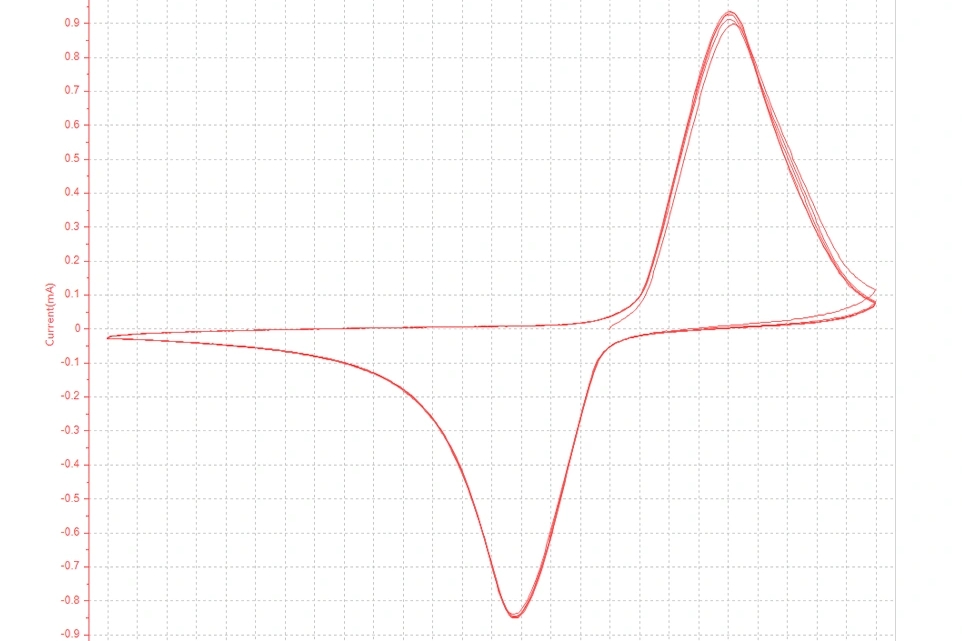
This article provides a detailed overview of cyclic voltammetry, electrochemical impedance spectroscopy, and charge/discharge testing, summarizing their principles and procedures.
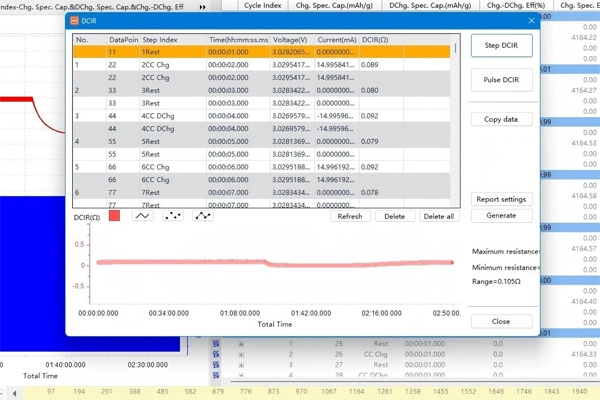
Direct Current Internal Resistance (DCIR) refers to the ratio of the voltage change to the corresponding discharge current change of a battery under operating conditions. It can be measured by battery testing equipment under specific settings and is a critical parameter for evaluating electrode materials.
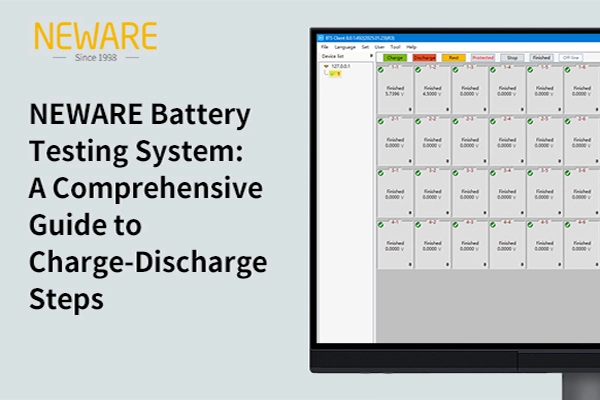
In the research, development, quality verification, and application of lithium-ion batteries, accurate, reliable, and efficient testing is the foundation for obtaining authentic battery performance da

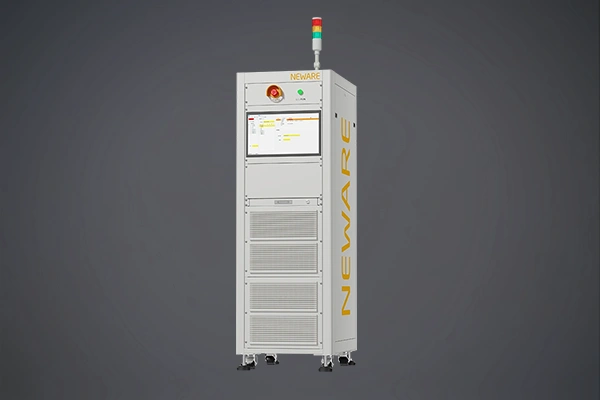
Before formal installation, please check the appearance of your equipment is intact. Due to the large number of CE-6000 Module series devices, the appearance of each device will be slightly different, here CE-6012n-60V50A as an example.