Introduction
The global automotive industry is accelerating its electrification process, but the development of electric vehicles remains constrained by two core bottlenecks: range anxiety and battery safety concerns. The energy density of current mainstream liquid lithium-ion batteries has approached its theoretical ceiling, and their flammable organic electrolytes are highly prone to causing fires after thermal runaway. Solid-state batteries are regarded as the next-generation solution to overcome this dilemma. By replacing the liquid electrolyte with a non-flammable solid electrolyte, they have the potential to increase cell energy density from the current maximum of approximately 260 Wh/kg to 300-500 Wh/kg or even higher, while fundamentally eliminating fire risks caused by leakage or thermal runaway. With major global automakers and battery giants actively competing in this space, the industrialization of solid-state batteries is imminent.
The core of transformation: reshaping energy storage with solids
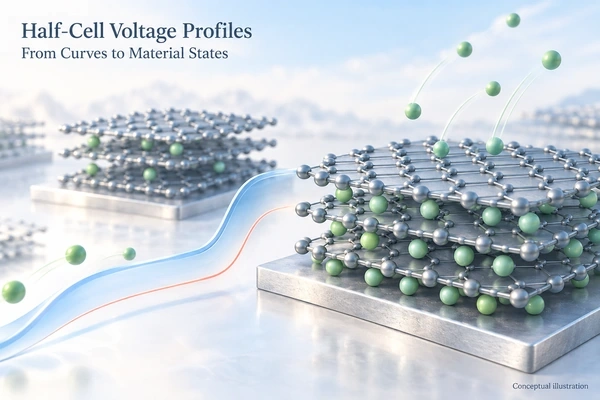
Solid-state batteries do not constitute an entirely new battery system. Their working principle is consistent with that of mature liquid lithium-ion batteries, both relying on the back-and-forth migration of lithium ions between the positive and negative electrodes (the rocking-chair mechanism). The true transformation lies in the "lifeblood" inside the battery—it completely replaces the liquid electrolyte and separator with a solid electrolyte.
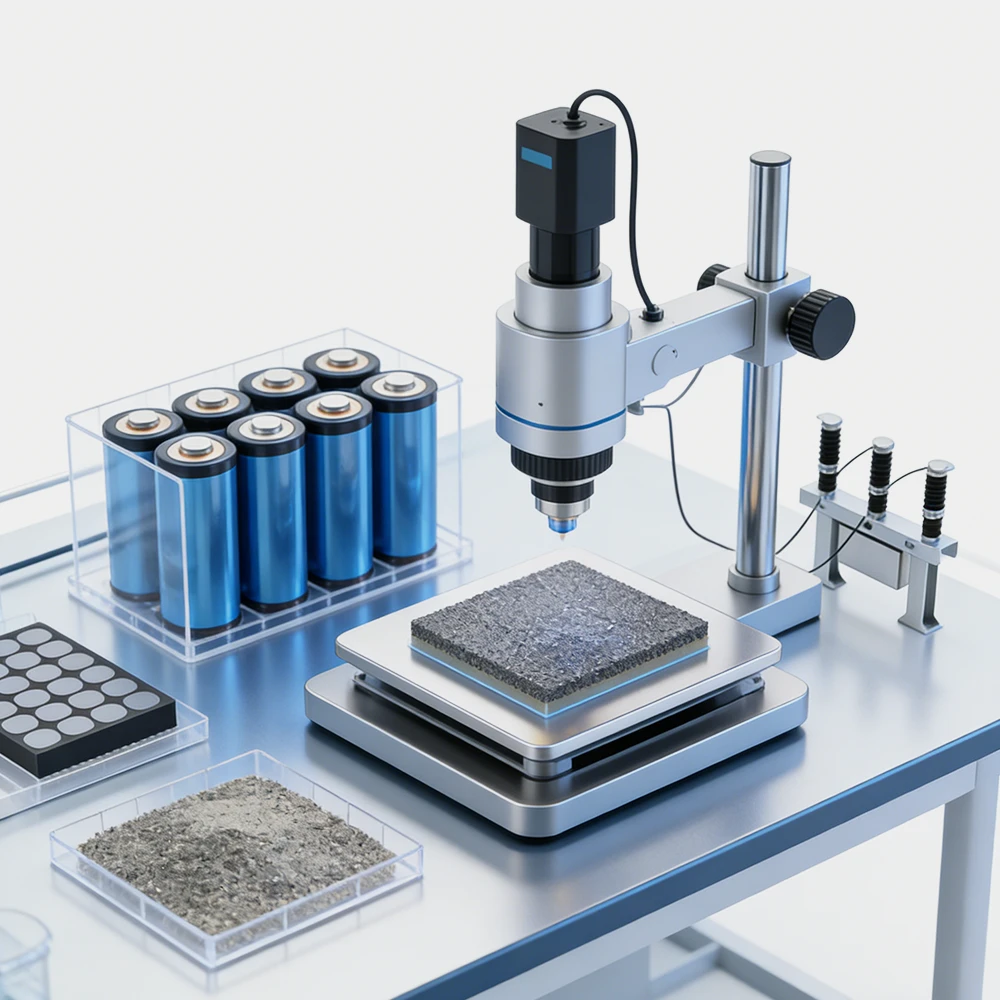
A standard solid-state battery consists of three fundamental components: the cathode, the anode, and the solid electrolyte.
Regarding cathode materials, high-nickel ternary materials will continue to be used in the short term, but in the long run, higher-capacity materials such as lithium-rich manganese-based compounds represent the developmental direction.
The upgrade of anode materials is key to achieving a leap in energy density. The progression will move from current graphite and silicon-carbon anodes towards the ultimate goal of lithium metal anodes, which offer an extremely high theoretical capacity.
The solid electrolyte itself assumes the dual responsibility of conducting ions and isolating the positive and negative electrodes simultaneously. The current mainstream research and development paths primarily include three major categories: polymers, oxides, and sulfides.
The advantages of solid-state batteries are as prominent as their challenges. Their core strengths lie in high safety and high energy density.
The solid electrolyte is non-flammable and leak-proof, effectively suppressing lithium dendrite penetration and significantly reducing the risk of thermal runaway. Simultaneously, it is compatible with high-voltage cathodes and lithium metal anodes, thereby enabling a leap in energy density.
The challenges it faces are equally formidable. The solid-solid interface contact issue leads to high ionic conduction impedance, affecting charge-discharge rates and cycle life. Furthermore, high costs (current material costs are several times that of liquid batteries) and complex manufacturing processes (such as the need for isostatic pressing equipment to enhance interface contact) are the greatest obstacles to its large-scale commercialization.
Standard definition: the watershed of technological pathways
In recent years, the term "semi-solid-state battery" has been widely used as a transitional concept, generally referring to batteries with a liquid electrolyte content of 5-10%. However, as technology advances, this vague definition can no longer meet the needs of industry norms and market selection.
On December 30, 2025, China's first national standard for "Solid-State Batteries for Electric Vehicles" was released for public comment, establishing a clear and unified technical benchmark for the industry and introducing two key changes.
Clarifying terminology: the "Exit" of semi-solid-state batteries
The new Chinese national standard first provides precise definitions in terms of terminology. Based on how ions are transported within the battery, batteries are explicitly categorized into three types: liquid batteries, hybrid solid-liquid batteries, and solid-state batteries.
This means that the previously common term "semi-solid-state battery" is replaced within the Chinese national standard system by the more rigorous term "hybrid solid-liquid battery," clarifying the technical essence from a nomenclature perspective.
Quantitative threshold: tightening mass loss rate requirements
More crucially, the new Chinese national standard establishes a quantitative and more stringent technical threshold for determining a "solid-state battery": the mass loss rate of a solid-state battery should be no greater than 0.5%.
Mass loss rate refers to the ratio of mass lost to the initial mass after a battery undergoes vacuum drying under specific conditions. It directly reflects the amount of liquid components inside the battery.
This standard is twice as strict as the previous group standard issued by the China Society of Automotive Engineers (mass loss rate less than 1%). The purpose is to distinguish those "hybrid solid-liquid batteries," which still contain a relatively high amount of liquid electrolyte and offer limited performance improvements, from genuine solid-state batteries. The development of this standard is based on industry validation tests, with feedback indicating that mainstream solid-state battery products can already achieve a mass loss rate below 0.5%.
Future landscape: industrialization competition and value chain reshaping
The new standard is not merely a clarification of technical definitions but a powerful guide for the direction of industry development. It signifies that future market competition will focus on technological pathways capable of meeting the stringent solid-state criteria, making industry consolidation and value chain reshaping inevitable.
The high-performance route represented by sulfide electrolytes, due to its ionic conductivity being closest to that of liquid electrolytes, has become a key focus for numerous leading enterprises (such as Toyota, CATL, and BYD). Although facing challenges in cost and stability, it is considered the future mainstream direction.
Meanwhile, oxide and polymer routes may secure their niche in specific application scenarios by leveraging their advantages in easier industrialization. The industrialization timelines for various companies are becoming increasingly clear. Major global automakers generally regard the period from 2027 to 2030 as the critical window for the scaled installation of solid-state batteries in vehicles.
Conclusion
With the finalization of China's new national standard for solid-state batteries, the industry will bid farewell to the ambiguous transitional era of "semi-solid-state" and enter a new phase of intense technological competition aimed at achieving "true solid-state" batteries. The concept of semi-solid-state batteries disappears, and the boundary between hybrid solid-liquid batteries and solid-state batteries becomes clearer. Industry influence will be redistributed, with enterprises mastering key technologies such as core solid electrolyte materials, lithium metal anodes, and dry electrode processes poised to dominate the new value chain.
The market application path will follow the pattern from high-end to mainstream adoption. Solid-state batteries will first be installed in high-end vehicle models, which are relatively cost-insensitive and pursue ultimate performance, before gradually trickling down to more affordable segments. Ultimately, an industry transformation driven by material innovation—one that will shape the future form and competitiveness of electric vehicles—is accelerating in full force with the implementation of this new standard.