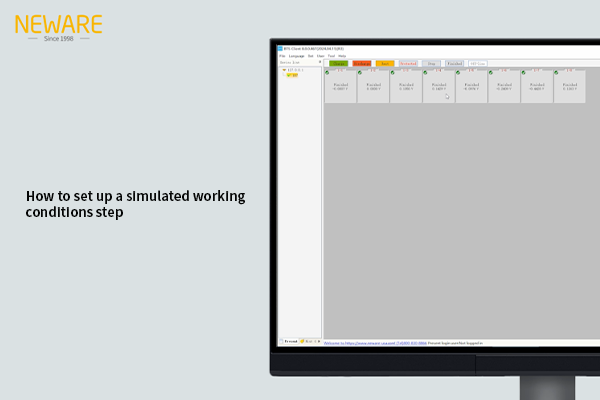
How to set up a simulated working conditions step

Latest updated: Jan 05, 2026
Video recording version: 8.0.1.518, compatible with BTS 8.0 software.

After selecting the channel, right-click and choose “Single start” to enter the step-editing window.

Create a new test step: double-click the blank cell under “Step Name”.

Select “SIM”, then double-click the blank cell under “Step Time”; the “SIM Parameter settings ” window will pop up.

You may import a pre-edited profile file

Set the “Start row number”, “End row number”, “Mode” (Current or Power), and any custom parameters directly in this page.

When editing the profile file, column A is the duration of each individual step by default, and column B is the current value corresponding to that duration.

Below is the guide on how to edit the profile file.

Key points are as follows:

  • a. Supported formats: .xls, .xlsx, .txt.

  • b. Minimum single-step duration ≥ 0.5 s.

  • c. If a current value exceeds the device’s full-scale output, the full-scale value is used;  

  • if it is below the minimum output, the minimum value is used.

  • d. Following the above rules, the template file “SIM Step Template” is structured as:

Column A: time (relative time); e.g.,

A2–A1 = 2–0 = 2 s with a current of 200 A;

A3–A2 = 5–2 = 3 s with a current of 100 A.

Column B: current value; positive = charge, negative = discharge.

After completing the setup, click OK and then click Start.

This operation video tutorial is applicable to the following products:


neware-battery-test-car-battery-test

Latest News

Stay informed with the latest from NEWARE.

Find the Right Battery Test Equipment for Your Needs.

Application Scenarios

Trusted testing solutions for global clients.

Solid-State Battery Research - NEWARE Solid-State Battery test
Solid-State Battery Research

The lab focuses on solid-state battery research to overcome traditional lithium batteries' safety and energy density issues, supporting environmental sustainability. It develops innovative solid-state electrolytes, refines electrode materials, and investigates ion transfer and interface stability to revolutionize battery technology.
View more
electric vehicle battery test
Electric Vehicle Battery

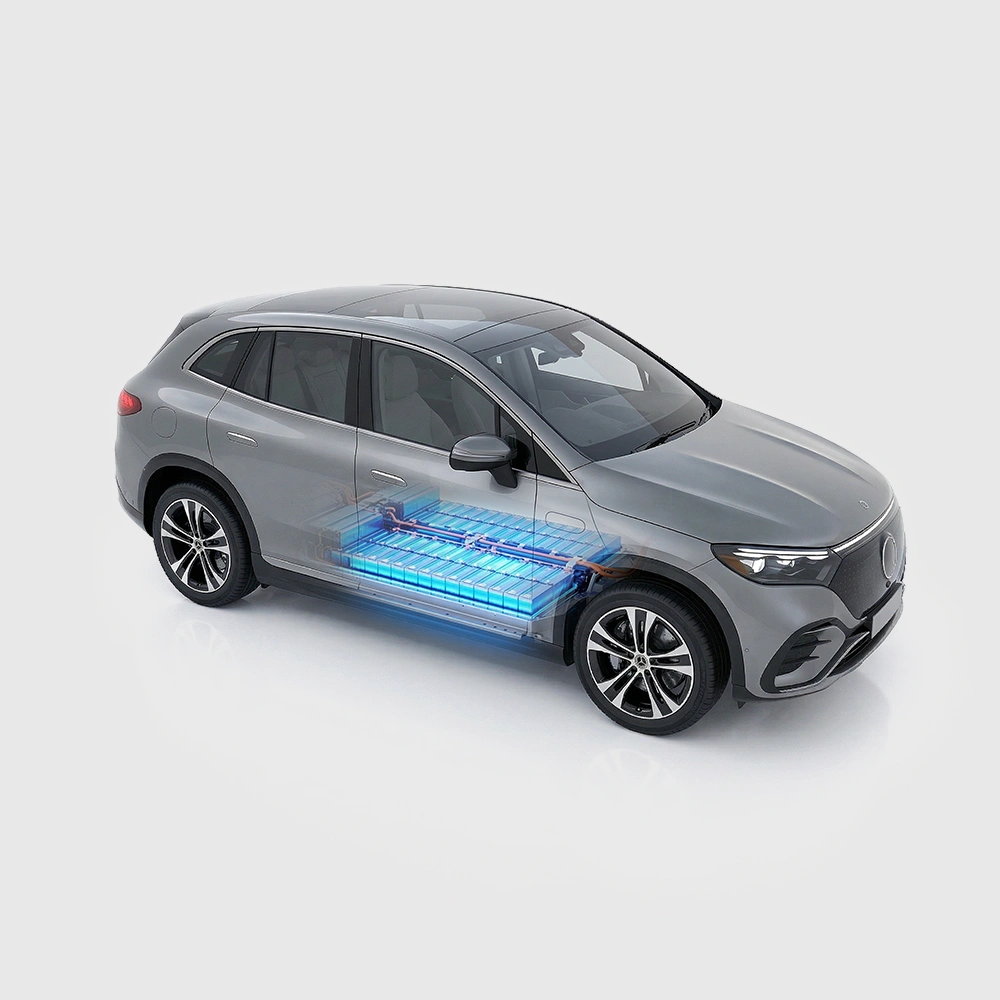
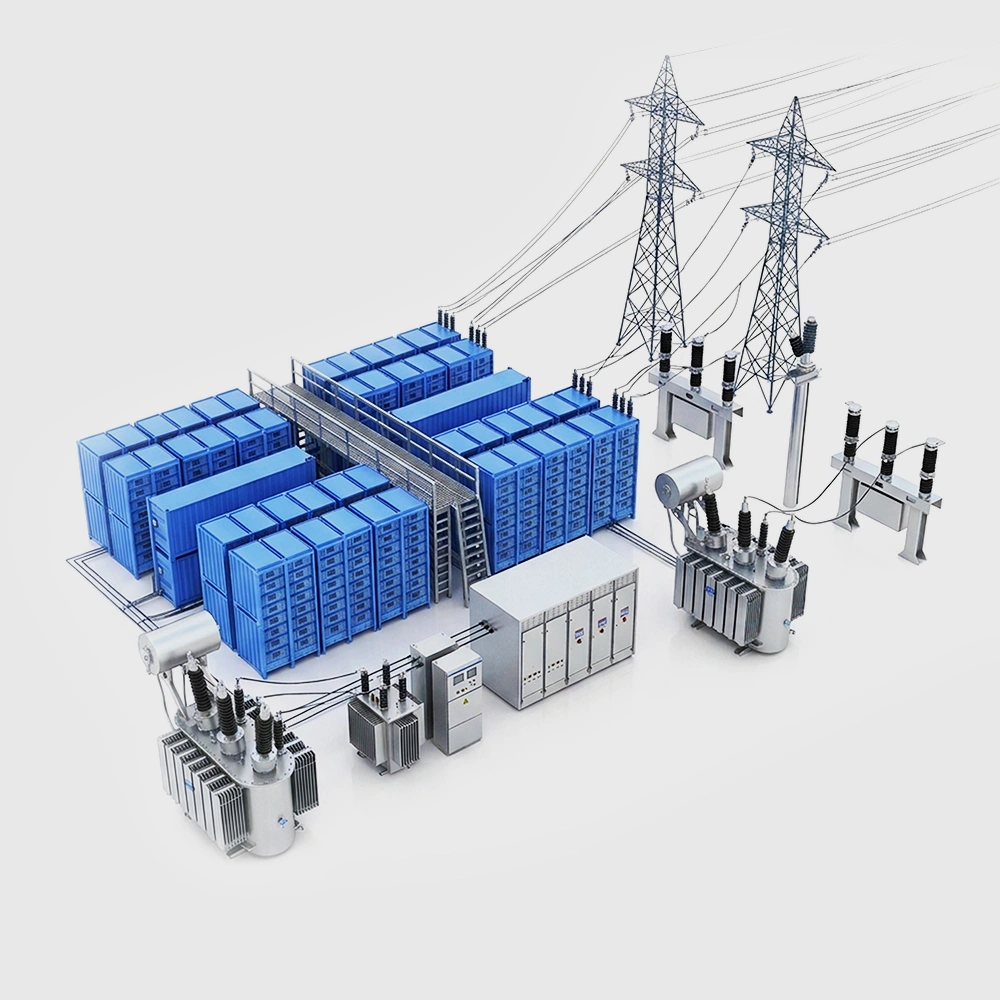
The electric vehicle battery industry is rapidly developing, focusing on technological innovation, market competition, and sustainability. Research hotspots include solid-state batteries, new types of electrolytes, BMS optimization, and recycling technologies. The environmental adaptability, safety, and economic viability of batteries are key research areas, and the industry is expected to undergo more innovation and transformation.
View more
Battery-powered vehicles include electric hoverboards, scooters, e-bikes, and motorcycles.
Electric Transportation Battery

Electric Hoverboard, electric scooters, e bikes, and electric motorcycles are changing the way people travel, with the development of battery technology being at the core of this transformation. The main issues faced by electric bicycle batteries include battery cost, range, the popularity of charging infrastructure, thermal management of batteries, and safety. As battery technology continues to advance, it provides more reliable power support for these intelligent devices.

View more
Battery Materials Research - NEWARE battery test
Battery Materials Research

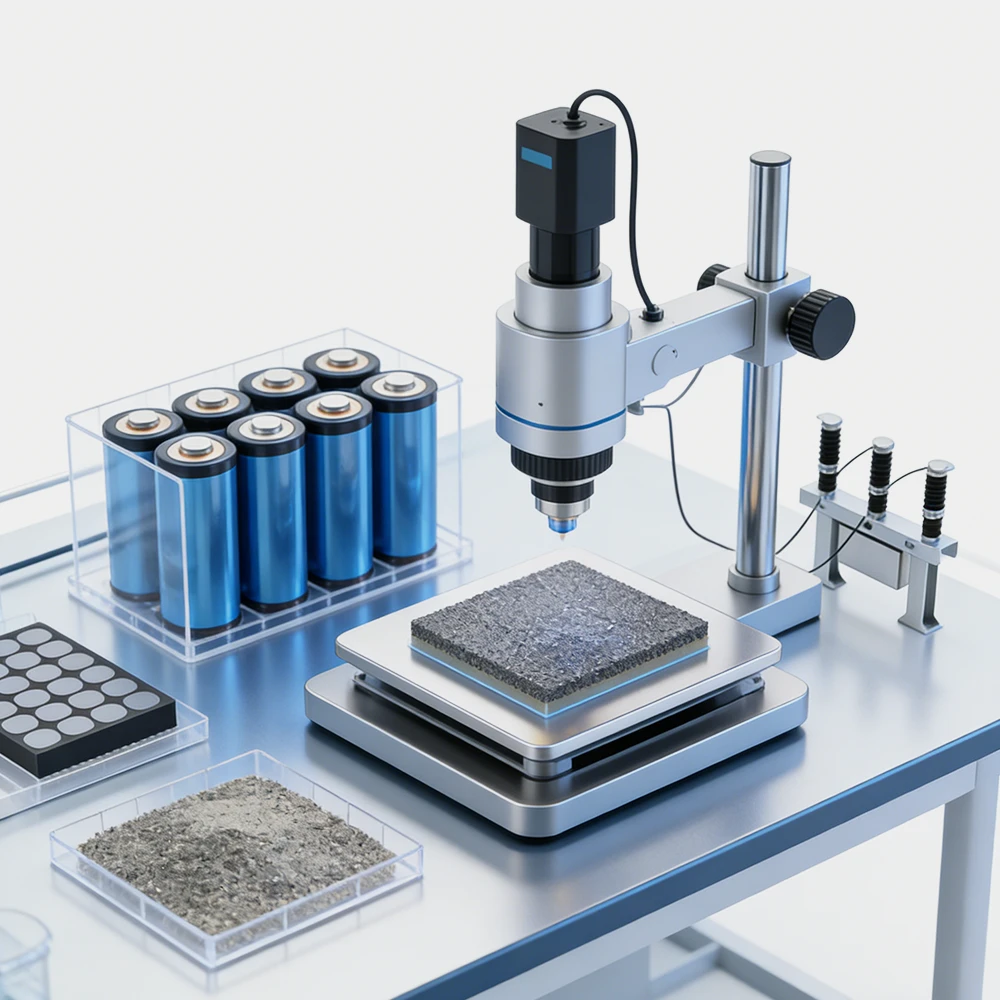
We specialize in battery preparation technology research, focusing on overcoming existing energy storage challenges by innovating in electrode materials, battery chemistry, and manufacturing processes to improve performance, enhance safety, and reduce costs. Sustainability and recycling technologies for batteries are also emphasized to mitigate environmental impacts and foster the growth of green energy.
View more
NEWARE and Cookies
We use cookies to personalize and improve your experience with our website. By continuing to browse the site you are agreeing to our use of cookies.